By Irum Saleem
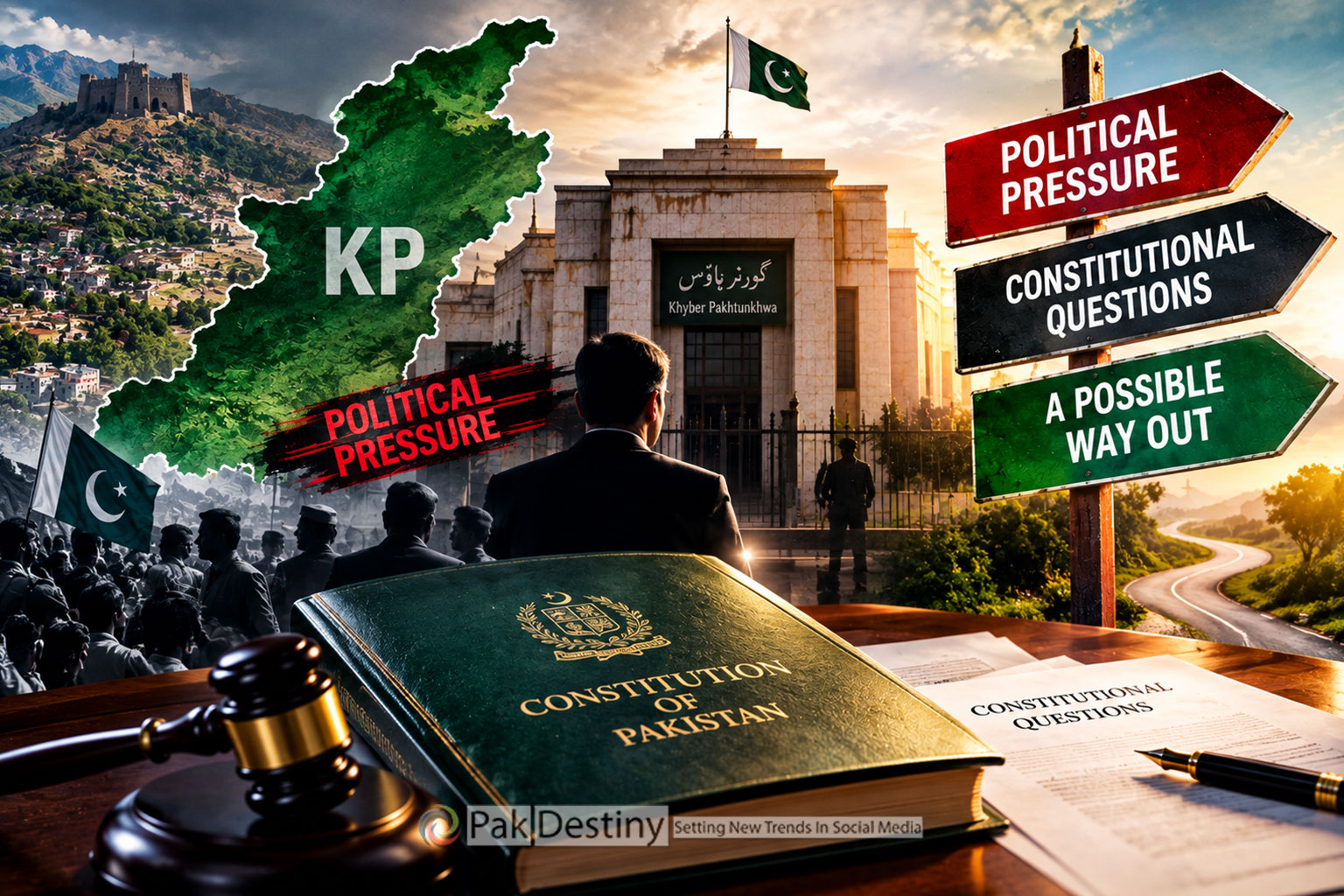
The political confrontation between the federal government and the Pakistan Tehreek-i-Insaf (PTI)-led Khyber Pakhtunkhwa government has entered a potentially decisive phase, with claims emerging that a decision has been taken to impose Governor’s Rule in the province under Article 234 of the Constitution.
The claim, made by senior anchorperson Kamran Khan on social media on Monday, suggested that the PTI government could still continue if Chief Minister Sohail Afridi and the party leadership withdrew the call for the proposed long march, abandoned plans to change the provincial police system and aligned their law-and-order priorities with federal security institutions. No formal presidential proclamation or official notification confirming the imposition of Governor’s Rule was identified in the reporting available at the time of writing.
The development nevertheless highlights how rapidly the political dispute has moved from confrontation over a protest movement to a question about the future of the PTI government in the province.
At the heart of the dispute is a fundamental political dilemma: whether the federal and provincial governments can find a negotiated framework for coexistence, or whether the confrontation will ultimately produce an institutional rupture.
Article 234 and the constitutional question
Article 234 provides a constitutional mechanism for dealing with what it describes as a failure of constitutional machinery in a province.
Under the provision, if the President, on receiving a report from the provincial governor, is satisfied that the provincial government cannot be carried on in accordance with the Constitution, the President may issue a proclamation. The provision allows the President to assume certain provincial functions himself or direct the governor to do so on his behalf, while the powers of the provincial assembly can be made exercisable by or under the authority of Parliament.
Such a proclamation is not simply an administrative decision. The Constitution provides for parliamentary approval and places a time limit on its continuation. Under Article 234, a proclamation must be laid before a joint sitting and ceases to operate after two months unless approved; it can subsequently be extended, but the constitutional provision sets an overall limit.
This makes any move towards Governor’s Rule both a political and constitutional matter.
Why the issue has intensified
The immediate trigger is the PTI’s proposed march towards Islamabad.
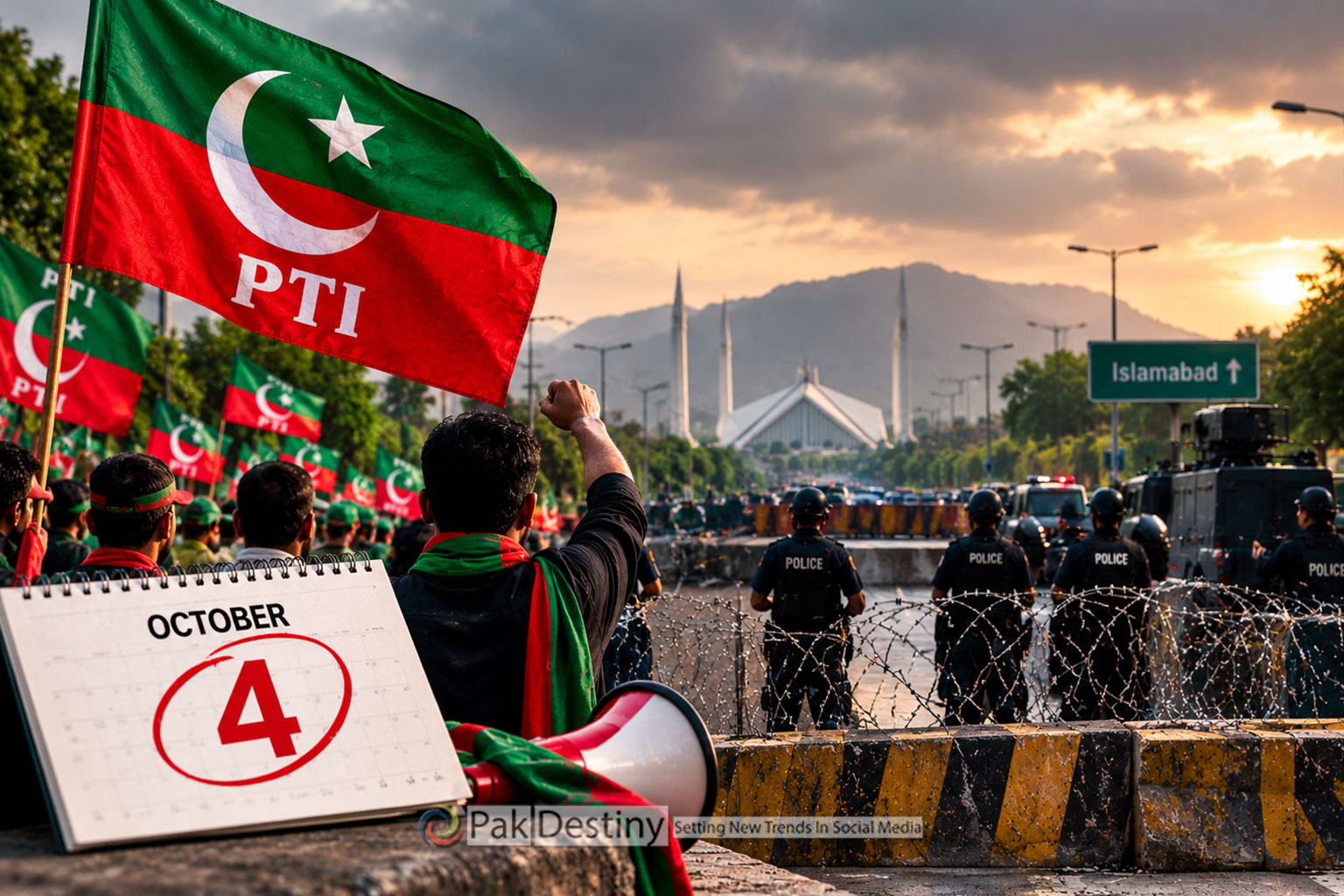
Chief Minister Sohail Afridi announced on Sept 25 that the PTI’s long march, initially scheduled for Sept 27, would instead leave Peshawar on Oct 4. He described the decision as having been unanimously taken by the party’s political committee.
The postponement did not end the confrontation.
Mr Afridi subsequently adopted a more conciliatory tone on dialogue with the federal government but warned that any attempt to obstruct the provincial government or the PTI mobilisation could have serious consequences.
At the same time, federal and provincial authorities have remained sharply divided over security, political protests and the role of the provincial administration.
The federal government has argued that public order and security must be protected, while PTI leaders maintain that their political activities are peaceful and constitutionally protected. Reuters reported that security measures around Islamabad and parts of KP had been intensified ahead of the planned mobilisation.
The result is a situation in which a political protest has become intertwined with questions of provincial administration, policing and relations between federal and provincial institutions.
The police dispute
The proposed changes to the provincial police system have added another layer to the confrontation.
The issue is significant because policing is directly connected to the provincial government’s constitutional responsibilities, while terrorism and national security involve federal institutions as well.
The reported condition that PTI should withdraw its proposed police reforms and bring its law-and-order priorities into line with federal security institutions therefore points to a deeper disagreement over who should determine the operational and strategic direction of security policy in the province.
Khyber Pakhtunkhwa faces a particularly complex security environment because of its proximity to Afghanistan and the continuing threat from militant organisations.
The federal position has increasingly emphasised coordinated security policy, while the PTI provincial leadership has insisted on its constitutional and political authority.
The question is therefore not merely about a police law. It concerns the wider balance between provincial autonomy and the requirements of national security.
A possible political bargain?
The most consequential element of the reported proposal is the suggestion that the PTI government could remain in office if the party withdraws the long march and moderates its position on policing and law and order.
If such an understanding were actually reached, it would represent a political bargain rather than simply a retreat by one side.
For the federal government, it could reduce the immediate prospect of confrontation on the streets of Islamabad.
For the PTI, retaining its elected provincial government would preserve an important institutional foothold and allow it to continue governing its strongest provincial base.
But such an arrangement would require more than an agreement between the federal government and the chief minister.
The PTI leadership would have to accept it politically, while the federal authorities would need to demonstrate that the provincial government’s constitutional space would remain intact.
Why the PTI may resist
For the PTI, abandoning the march could carry political costs.
The party has framed its mobilisation around demands including the release of its founder Imran Khan and broader grievances concerning the political and judicial system. Mr Afridi has repeatedly described the movement as a constitutional and peaceful political struggle.
The chief minister has also warned against attempts to impose Governor’s Rule.
On Sept 28, he said he was prepared to leave the Chief Minister’s House rather than compromise on what he described as his ideology, while rejecting threats of Governor’s Rule or an emergency in the province.
Consequently, any unconditional withdrawal of the march could be difficult for the provincial leadership to explain to its political base unless accompanied by a broader political understanding.
The federal government’s dilemma
The federal government, meanwhile, faces its own calculation.
Governor’s Rule could provide a mechanism for taking direct control of certain provincial functions, but it would also deepen the political confrontation with the PTI and potentially turn the constitutional provision into the centrepiece of a new political dispute.
The move could therefore shift the argument from the question of whether PTI should hold a march to whether the federal government was justified in removing or neutralising an elected provincial administration.
That would make the political stakes considerably higher.
Any formal invocation of Article 234 would consequently be expected to face intense political scrutiny and potentially judicial challenges concerning whether the constitutional conditions for such a step had actually arisen.
The danger of institutional confrontation
The central concern is that the dispute could move beyond ordinary political competition.
Pakistan’s federal structure depends on institutions at both levels being able to perform their constitutional responsibilities without turning every disagreement into an institutional confrontation.
Khyber Pakhtunkhwa presents an especially sensitive case because the province’s political administration, police, security institutions and federal authorities are dealing simultaneously with political mobilisation and a serious security environment.
A prolonged confrontation could therefore have consequences extending beyond Islamabad and Peshawar.
It could affect governance, investment, public administration and the ability of the provincial government to concentrate on security, education, health and economic issues.
The possibility of a new political understanding
The suggestion that the PTI government could continue if it abandons the march raises the possibility of a negotiated exit from the current confrontation.
Such an understanding could theoretically involve three parallel commitments.
First, the PTI could suspend or withdraw the proposed mobilisation towards Islamabad.
Second, the federal and provincial governments could establish a formal mechanism for coordination on counterterrorism and law-and-order matters.
Third, both sides could agree to resolve disputes over policing and other institutional matters through constitutional and parliamentary procedures rather than street confrontation.
Such an arrangement would not resolve the larger political conflict between the PTI and the federal government. Nor would it settle the disputes surrounding Mr Khan’s imprisonment or the party’s broader political demands.
It could, however, prevent one dispute from triggering another.
The larger question for KP
The debate ultimately goes beyond Sohail Afridi or the PTI.
Khyber Pakhtunkhwa needs political stability at a time when its security challenges remain substantial. The provincial administration needs the authority to govern, while federal institutions require effective cooperation on issues that cross provincial boundaries.
The constitutional framework provides mechanisms for dealing with institutional disputes. Article 234 is one of those mechanisms, but its use carries significant political consequences because it directly affects the functioning of an elected provincial government.
The immediate question, therefore, is whether the current confrontation will culminate in the invocation of that provision or whether political negotiations will produce an alternative.
The reported proposal offers a possible off-ramp: the PTI could reconsider the march, while the federal side could allow the provincial government to complete its constitutional tenure subject to clearer coordination on security and governance.
Whether such a formula is acceptable to either side will depend on the political price each is prepared to pay.
For now, the reported decision to impose Governor’s Rule remains a claim rather than an officially confirmed constitutional action.