— As political power increasingly collides with independent journalism, the media’s greatest test is no longer merely to report the truth — but to defend its right to do so
By Raza Ruman
The responsibility of mass media has grown manifold as the world enters an extended period of political turbulence.
Across democracies, state institutions are increasingly under pressure, while technology has made the circulation of misinformation faster and more sophisticated. In such an environment, the media cannot afford to retreat.
Its responsibility is not simply to transmit information but to defend the public’s right to accurate, independent and credible information.
It is an uncomfortable role. But it cannot be wished away.
Recent developments in the United States offer a stark reminder of what is at stake. US President Donald Trump’s decision to exclude three news organisations — CNN, MS NOW and Politico — from White House access, reportedly citing their coverage over the preceding two years, sent a disturbing message: critical reporting could carry institutional consequences.
Trump subsequently described the move as an assault on what he called “fake news”, comparing the phenomenon to a cancer afflicting America.
But the more significant story was not the administration’s attempt to control access. It was the response of the wider news industry.
In an unusual display of solidarity, major US broadcasters — ABC, CBS, CNN, Fox and NBC — jointly declared that the public has a vital interest in receiving accurate and independent information and that no administration should restrict a news organisation merely because it objects to its reporting.
That response matters.
A divided media is easier to pressure. A fragmented industry can be picked apart, organisation by organisation, journalist by journalist. But when news organisations stand together around fundamental principles, attempts to intimidate individual outlets become considerably harder.
The emergence of Trump TV after the dispute further underlines the widening confrontation between political messaging and independent journalism. The danger is not simply that governments may dislike unfavourable coverage.
The greater danger is that political power may seek to replace scrutiny with its own version of reality.
This is not exclusively an American problem.
For media organisations everywhere, particularly in countries where political and institutional pressures are already intense, the lesson is clear: restrictions imposed on one newsroom today can become restrictions imposed on the entire profession tomorrow.
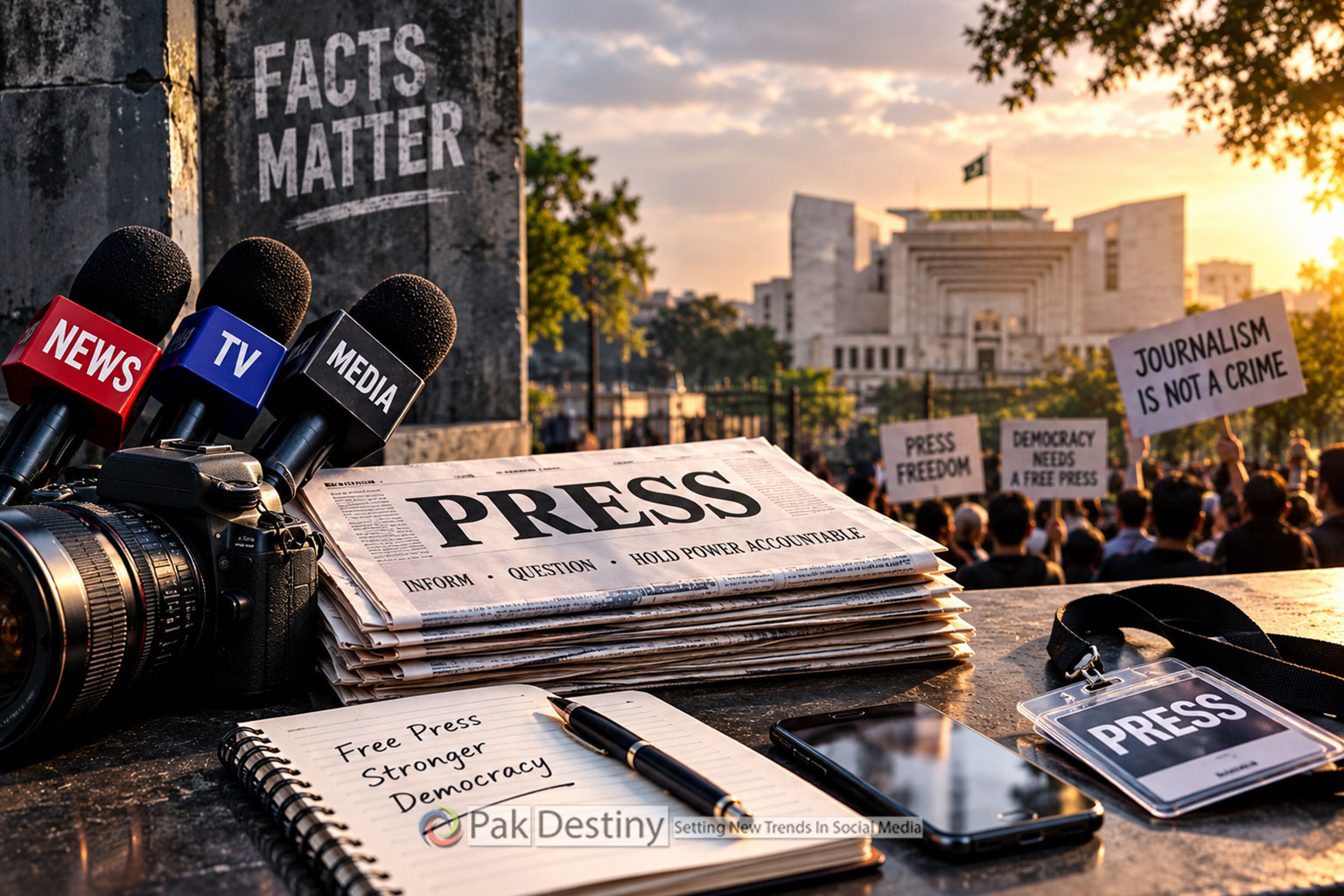
The press does not exist to please governments, opposition parties, advertisers or powerful individuals. Its mandate is to inform the public, question those in power and hold institutions accountable.
That mandate becomes most important when exercising it becomes most difficult.
The media may not always agree on everything. News organisations will compete, editorial lines will differ and mistakes will inevitably occur. But there must be common ground on one fundamental principle: independent journalism cannot survive if the industry quietly accepts the shrinking of its own space.
Silence in the face of restrictions may appear convenient in the short term. In the long run, it becomes surrender.
And for journalism, surrender should never be an option.