By Raza Ruman
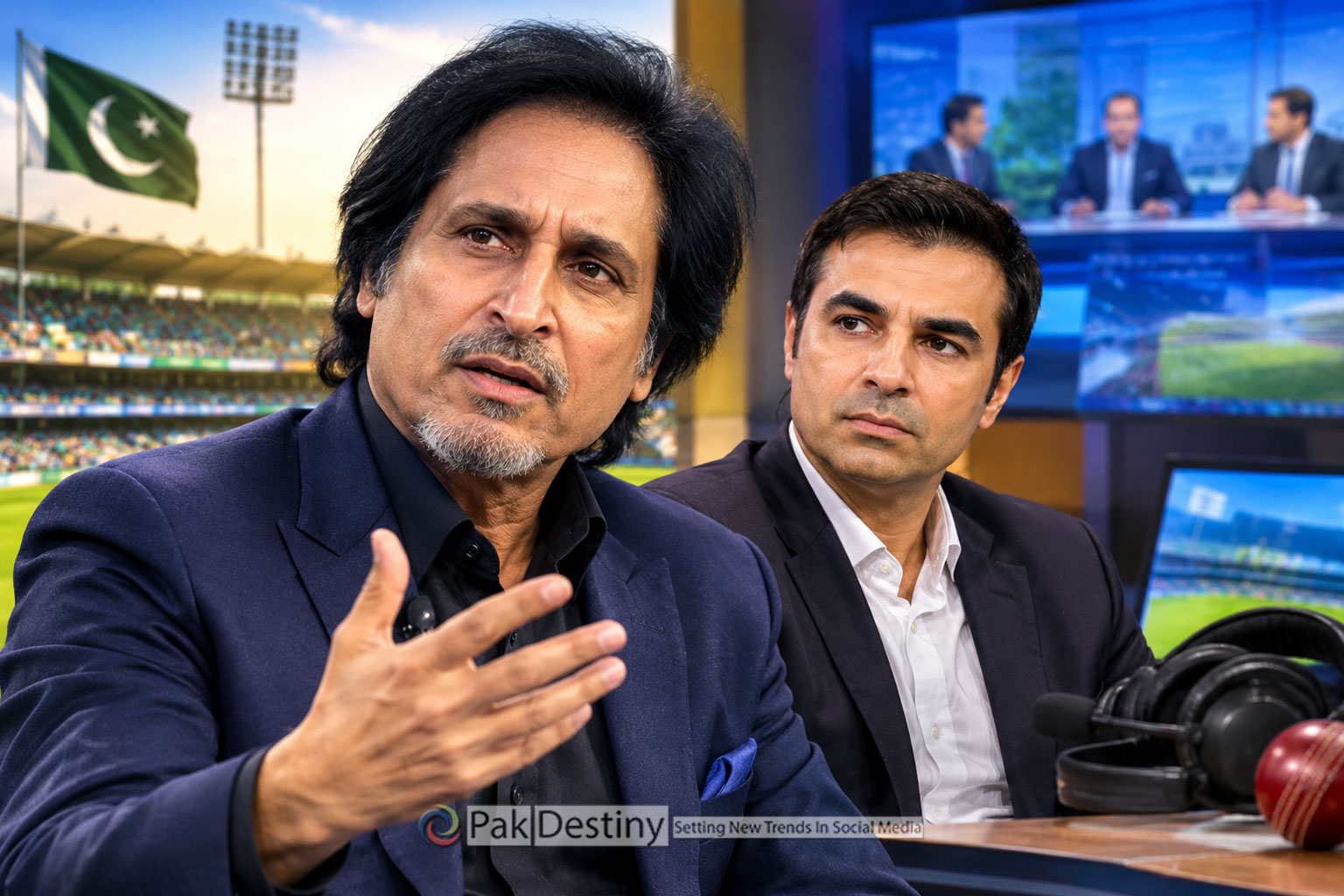
Former Pakistan Cricket Board (PCB) chairman Ramiz Raja has expressed disappointment over his exclusion from the commentary panel for matches in Pakistan, questioning why he was being kept out of commentary duties in his own country while continuing to receive offers from international cricket assignments.
Reacting to the inclusion of former Pakistan batter Salman Butt in the commentary panel, Raja said he had no regrets about missing out on the opportunity but admitted that being excluded from a match in his home country was hurtful.
“I do commentary all over the world and have also served as PCB chairman. I have no regrets about not being included in the commentary panel. Offers come to me from all over the world, and this is nothing new for me,” he was quoted as saying.
“However, it does hurt when you are kept out of commentary for a match in your own country.”
Raja, a former Pakistan captain and an established cricket commentator, said his position on the matter had remained unchanged and that those responsible for his exclusion were aware of his stance.
He maintained that while his absence from Pakistan’s commentary panel would not affect his international assignments, it raised questions about his treatment in his own country.
Raja also disclosed that he had been selected for commentary during the Bangladesh-Afghanistan Test match and had travelled to Dubai for the assignment.
“Let cricket remain just cricket,” he said, adding that those who wanted to prevent him from commentating internationally had no such power.
“At most, you can keep me out of commentary for Pakistan’s series. You cannot stop me from commentating on matches involving other countries,” he said.
Salman Butt’s inclusion in the commentary panel alongside Raja’s reported exclusion has drawn attention because of the contrasting circumstances surrounding the two former Pakistan cricketers.
Butt, Pakistan’s former captain, was banned from cricket following the 2010 spot-fixing scandal in England. He was convicted in the United Kingdom over his role in the case and later served his sentence. His return to cricket-related roles has periodically prompted debate over the rehabilitation of players involved in corruption-related offences.
Raja, meanwhile, has held several prominent positions in Pakistan cricket, including the PCB chairmanship, and has worked as a commentator for international broadcasters.
His remarks have once again brought into focus the selection of commentary panels, the treatment of former cricketers and the place of integrity and accountability in cricket-related appointments.