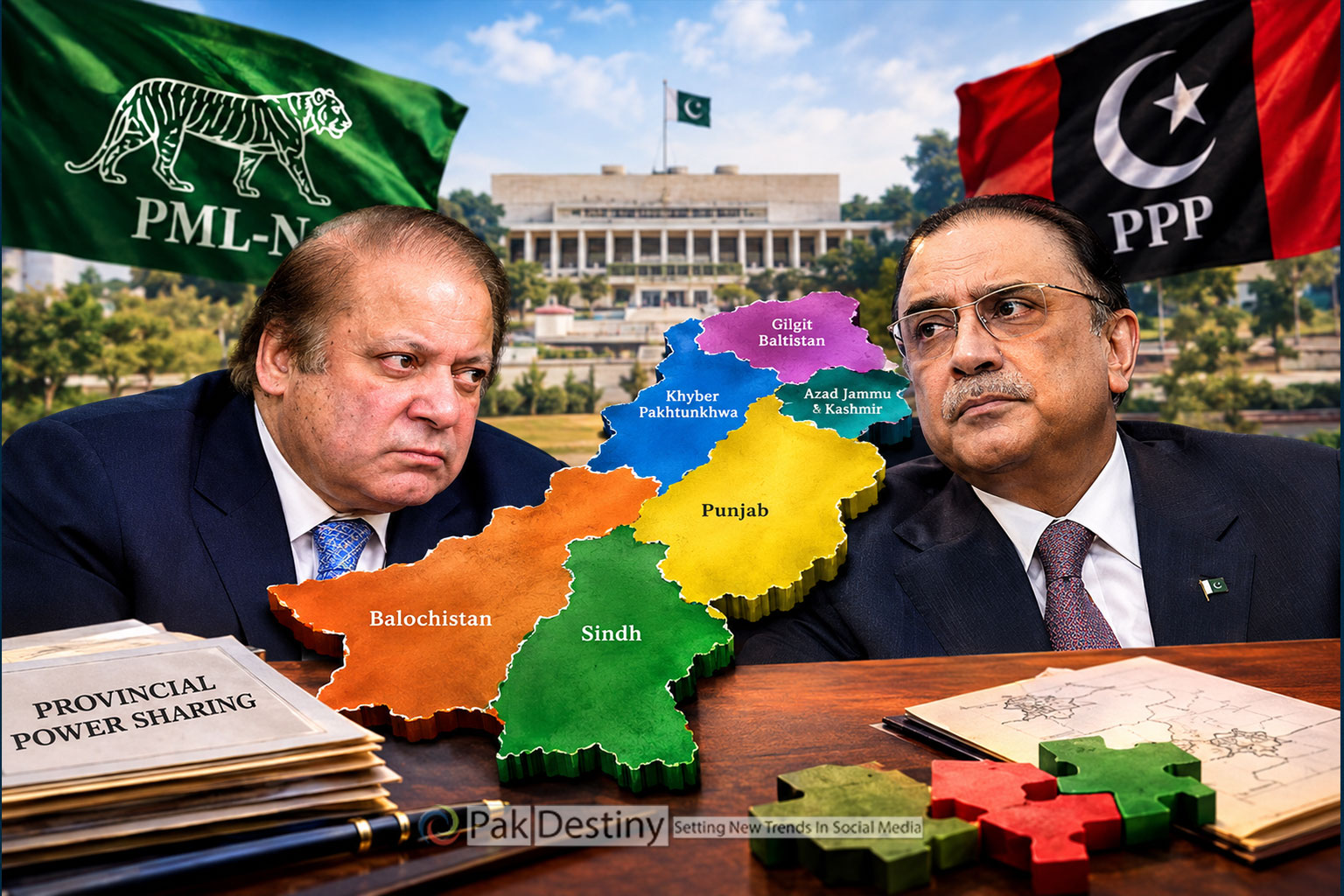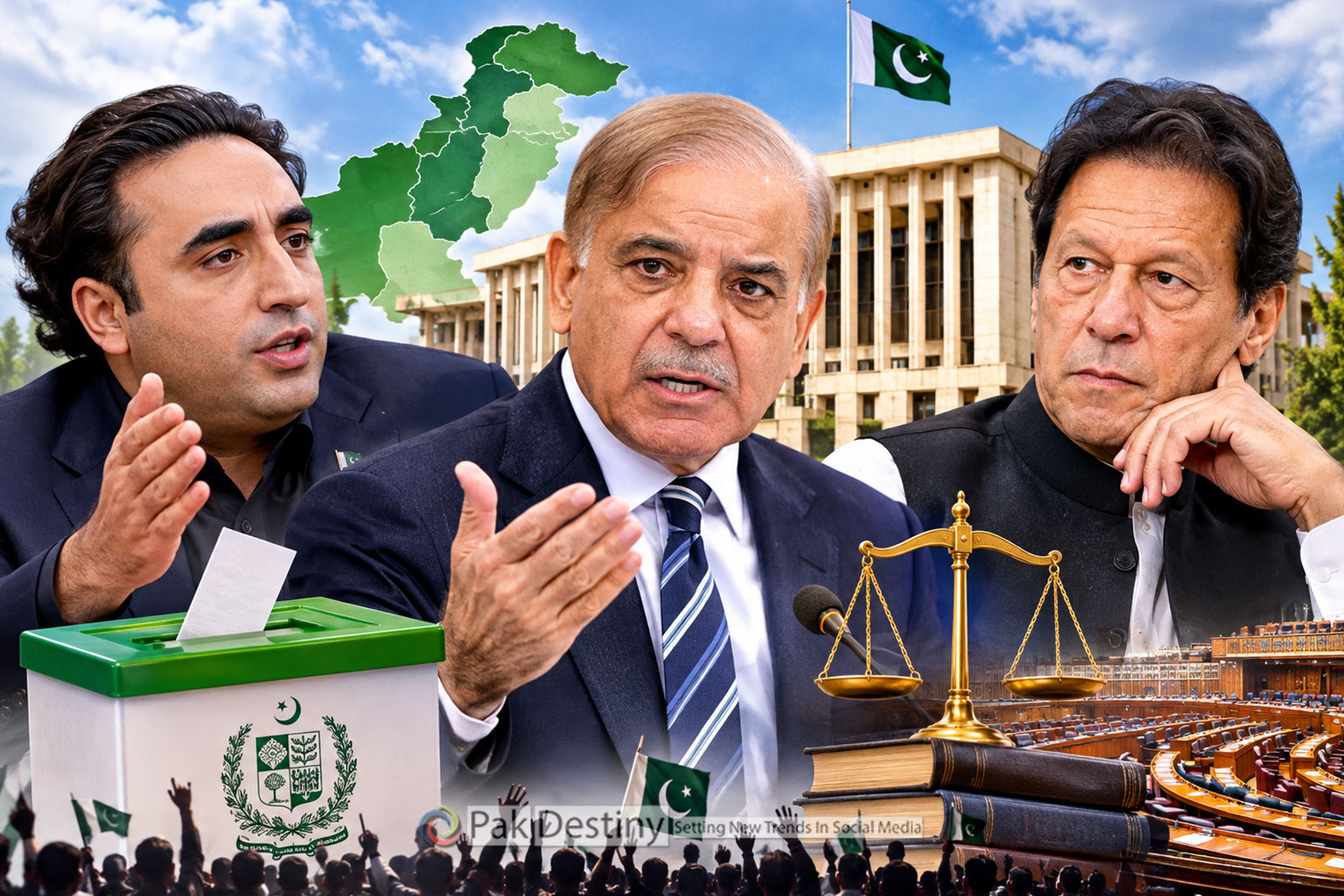
— Bilawal Bhutto-Zardari questions the government’s push for a nationwide referendum, revealing that neither the prime minister nor his cabinet has formally discussed the proposal with him or the president
By Irum Saleem
As ministers publicly champion the idea, the absence of political consensus raises questions about whether the debate is driven by genuine reform or an attempt to test the political waters.
The debate over creating new provinces in Pakistan has taken an unusual turn, with the Pakistan Peoples Party (PPP) raising questions about the government’s apparent enthusiasm for a nationwide referendum while key political stakeholders remain out of the loop.
PPP Chairman Bilawal Bhutto-Zardari has challenged the government’s argument that a referendum is the fairest way to decide the future administrative map of the country, pointing out that Pakistan’s political history offers little precedent for using the exercise to advance democratic reforms.
“In our history, a referendum has always been carried out for an undemocratic act and never a democratic one,” he remarked during his address at the Karachi Press Club on Tuesday.
More significantly, Mr Bhutto-Zardari disclosed that neither Prime Minister Shehbaz Sharif nor any member of his cabinet had discussed the question of new provinces with President Asif Ali Zardari or him.
The disclosure has exposed a curious disconnect within the ruling coalition.
While federal ministers, including those holding the interior, defence and information portfolios, have been making increasingly emphatic statements in favour of new administrative units, the PPP leadership appears to have been kept outside the consultation process.
The apparent lack of coordination raises a fundamental question: is the government genuinely pursuing a constitutional and administrative reform agenda, or is it testing political reactions through public statements before taking the leadership into confidence?
Mr Bhutto-Zardari’s remarks also appeared to reflect frustration with the prime minister’s silence on an issue being actively promoted by his ministers.
The president’s conspicuous absence from the debate is equally striking, given that any major constitutional restructuring would require the ruling coalition to reach a political understanding.
One possibility is that senior leaders in both parties, including the president, are allowing second-tier leaders and ministers to test public and political reactions before committing themselves to a formal position.
But such political manoeuvring cannot continue indefinitely. Creating new provinces in a country as populous and politically diverse as Pakistan is far more complicated than drawing new boundaries on a map.
The exercise would require extensive constitutional amendments, political negotiations, administrative restructuring and a consensus on the distribution of resources, representation and authority. Under Article 239(4) of the Constitution, a bill seeking to alter the limits of a province must be passed by a two-thirds majority of the concerned provincial assembly, in addition to the required parliamentary approvals.
A nationwide referendum, therefore, cannot simply substitute for the constitutional process.
For now, the growing debate has exposed more questions than answers. Before selling the idea of new provinces to the public, the ruling coalition will have to explain whether its leadership is even on the same page about the proposed reform.