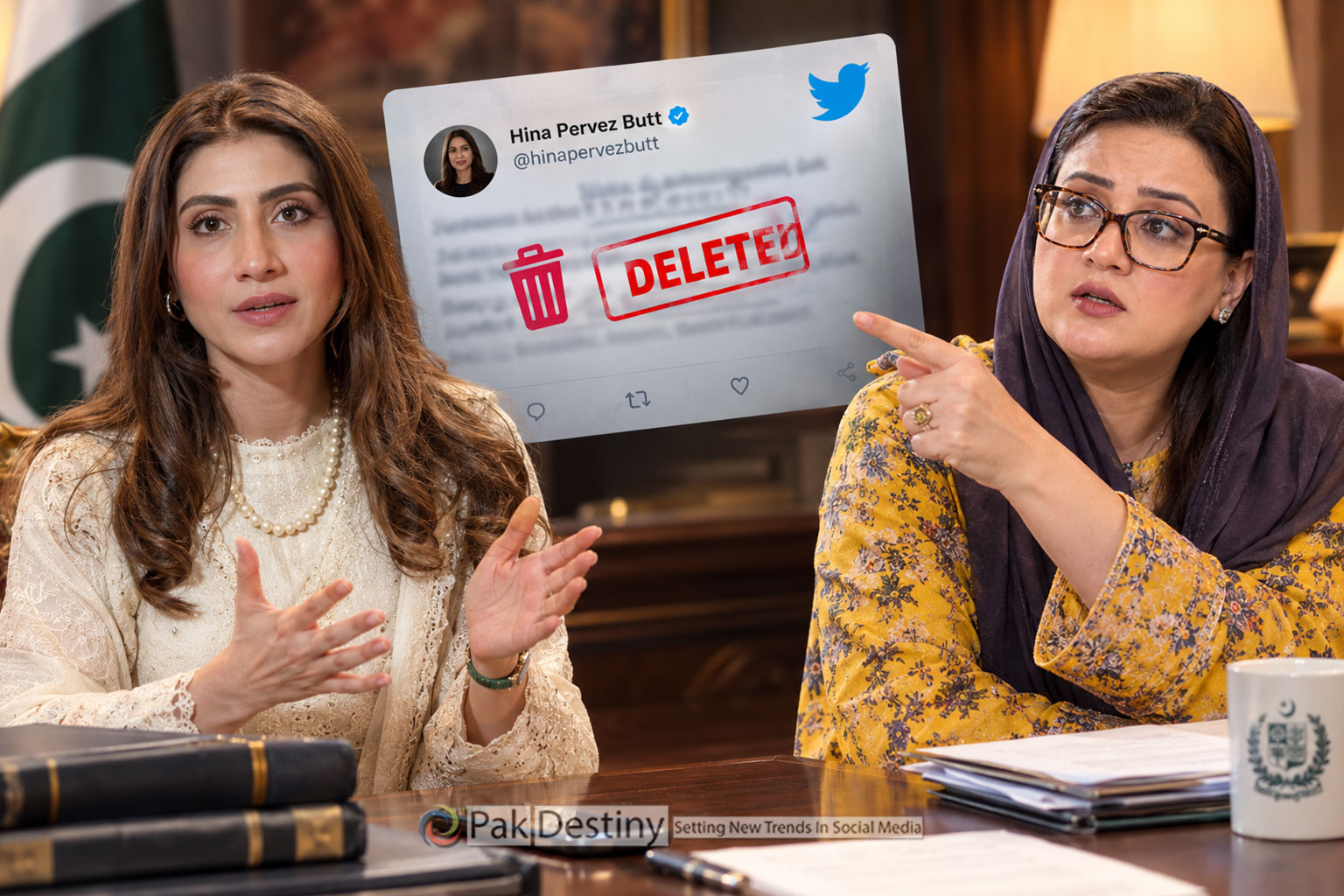
— The controversy surrounding Hina Parvez Butt’s now-deleted post is bigger than one ill-judged tweet
–It exposes an uncomfortable contradiction at the heart of the Punjab government’s messaging on crime, policing and justice.
By Irum Saleem
Hina Pervez Butt’s original message — celebrating the alleged encounter as evidence that, under Maryam Nawaz’s government, “justice is served immediately” — may have been intended as an expression of public anger over the brutal killing of a teenage boy.
But the language carried a far more serious implication: that the killing of an accused suspect by police could itself be presented as justice.
That distinction matters.
The state cannot simultaneously demand due process for victims and celebrate the death of suspects before a court has established their guilt. If an encounter is lawful, it must withstand investigation and judicial scrutiny. If it is staged, then calling it “instant justice” does not make it justice; it makes the state part of the problem.
Punjab Information Minister Azma Bokhari’s intervention was therefore significant. By distancing the chief minister from the police encounter and warning that statements such as Butt’s create trouble for her and embarrassment for the government, Bokhari was effectively drawing a line between political outrage and official state policy.
But Butt’s response shows that the political problem is not going away that easily.
She insists she was merely voicing what ordinary citizens felt after hearing about Waseem’s alleged mistreatment and death. That sentiment is understandable.
The public has every right to demand the harshest lawful punishment for those who brutalise children. Families who lose their children to violence deserve justice, not indifference.
But public anger cannot become a substitute for due process — particularly when the people exercising state power are police officers.
This is where the debate around Punjab’s Crime Control Department becomes crucial. Human rights advocates and the Human Rights Commission of Pakistan have already raised serious concerns about the department’s alleged pattern of deadly encounters.
The department, for its part, rejects such allegations as unfounded.
That dispute cannot be settled through political tweets, television statements or competing narratives. It requires transparent investigations, credible evidence and judicial oversight.
The most troubling aspect of the episode, therefore, is not that Hina Parvez Butt expressed anger. It is that the phrase “instant justice” can so easily blur the line between justice and vengeance.
For a government that wants to project itself as tough on crime, that distinction is vital. A strong state is not one that kills suspects quickly. A strong state is one that catches suspects, proves their guilt in court and secures punishment that cannot be challenged as a staged encounter.
Butt may have been speaking as a citizen. Bokhari was speaking as the government’s spokesperson.
The disagreement between them is ultimately less important than the principle at stake:
Justice is not instantaneous because someone dies. Justice is established when the truth survives scrutiny.
And if Punjab wants its much-publicised crackdown on crime to retain public credibility, every encounter resulting in death must be treated not as a victory to be celebrated, but as an event demanding answers.