By Rana Sohail Ahmad.
“Before we start learning cupping and tasting our pour-over coffee through the V60 method, your intellect needs to ask your mind and senses to be present here in order to enjoy the real essence of coffee.”
Our instructor gently instructed the group of participants.
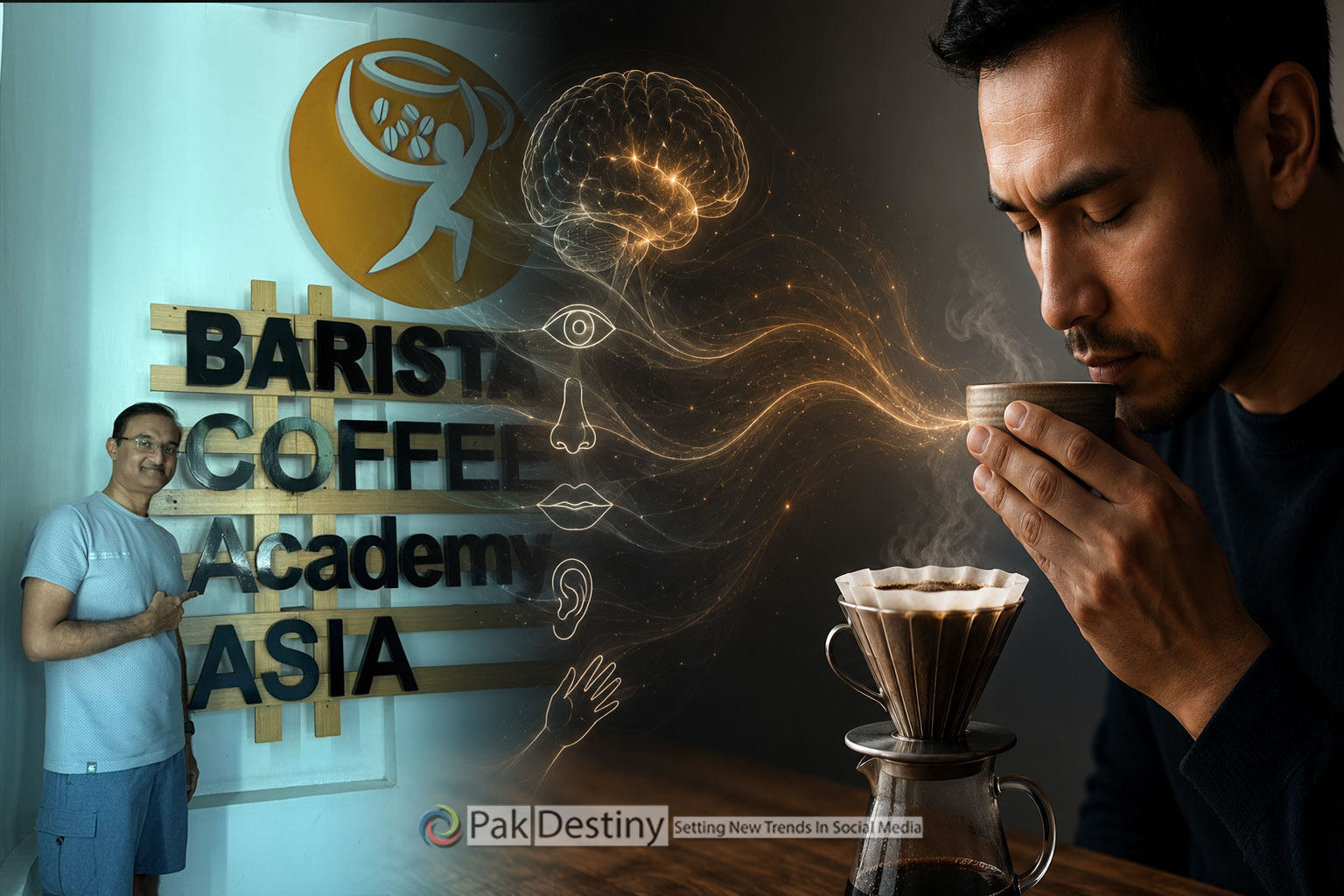
I was attending a coffee tasting course at an SCA (Specialty Coffee Association)–approved coffee institute in Manila, Philippines. A coffee cupping and tasting course trains participants to evaluate coffee quality using professional sensory techniques. It teaches how to identify aromas, flavors, acidity, body, and defects in coffee. The course helps develop a refined palate and a deeper understanding of specialty coffee standards. We were eight participants from around the world with very diverse backgrounds. Our instructor, Mr. Renc Alba, was the Philippine national Barista Champion.

“Hold your cup of coffee and realize that this moment is unique. Whatever we are experiencing with this coffee will never happen again. You may get the same coffee in the future, but today’s experience will be unique and will never repeat. We will learn to taste coffee not only with our sense of taste, but we need to use all five senses. Use your intellect to tell your mind to join your five senses to record the memory of this unique moment to the fullest. Your mind becomes efficient when you realize that this event is happening for the first time in your life, or if it is going to be the last time in your life.”

He sounded more like a philosopher at that moment.
“Feel the warmth of the cup of coffee by holding it in your hands. Appreciate the color of the coffee by seeing it, and smell the aroma of the coffee. Identify whether the aroma is earthy, nutty, fruity, or floral. Now slurp the first sip and hear the sound of it. Identify the mouthfeel and its body through the sound within your mouth. Spread the coffee across the palate of your mouth and move your tongue through it to identify the notes, spices, and body of the coffee. All your senses create new neural pathways to connect their observations with your mind. If the coffee is approved by all five senses from the first to the last sip, then this becomes an exquisite experience fully recorded and stored by the mind into long-term memory, providing happiness to the intellect and finally relaxing your inner self. This is the perfect process to appreciate a perfect cup of coffee.”
The certificate distribution and group photo ceremonies concluded, and most of the participants preferred to stay in the café, buying coffee beans and chatting with their course mates.
“Hey Renc, the coffee tasting session was mind-blowing and incredibly great. I learned a lot. But I have one question—not related to coffee, but related to your talk about the mind, senses, and intellect. When you said that your intellect should ask your mind and senses to be present at the moment of experiencing coffee, aren’t the mind and intellect the same part of the brain?”

Our course fellow, Antoinette, a 25-year-old Pinoy working in an online sales company, asked curiously.
“Intellect and mind are not the same thing. Have you noticed that most of the time your thoughts function automatically, and you don’t even control them? For example, you are reading a book for an examination to be held tomorrow. The book is in your hand, your eyes are reading the text, but your mind is thinking about a wedding event after the exams for which you need to prepare your clothes. Your intellect suddenly jumps in and reminds you about the examination, and you bring your mind’s focus back to what your eyes are providing. You may have to start reading again from the last page because your mind was virtually traveling somewhere else and was not present with your senses and intellect. In simple words, this automation of thoughts is related to your mind, and your focused thoughts are related to your intellect.”

Our barista teacher, Renc, replied calmly.
Our fellow, Mr. Arjun Mehta, a US-based Indian tech entrepreneur and IT expert, intervened with great excitement.
“It is actually quite simple to understand senses, mind, and intellect if we compare them with a computer,” he said. “Your personal computer is like the brain, which has a physical existence—the hardware. In the same way, the mind and intellect can be compared to software, which runs applications and manages the system.”

He continued,
“Now think of the keyboard and mouse as your senses. Just as these devices send input to a computer, our eyes, ears, nose, and skin send information from the outside world to the brain. The hard drive can be compared to memory storage because it saves information that can be retrieved later, much like our brain stores memories. The ROM, in my view, works like the mind, operating internally and independently to support essential functions. Finally, the RAM, together with the person operating the computer, represents the intellect. This is the part that processes information, analyzes it, and decides what action should be taken. In this way, just as the different components of a computer system work together to process data and perform tasks, the various parts of the human brain work together to understand information and guide our actions.”
“Hey Arjun, the human brain is not such a simple machine. It is far more complex than a computer. Even today, medical science continues to explore its complexity and discovers new things about it every day. Unlike computers, which are purely electronic systems, the human brain is a biochemical–electrical system where chemical signals and electrical impulses work together.”
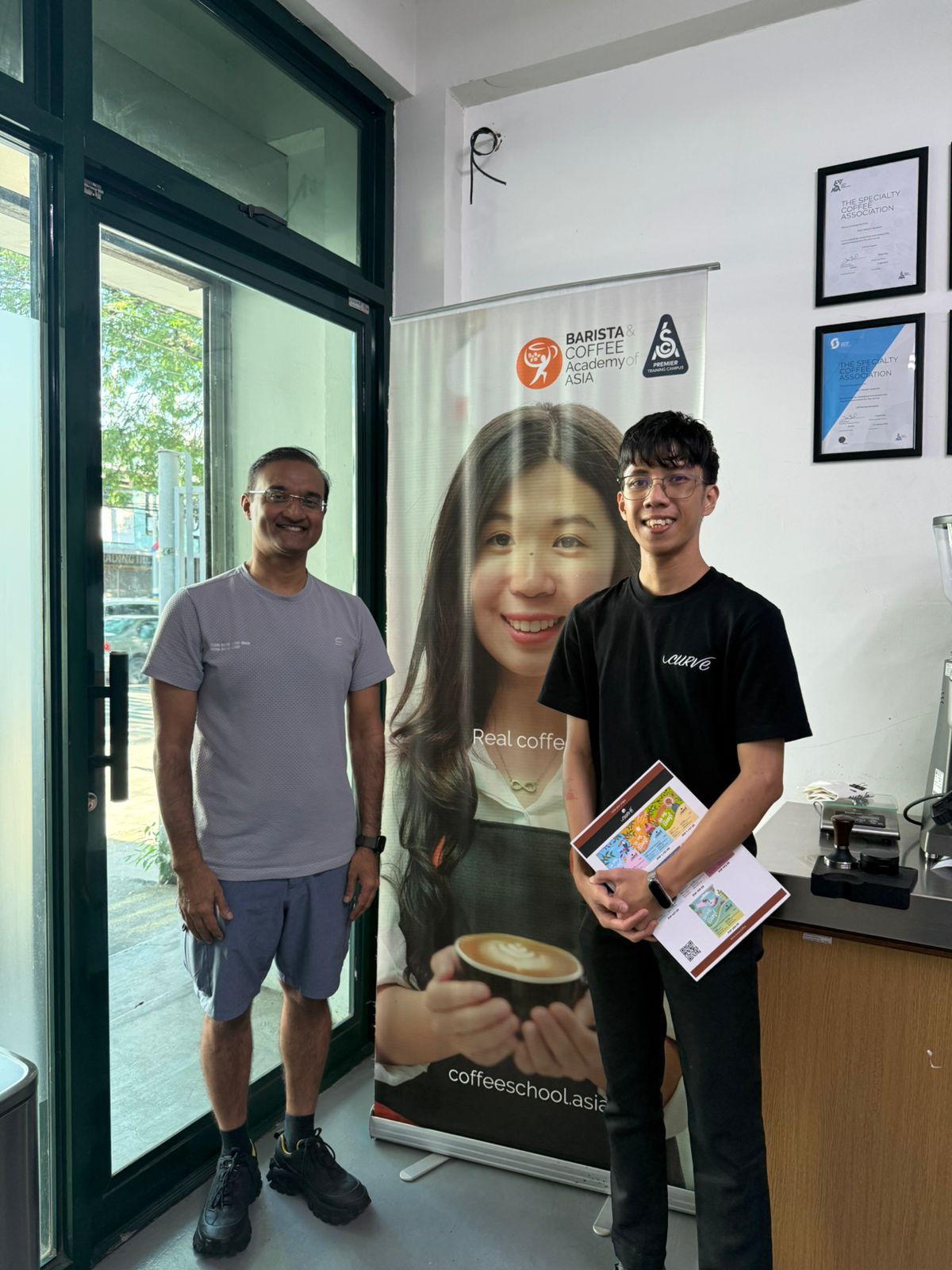
Dr. Naeem Khalid, a UK-based Pakistani medical doctor, joined the conversation as the topic was closely related to his field.
“Although the subject can involve many technical medical terms, I like to explain it in a simpler way,” he said. “I often describe the brain by dividing it into the ‘old brain’ and the ‘new brain.’ The old brain, also known as the reptilian or primitive brain, includes structures such as the brainstem, cerebellum, and basal ganglia. This part of the brain is responsible for basic survival functions like breathing, heart rate, and body temperature regulation. In simple terms, it is closely connected with the human body, whose primary role is to survive and maintain life. It also governs instinctive behaviors such as aggression, dominance, and territorial responses that help protect the body.”
He continued, “The new brain, known as the neocortex or cerebral cortex, is responsible for higher-level thinking. I often describe it in two functional parts: the mind and the intellect. The mind works closely with the senses—our eyes, ears, nose, tongue, and skin—to receive information from the outside world. It stores memories, recalls past experiences, and creates the mental background that generates cues and cravings for rewards. The intellect, however, is the part that analyzes this information and makes decisions. It evaluates what the mind presents and determines the actions the body should take. In this way, the body focuses on survival, the mind processes experiences, and the intellect guides our actions.”
“That’s too much science and technology—too hard for me to grasp. Maybe I need one more V60 coffee to understand it better,” Antoinette said, feeling perplexed after so many medical and technical terms used by Arjun and Dr. Naeem. Everyone in the group started smiling.
“Hey Antoinette, let me make it very simple for you. Medical terms can be complicated for a layperson, but understanding the basic components of our own bodies is very important if we want to deal with them properly.”

Our barista teacher Renc stepped in to help Antoinette, who had started feeling overwhelmed by the technical explanations. Smiling calmly, he continued, “Think of the brain working in three ways, which we can relate to the body, mind, and intellect. First, there is the involuntary brain that responds to signals from the body’s internal sensors—things like hunger, thirst, pain, fatigue, or changes in body temperature. These signals come from inside the body, and the brain responds automatically to maintain survival. That is why this function is closely associated with the body.
Second, there is another involuntary brain response that reacts to the five major senses—sight, hearing, smell, taste, and touch. These senses bring information from the outside world. The brain receives this information, processes it, stores it as memory, and creates impressions that can lead to desires and cravings. This function is what we relate to as the mind.
Finally, there is the voluntary brain—the part that allows us to think consciously, analyze situations, and choose how to act. This is what we call the intellect. The intellect observes what the body feels and what the mind desires, and then decides what action should be taken. In simple terms, the body sends signals, the mind experiences and reacts, and the intellect makes the final decision.”
“Yeah, that’s much better. Thanks, Mr. Renc, for explaining it in easy terms.” Antoinette was a bit relieved after the simple explanation.
“Guys, your body uses legs and vehicles to travel physically, while your mind allows you to travel virtually anywhere in time—sometimes into the future or the past. It is only your intellect that determines and asks your mind to stop this virtual travel and instead join the body and senses to enjoy and seize the moment in such a way that the moment actually seizes you, creating a real experience of happiness.”
Renc concluded and stood up.
“Let me prepare another V60 for all of us—especially Antoinette, whose intellect really deserves it now.”
The room filled with laughter and joy.

About author :
Rana Sohail Ahmad, a multifaceted author, entrepreneur, and philanthropist. With a background in Engineering and Business Administration, he’s the founder and CEO of Four thriving Global companies. Beyond his professional success, Rana is deeply interested in Psychology, History, Technology and Social sciences. He’s also an avid cyclist, yoga instructor, and health trainer. However, his most significant endeavor is the Quest of Happiness Foundation (QHF), which he founded to spread happiness and well-being. QHF conducts workshops on happiness, physical health, and career planning, especially for teenagers and university graduates, while also taking part in social initiatives like cleaning and plantation campaigns, and Book readers Club . Rana Sohail Ahmad’s upcoming book offers a unique blend of personal growth, and social responsibility, all centered around the theme of happiness with scientific and management practices.