By Wajih Ahmad Sheikh
Pakistan’s men’s hockey team has arrived in the Netherlands for the 2026 FIH Hockey World Cup, returning to the sport’s biggest stage after an eight-year absence with hopes of making a deep run in the tournament.
The Green Shirts’ return is itself significant for a country that once dominated world hockey, but their path to the knockout stage is far from straightforward, with Pakistan drawn alongside England, India and Wales in Pool D.
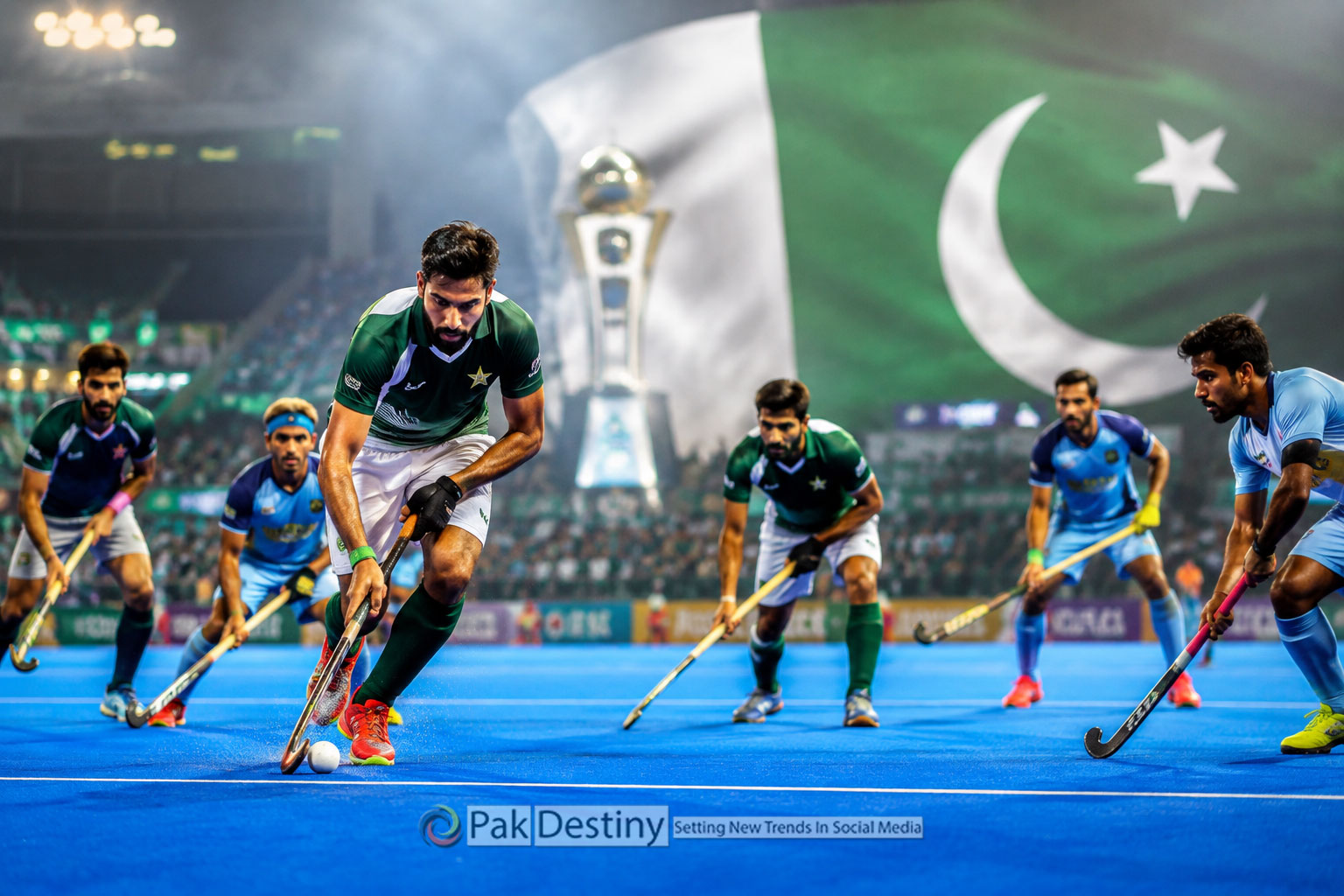
Pakistan will begin their campaign against England at the Wagener Stadium in Amstelveen on Aug 15, followed by a potentially crucial encounter with Wales on Aug 17 before the much-anticipated clash against arch-rivals India on Aug 19.
The top two teams from the pool will advance to the next phase, making every point particularly important for Pakistan.
A difficult but achievable target
On paper, England and India represent the biggest hurdles. England have named an experienced squad led by captain Zach Wallace, while India enter the tournament with considerable confidence after strong performances in the recent FIH Pro League, including victories over reigning Olympic champions the Netherlands and world champions Germany.
Pakistan, meanwhile, secured their place in the World Cup after a dramatic comeback victory over Japan in the qualifying tournament. The side trailed 3-1 in the final quarter before scoring three times in eight minutes to win 4-3 — a result that underlined both their attacking potential and fighting spirit.
Chief selector Samiullah Khan has backed Pakistan to compete with India, saying a draw against their traditional rivals could prove important in the race for qualification.
The biggest question, however, is whether Pakistan can maintain consistency against the world’s stronger sides.
Their recent international campaign has been mixed, and the team has struggled to establish itself among the leading nations. The World Cup will therefore be a major test of whether the rebuilding process has begun to produce tangible results.
Pakistan’s preparations have also been overshadowed by a last-minute change in the coaching setup. Goalkeeping coach Bob Johan Veldhof was promoted to head coach shortly before the team’s departure after Dutch coach Herman Kruis returned to the Netherlands because of a prior commitment.
The sudden change could prove challenging, particularly with Pakistan facing England in their opening match.
At the same time, the team’s familiarity with European conditions and the experience gained through international competition could work in their favour.
Wales game could hold the key
For Pakistan, the Wales fixture may be the most obvious opportunity to collect maximum points.
A strong start against England would immediately boost their prospects, but even a defeat would not necessarily end their campaign. Victory over Wales would put Pakistan in a much stronger position before the India match, where even a draw could potentially prove valuable.
The India game is likely to attract the greatest attention. Pakistan have struggled against their arch-rivals in recent years, but Samiullah believes the gap is not insurmountable and that his team can hold India to a draw.
For Pakistan, the immediate objective should therefore be clear: avoid defeat against Wales, compete strongly against England and India, and ensure that goal difference does not become a decisive factor.
The World Cup offers more than just an opportunity to reach the quarter-finals. It is a chance for Pakistan to reconnect with a competition in which it has a proud history.
Pakistan are four-time world champions, but their last title came in 1994. They missed the 2018 and 2023 editions, making this return particularly important for a sport that has gradually lost its former prominence in the country.
The FIH has also described Pakistan’s return as a significant moment, noting that the team is back at the World Cup for the first time in eight years.
A place in the knockout phase would therefore represent a significant achievement. A quarter-final appearance, or better, could provide the boost Pakistan hockey desperately needs.
The challenge is formidable, but Pakistan are not without a chance.
If they can reproduce the resilience shown against Japan, convert their penalty corners efficiently and remain disciplined defensively, the Green Shirts could yet spring a surprise in the Netherlands.
For a team returning after an eight-year absence, simply qualifying was an important step. Now Pakistan have an opportunity to remind the hockey world that their famous green shirts still belong on the game’s biggest stage.

About the author: Wajih Ahmad Sheikh is a senior journalist associated with DAWN with more than two decades.
He writes on sports for digital platforms. He is found on X @wajihsheikh
He can be reached at [email protected]