By Wajih Ahmad Sheikh
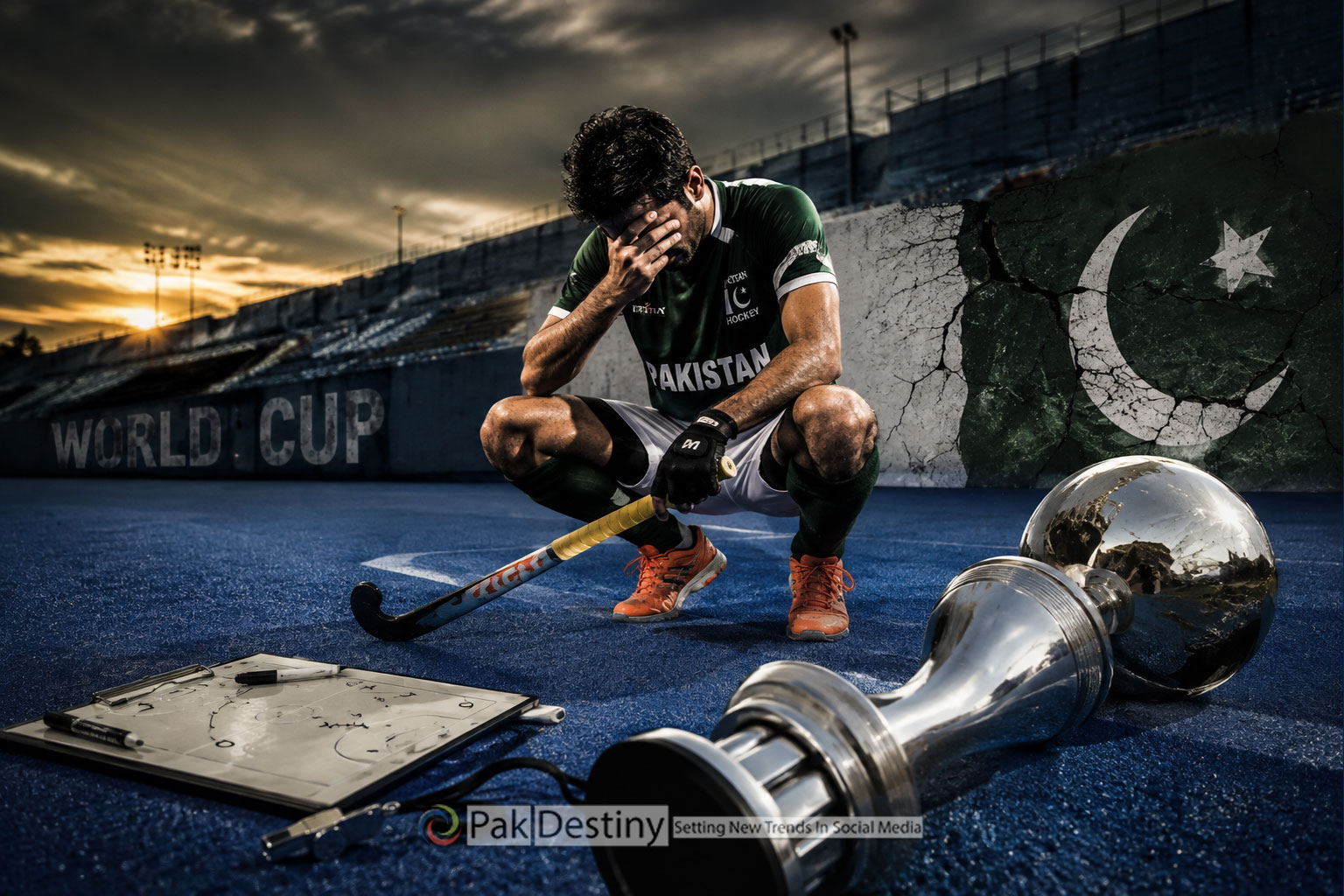
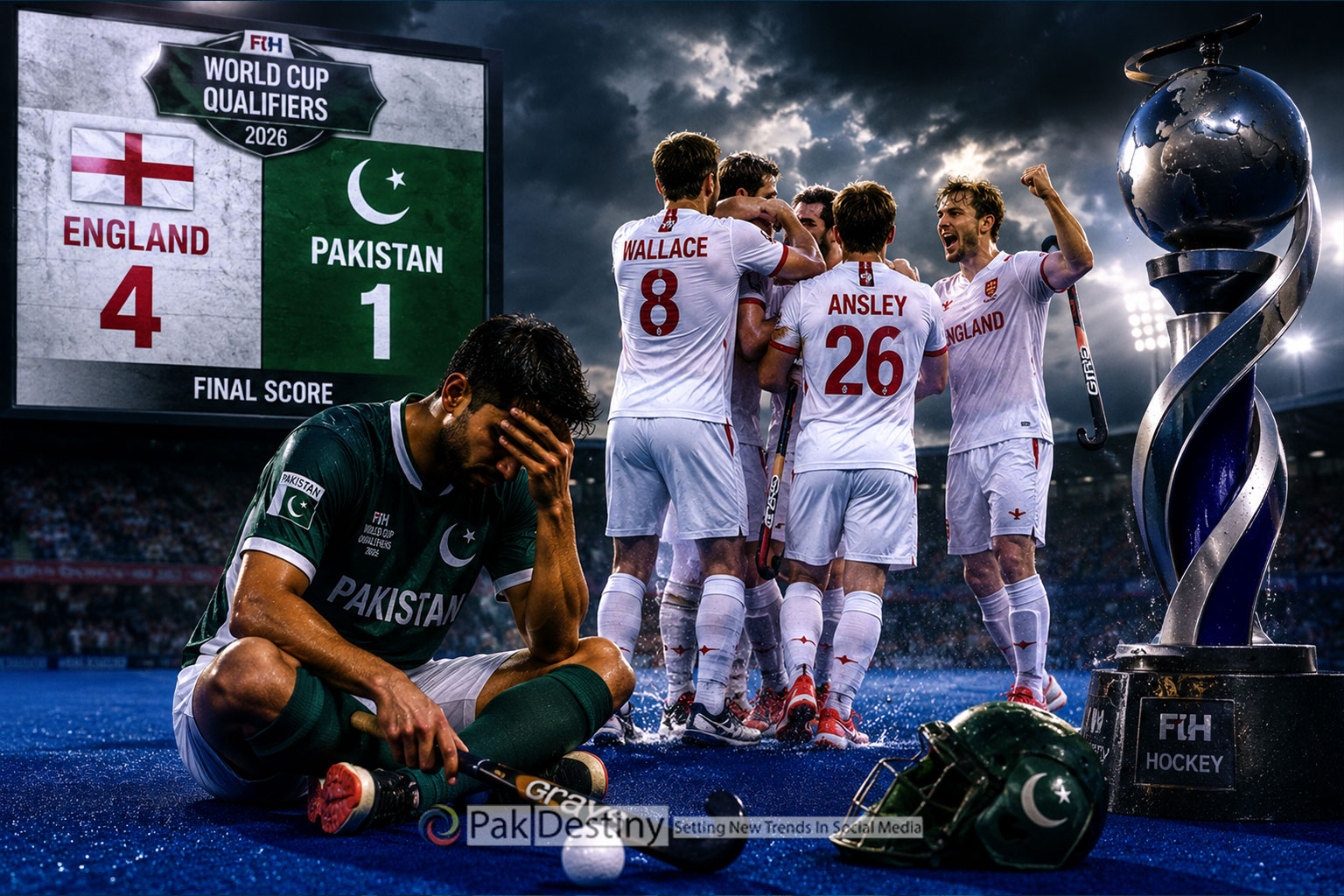
Pakistan’s return to the FIH Hockey World Cup after an eight-year absence could hardly have begun on a more difficult note, with England handing the Green Shirts a 4-1 defeat in their opening Pool D match on Saturday.
The margin of defeat has undoubtedly complicated Pakistan’s route towards the knockout stages, but it has not ended their World Cup campaign. With matches against Wales and arch-rivals India still to come, Pakistan retain a realistic opportunity to recover — although they can no longer afford another poor performance.
England’s victory was comprehensive rather than a matter of Pakistan simply being unlucky. England, ranked among the world’s leading sides, established control and eventually won 4-1, with Afraz scoring Pakistan’s only goal. The result also exposed the gap between Pakistan and the established elite after their long absence from the World Cup stage.
The defeat is particularly significant because Pool D is arguably one of the more demanding groups. Pakistan are alongside England, India and Wales. India began their campaign with a 3-1 victory over Wales, meaning Pakistan are already under pressure to collect maximum points from their remaining two matches.
Pakistan’s immediate priority is Monday’s match against Wales. The fixture has now assumed much greater importance than it would have had Pakistan secured even a point against England.
A victory would revive Pakistan’s chances of finishing among the top two in Pool D. A draw, however, would leave their qualification hopes dependent on other results and goal difference, while another defeat would make progression extremely difficult.
The good news for Pakistan is that Wales are the lowest-ranked opponent in the pool on paper, and Pakistan will have to approach the match as a virtual knockout contest.
But the danger is obvious: Wales will also see the encounter as their best opportunity to remain in contention after their opening defeat to India.
India match could decide Pakistan’s fate
Pakistan’s final pool match against India on August 19 could become the defining game of their campaign.
India have already demonstrated their ability to cope with the pressure of a World Cup opener by defeating Wales 3-1. Pakistan, meanwhile, need to improve substantially in both defence and attacking efficiency before facing their traditional rivals.
The India-Pakistan encounter is, therefore, likely to carry more than its traditional rivalry. Depending on Monday’s results, it could effectively become a qualification decider.
Pakistan can not afford to focus solely on the rivalry, however. Their first objective must be to collect three points against Wales and improve their goal difference. The 4-1 loss to England means goal difference could become an important factor if teams finish level on points.
The new World Cup format offers Pakistan a second chance
One factor working in Pakistan’s favour is the tournament’s new format.
Unlike previous editions, the 2026 World Cup does not go directly from the first pool stage to quarter-finals. The top two teams from each of the four pools advance to a second group stage. The results against the team already faced in the first pool are carried forward, and each team then plays two additional matches. The top two from each of the two second-stage groups reach the semi-finals.
This means that even a strong recovery after an opening defeat can still take Pakistan deep into the tournament.
But it also makes the opening match more consequential. If Pakistan qualify from Pool D, their defeat against England could continue to affect their position in the next phase because the result against the team that advances with them is carried forward.
A worrying backdrop to the defeat
Pakistan’s opening loss can not be viewed in isolation.
The national side qualified for the World Cup by finishing runners-up behind England in the World Cup Qualifier in Egypt in March. England defeated Pakistan 4-1 in that final as well.
Saturday’s identical scoreline, therefore, suggests that the gap between the two teams has not been closed in the intervening months.
Pakistan’s recent international record has also been inconsistent. They finished runners-up in the 2025 Nations Cup and struggled in the 2025-26 FIH Pro League, where they finished ninth among nine teams.
That makes expectations of a medal finish at this World Cup difficult to justify at this stage.
Yet Pakistan should not be written off
Pakistan have historically been capable of producing performances far beyond expectations in major tournaments, particularly when pressure and national attention increase. Their qualification itself showed resilience: they came from behind twice to beat Malaysia 5-3 in the qualifier before reaching the final.
Moreover, the team has now experienced the intensity of a World Cup match after an eight-year absence. The coaching staff can use the England defeat to identify defensive weaknesses, improve penalty-corner execution and address the lapses that allowed England to build a decisive advantage.
The key question is whether Pakistan can transform that experience into an immediate response.
What Pakistan need to do
First, beat Wales. A convincing victory would restore confidence and potentially improve goal difference.
Second, compete far more effectively against India. Pakistan do not necessarily need to beat India if other results go their way, but relying on permutations would be dangerous.
Third, improve defensive discipline. Conceding four goals against England leaves little margin for error in a tournament where goal difference may prove decisive.
Fourth, make penalty corners count. Against top opposition, Pakistan cannot afford to waste limited scoring opportunities.
Finally, avoid another slow start. The England match demonstrated the cost of allowing a superior opponent to establish control early.
Prospects: difficult, but not hopeless
At this stage, Pakistan’s prospects should be described as challenging rather than finished.
The route to the semi-finals has undoubtedly become harder, and a medal appears a distant prospect based on the team’s recent form. But the new World Cup format gives Pakistan an opportunity to recover, provided they finish among the top two in Pool D.
The Wales match is now the immediate test. If Pakistan respond with a strong victory, the England defeat could eventually be remembered as a setback rather than the beginning of another disappointing World Cup campaign.
If they fail to beat Wales, however, their return to the world’s biggest hockey stage could become little more than a short-lived comeback.
For a team returning to the World Cup after eight years, the next 60 minutes against Wales may therefore be more important than the opening 60 minutes against England.
Pakistan’s World Cup is not over. But after the 4-1 defeat, there is virtually no room left for another mistake.

About the author: Wajih Ahmad Sheikh is a senior journalist associated with DAWN with more than two decades.
He writes on sports for digital platforms. He is found on X @wajihsheikh
He can be reached at [email protected]