By Raza Ruman
A 15-year-old boy was allegedly run over in Multan. Days later, the man accused of killing him was himself killed in a police encounter.
Between the two deaths lies a troubling question: where does justice end and extrajudicial punishment begin?
The story began with a frightened teenage boy running for his life.
Fifteen-year-old Waseem Abbas, an orphan from Muzaffargarh who was working as an electrician, was allegedly being pursued after a dispute with his employer, Tauqeer Nazir.
CCTV footage reportedly captured the teenager running as a vehicle followed him. Moments later, the vehicle allegedly struck him.
Waseem was dead.
The images triggered outrage across social media. Thousands demanded that whoever was responsible be arrested and punished.
Police arrested Tauqeer Nazir and registered a murder case.
For a brief moment, it appeared that the case would follow the ordinary path of criminal justice: investigation, evidence, prosecution and trial.
Then everything changed.
Tauqeer was dead too.
Police said he escaped custody and was later involved in an armed encounter near Bahawalpur.
According to the police version, officers attempted to stop two men on a motorcycle, shots were fired, and Tauqeer was killed.
The accused who had been expected to stand trial would never enter a courtroom again.
And Pakistan was left with a question far more uncomfortable than the original crime:
Was this justice — or another killing outside the courts?
A boy who never got his day in court
Waseem’s story is heartbreaking precisely because he was so young.
He was reportedly an orphan and had been sent to learn electrical work. Instead, his life ended violently.
The allegations against Tauqeer were serious. The FIR reportedly described a pursuit in which Waseem tried to escape before being struck by a vehicle.
The CCTV footage became the most powerful element of the case in the public imagination.
People did not need a courtroom to become angry.
They saw a child running.
They saw a vehicle following him.
And then they heard that the boy was dead.
Public anger quickly turned into demands for immediate punishment.
But the criminal justice system is supposed to work differently.
An accusation is not a conviction.
Evidence must be tested.
Witnesses must be heard.
The accused must have the opportunity to defend himself.
And a judge must decide guilt.
That process may be slow.
It may be frustrating.
But without it, the state risks turning suspicion into punishment.
Then came the encounter
Tauqeer’s arrest appeared to signal that the legal process had begun.
He was produced before a magistrate and police obtained physical remand for investigation.
Then came the news that he had allegedly escaped.
Soon afterwards, police announced that he had been killed in an encounter.
The timing immediately raised questions.
How could a murder suspect under police custody escape?
Who was guarding him?
Where exactly did the escape occur?
How did he reach the place where the encounter allegedly took place?
And why was an accused man, whose guilt had not yet been established in court, suddenly beyond the reach of the courts?
These questions are not an attempt to minimise Waseem’s death.
They are precisely the questions that arise when the state takes responsibility for someone’s death.
The tweet that ignited another controversy
The public debate became even more intense after PML-N politician Hina Parvez Butt appeared to celebrate the development on social media, writing that this was “Maryam Nawaz’s government, where swift justice is delivered.”
The post was later deleted following criticism.
That single social-media post captured the central conflict surrounding the case.
For some, the death of the accused looked like immediate accountability.
For others, describing an encounter as “justice” before an independent investigation amounted to normalising extrajudicial killing.
The distinction is fundamental.
Justice is delivered by a lawful process.
A police encounter is an event that must itself be investigated.
When public anger becomes state power
Pakistan has seen countless cases in which public outrage has demanded immediate punishment.
Sometimes the anger is understandable.
Sometimes it is justified.
But the state is held to a higher standard precisely because it possesses overwhelming power.
A private citizen cannot legally decide that someone is guilty and execute them.
Neither should the state be allowed to bypass the courts merely because the public believes an accused person deserves death.
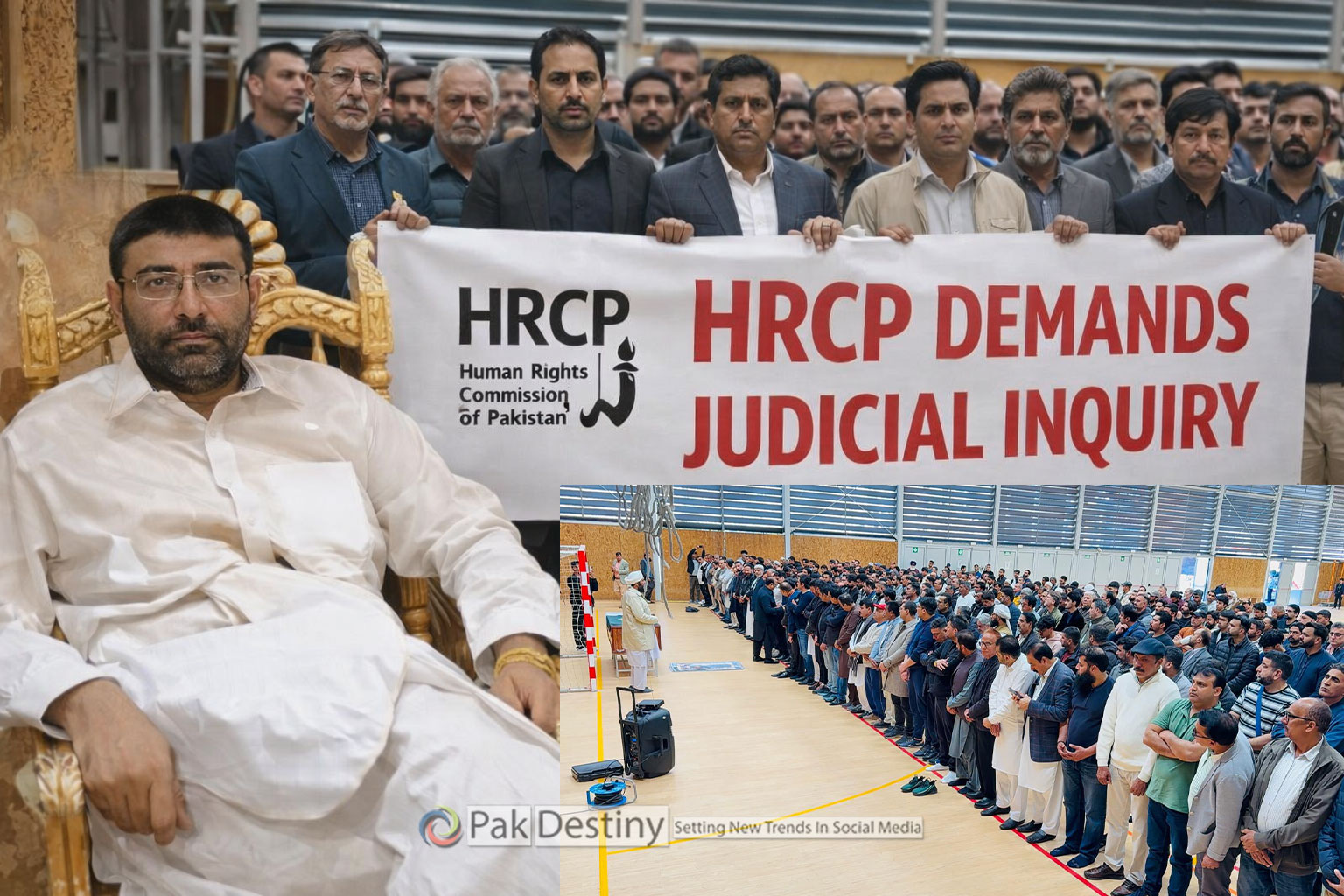
That is why human-rights organisations have called for an independent investigation into Tauqeer’s death.
The Human Rights Commission of Pakistan has expressed concern over the alleged extrajudicial killing and called for transparency.
The question is therefore no longer simply whether Tauqeer was responsible for Waseem’s death.
The question is whether the state followed the law after arresting him.
The principle of due process does not depend on whether society likes the accused.
It exists precisely for the people society dislikes.
If Tauqeer was guilty, the evidence should have established it.
If he was innocent, the courts should have protected him.
And if police genuinely encountered armed resistance, an independent investigation should be able to establish exactly what happened.
Anything less leaves unanswered questions hanging over both deaths.
The child labour question
There is another story buried beneath the headlines.
Why was a 15-year-old orphan working under circumstances that allegedly exposed him to danger?
Who was responsible for his welfare?
Who placed him with the employer?
Was anyone monitoring his working conditions?
Did anyone know that he allegedly wanted to leave?
And why did a child have to run for his life before anyone intervened?
The tragedy therefore goes beyond one alleged murder.
It raises questions about vulnerable children, orphanages, child labour and the responsibilities of institutions that place young people into workplaces.
Waseem’s death should not simply become another viral video that disappears from public memory.
The questions Pakistan deserves answered
The authorities now owe the public a clear account.
How did Tauqeer escape custody?
Who was responsible for him at the time?
Was the escape recorded on CCTV?
Who accompanied him after the alleged escape?
What evidence proves the circumstances of the encounter?
Were the weapons allegedly used against police recovered?
Was a forensic examination conducted?
How many shots were fired by police?
How many were fired by the suspects?
Were independent witnesses present?
And perhaps the biggest question:
Why did an accused person die before a court could determine whether he was guilty?
—
Justice must survive the anger
Waseem Abbas deserved justice.
There is no argument about that.
He was a 15-year-old child whose life was cut short in circumstances that demand a full and impartial investigation. His family deserves more than outrage, headlines or promises. They deserve the truth about what happened to him and accountability for anyone responsible.
But justice for Waseem cannot mean abandoning the very legal principles that are supposed to protect every victim and every accused person.
If Tauqeer killed Waseem, then he should have been convicted and punished according to law.
If the police encounter was genuine, an independent investigation should confirm it.
And if it was not, those responsible must themselves face the law.
Otherwise, Pakistan risks replacing one tragedy with another.
The most disturbing possibility is not that one man died.
It is that society may become comfortable with the idea that a suspected criminal does not need a trial if the public already believes him guilty.
That is not justice.
That is the beginning of a system where the verdict comes first and the evidence later.
Waseem Abbas cannot speak anymore.
Tauqeer Nazir cannot speak anymore.
So now the state must speak — not through slogans, not through tweets, and not through triumphalism.
It must speak through evidence, transparency and law.
Because the final measure of justice is not how quickly someone dies.
It is whether the truth survives the process.