— Pakistan’s effort to reassure Iran over its defence agreement with Saudi Arabia and Türkiye highlights a larger question: can regional powers overcome deep mistrust and build their own collective security architecture?
By Zulqernain
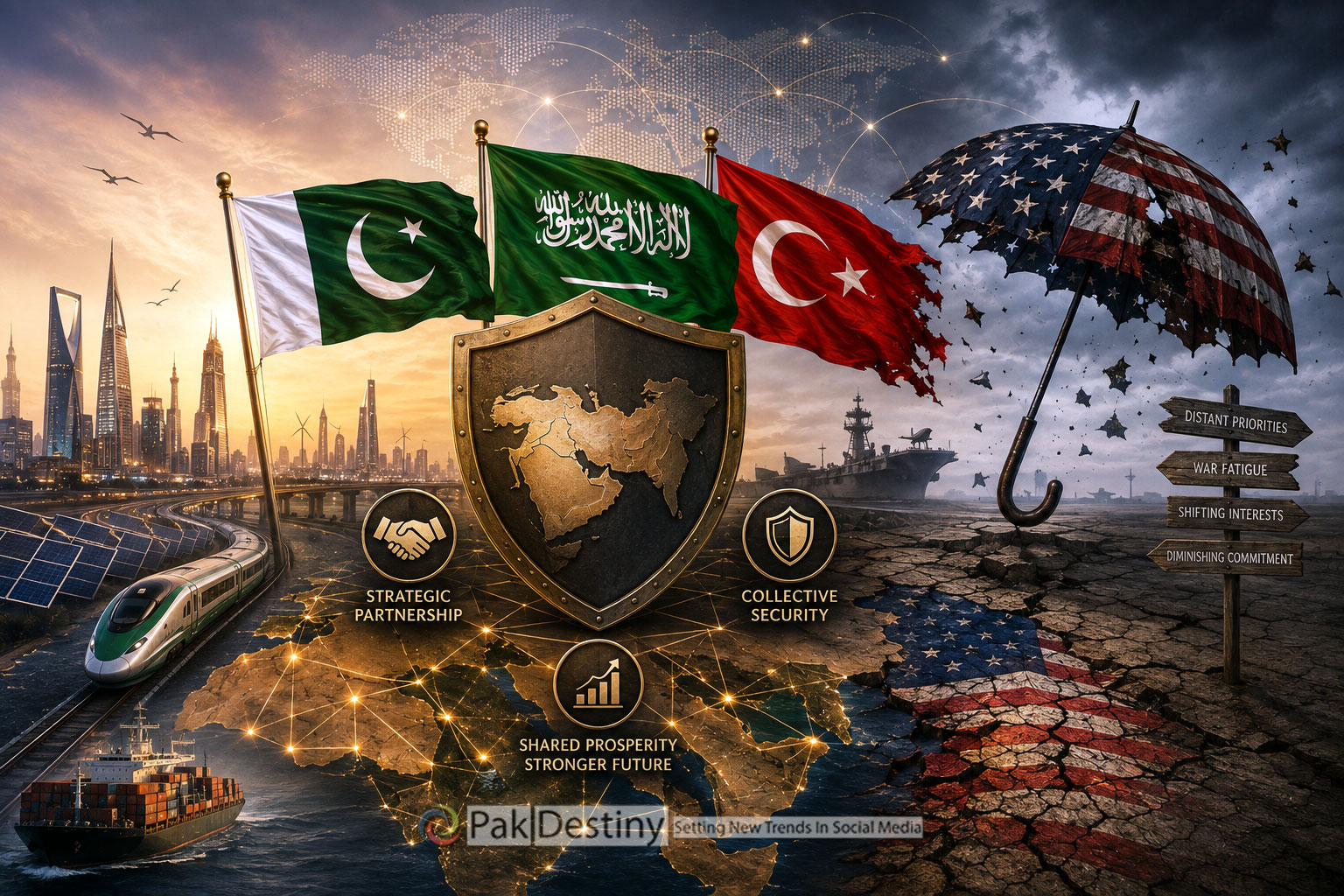
The Makkah Joint Defence Agreement between Pakistan, Saudi Arabia and Turkiye was conceived as a pact for mutual defence.
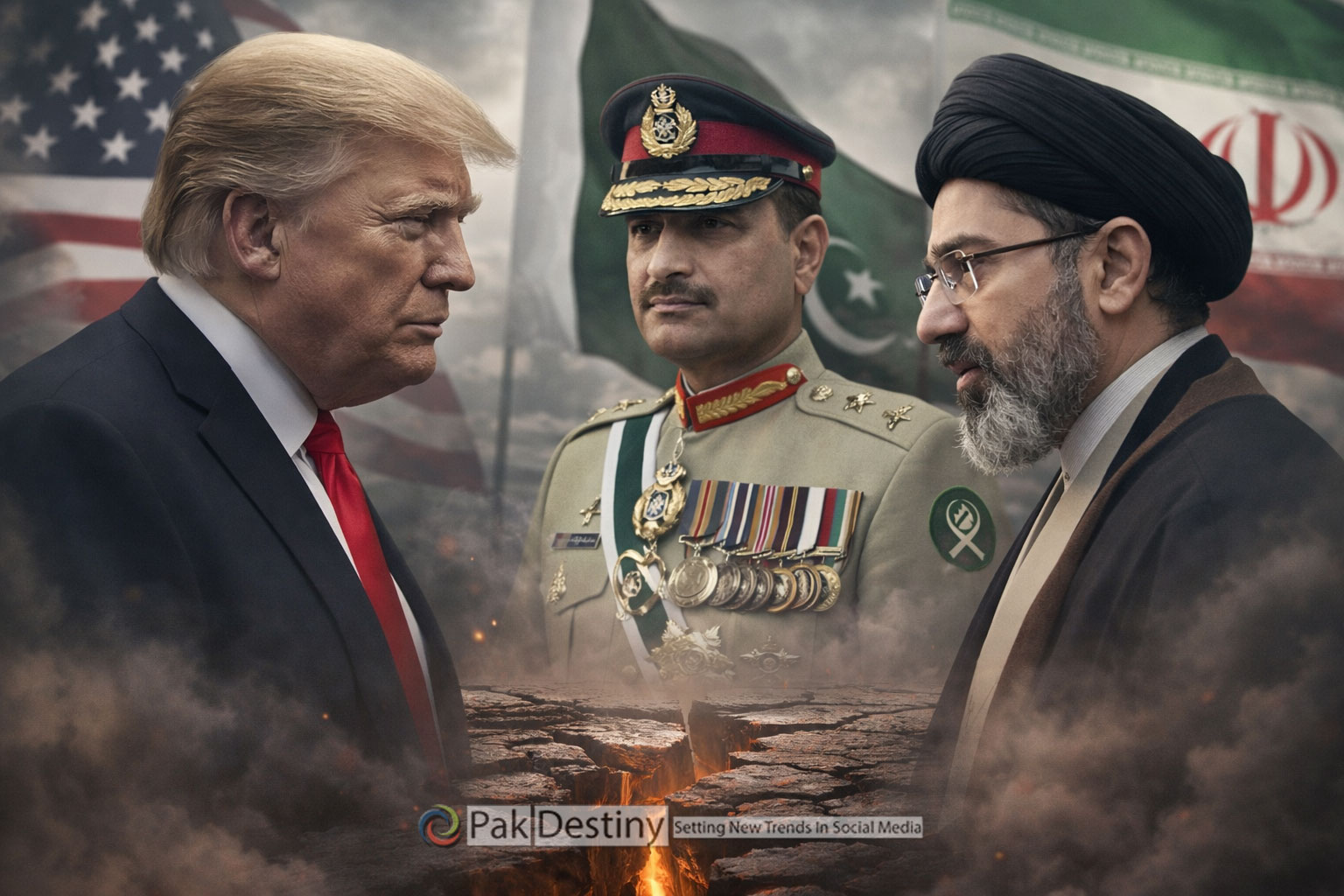
Yet its most consequential test may lie not in deterring an external attack, but in convincing Iran that the emerging security arrangement is not directed against it.
Pakistan appears acutely conscious of this sensitivity.
Foreign Minister Ishaq Dar has told his Iranian counterpart, Abbas Araghchi, that the agreement is “not an instrument of confrontation”, while Prime Minister Shehbaz Sharif has described it to the cabinet as an arrangement “entirely for defence purposes”.
Tehran, for its part, appears to have taken note of the assurances.
An Iranian foreign ministry spokesman said there was no reason to believe the agreement was intended to encircle Iran, while arguing that the pact reflected a broader realisation among regional states that they could not indefinitely depend on the American security umbrella.
That response is significant. The principal concern surrounding the Makkah agreement stems from its mutual-defence clause, under which an attack on one member is to be treated as an attack on all. Given the recent escalation between Iran and the United States and attacks on American military assets in Saudi Arabia and other Gulf states, questions naturally arose over whether the pact could eventually draw its members into a confrontation with Tehran.
The clarifications from Islamabad are therefore important. But they also point towards a much bigger strategic opportunity.
From defence pact to regional architecture
The Middle East has long suffered from a security paradox: countries that share geography, economic interests and many common threats remain divided by deep strategic mistrust, while their security arrangements continue to depend heavily on extra-regional powers.
The Gulf states have traditionally relied on the United States for their security. Iran, meanwhile, has regarded the American military presence in the region as a fundamental threat. Israel’s repeated military operations against Iran and other regional actors have further complicated an already volatile environment.
The result is a cycle in which each side seeks greater security by strengthening military alliances, while those very alliances deepen the insecurity of its rivals.
The Makkah agreement could either reinforce that cycle or become the beginning of something different.
Turkish President Recep Tayyip Erdogan’s suggestion that the pact is open to other countries is particularly noteworthy.
If the arrangement eventually evolves beyond its three founding members and includes Iran or other major regional states, it could become the foundation of a genuinely regional security mechanism.
But that would require the signatories to move beyond the traditional logic of military blocs.
Pakistan and Turkiye’s unusual position
Pakistan and Turkiye are perhaps better placed than many other states to attempt such diplomacy.
Both maintain strategic relations with Saudi Arabia while also retaining channels of communication with Tehran. Islamabad, in particular, has repeatedly sought to avoid becoming a party to rivalries between Iran and the Arab Gulf states.
That diplomatic space could now become an asset.
Rather than presenting the Makkah agreement as a new anti-Iran alliance, Pakistan and Turkiye could work to gradually transform it into a broader confidence-building mechanism. This would require transparency over its objectives, regular consultations with neighbouring countries and, eventually, mechanisms for crisis communication.
The first step, however, would be to address the most immediate sources of mistrust.
Iran could, for example, consider reopening the Strait of Hormuz as a confidence-building measure.
The continued disruption or closure of the strategic waterway carries consequences far beyond Iran’s confrontation with the United States, threatening Gulf economies and global energy markets.
The Arab Gulf states, on the other hand, could provide assurances that their territories will not be used by outside powers to launch attacks against Iran.
Such reciprocal commitments would not resolve the underlying disputes overnight. But they could begin to create the trust necessary for a broader regional dialogue.
A post-American Middle East?
The larger question is whether the Middle East is approaching a point where regional states will have to assume greater responsibility for their own security.
For decades, the US military presence has provided the ultimate security guarantee for several Gulf monarchies. But geopolitical priorities are changing, and regional countries cannot assume indefinitely that Washington will remain willing or able to provide the same level of military protection.
That possibility makes indigenous regional security arrangements increasingly relevant.
A functioning regional security architecture would not necessarily require the withdrawal of the United States or the abandonment of existing alliances. Rather, it would mean that regional states themselves develop mechanisms to prevent conflicts, manage crises and collectively deter aggression.
The Makkah pact could provide an initial template — but only if it remains open rather than exclusive.
The Israel factor
There is also another strategic reality that may eventually push regional states towards greater cooperation: Israel’s expanding military reach.
Israel has attacked Iran and targets linked to its allies, but it has also struck countries regarded as close to Washington, including Qatar.
This demonstrates that alignment with the United States does not necessarily insulate a regional state from military action.
For Arab states, Iran and other regional powers, this presents a shared security dilemma.
A credible regional defensive arrangement could therefore evolve into something larger than a conventional military alliance.
If countries collectively make clear that aggression against any regional state will carry a coordinated political, economic and defensive response, the calculations of potential aggressors could change.
The real test
The Makkah agreement’s ultimate significance will not be determined by the number of weapons or troops committed to it. Its real test will be whether it becomes another exclusive bloc in the Middle East’s fragmented security system — or the nucleus of a more inclusive regional order.
For now, Pakistan’s reassurance to Iran is a useful beginning.
The real opportunity lies in taking the next step: turning a three-country defence arrangement into a platform for dialogue among Saudi Arabia, Iran, Turkiye, Pakistan and the wider Gulf.
The Middle East does not need another rivalry-driven alliance. It needs a security system in which its countries no longer have to choose between competing external patrons — and in which an attack on one does not automatically make the entire region a battlefield.