
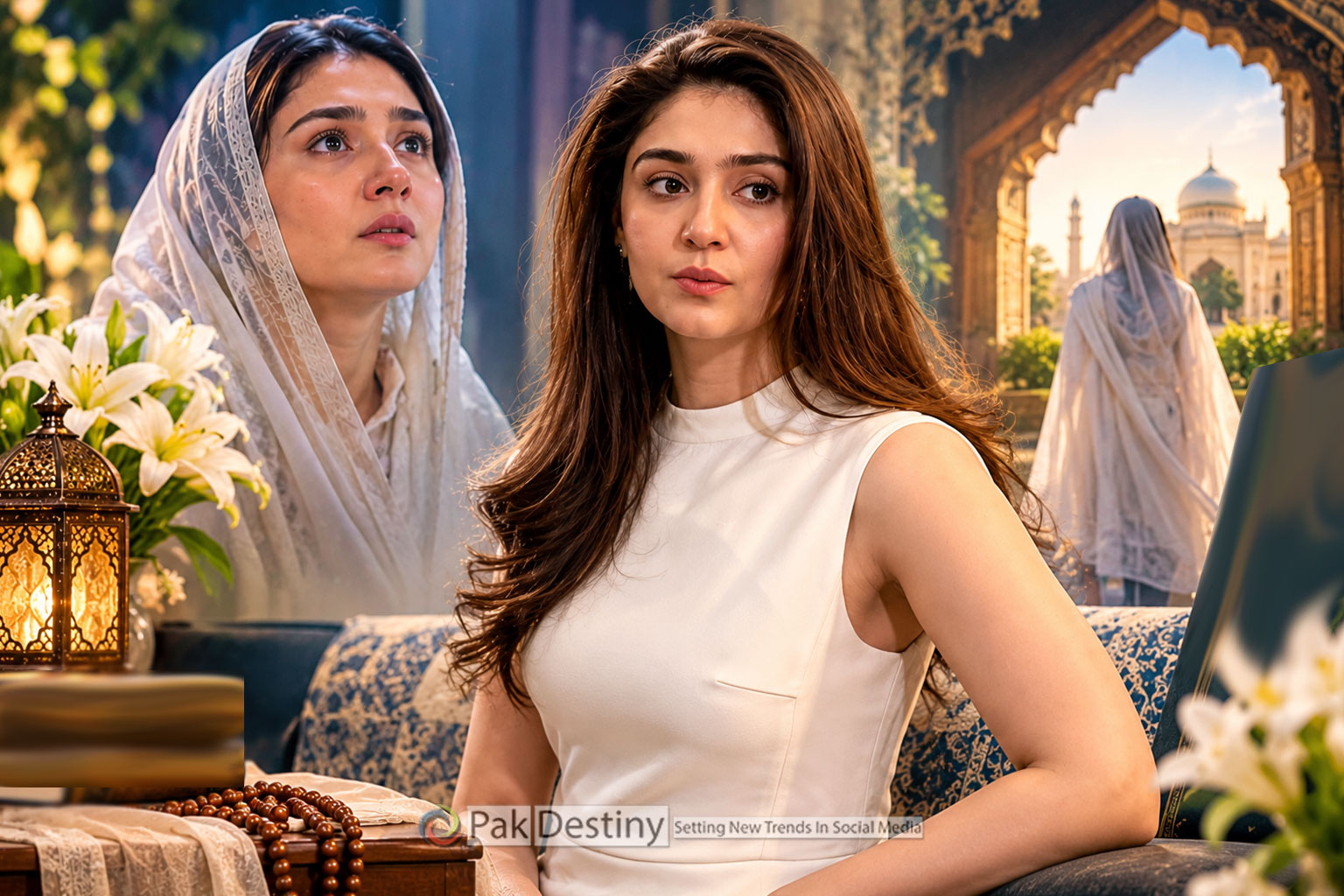
— The actor says the controversy is not about Zaryab’s changing dress preferences but society’s tendency to scrutinise and judge women’s personal choices, raising questions about whether the drama is challenging social attitudes or reinforcing a narrow understanding of religious modesty
By Irum Saleem
The latest controversy surrounding popular television drama Dar-e-Nijaat has once again brought the sensitive intersection of religion, women’s autonomy and social expectations into the spotlight, with actor Durefishan Saleem defending her character’s decision to abandon sleeveless clothing as part of her evolving relationship with faith.
A scene in which the female protagonist, Zaryab Habib, refuses to wear a sleeveless dress, saying she no longer feels comfortable in such attire, has triggered considerable debate on social media. While some viewers have interpreted the development as a reflection of religious awakening, others have questioned the way the drama appears to associate a woman’s changing religious outlook with her choice of clothing.
Responding to the criticism in an Instagram post on Sunday, Saleem said the scene was intended to portray Zaryab’s changing personal relationship with faith, arguing that such a transformation should be allowed without inviting public scrutiny or moral judgement.
She described faith as an internal process that eventually manifests itself in outward conduct, including decisions about clothing and personal appearance.
However, the actor’s intervention has also highlighted a contradiction at the heart of the debate: while defending a woman’s right to dress according to her evolving beliefs, the narrative itself uses a change in clothing to communicate a shift in religious consciousness.
The question, therefore, is not simply whether Zaryab should wear sleeveless clothes or cover herself, but why women’s clothing continues to serve as such a powerful measure of their morality, religiosity and social acceptability.
Saleem maintained that the real problem was not Zaryab’s decision but people’s tendency to question, scrutinise and judge her choices rather than respect them.
She stressed that every woman should have the freedom to decide what makes her comfortable, irrespective of the clothing style she prefers.
The actor also sought to distinguish her personal choices from those of her character, saying she herself had been comfortable wearing sleeveless outfits for some time. Her own relationship with modesty, she said, could be different from that of another woman.
Her argument raises an important point often missing from television debates about religion and women: personal faith cannot be reduced to a dress code, nor should clothing become a public test of a woman’s character.
Yet, by making Zaryab’s sartorial choices a visible marker of her spiritual journey, the drama has inevitably invited the very discussion that its lead actor appears to resent.
Saleem said Dar-e-Nijaat was essentially Zaryab’s story, with all her imperfections, flaws and contradictions, and viewers were entitled to their own interpretations.
She also questioned why a character’s development had to be blown out of proportion and turned into a national controversy, arguing that not every narrative decision required a panel discussion or a final verdict from social media.
The actor concluded that her faith did not give her the right to judge others, just as other people’s beliefs did not give them the right to judge her.
Ultimately, the controversy has moved beyond a television character’s wardrobe to a larger question: can Pakistani society accept women’s individual choices without attaching religious or moral labels to them?