By Irum Saleem
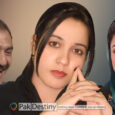
The sudden and tragic death of television anchorperson Rabia Ahsan has sent shock waves through the media fraternity, leaving her colleagues, friends and admirers struggling to come to terms with the loss of a woman who had carved out a distinctive place for herself in Pakistan’s highly competitive media industry.
For those who knew her beyond the television screen, her death is not merely the loss of a familiar face but the departure of a friend, a colleague and a woman who embodied professional ambition, resilience and an extraordinary ability to juggle multiple responsibilities.
I worked with Rabia for at least five years. She was a good friend and colleague, and I can hardly recall a moment during our association when she gave me a reason to disagree with her. She was warm, professional, composed and remarkably accommodating. Her pleasant disposition was as much a part of her personality as her professional accomplishments.
Rabia was, in many ways, what a woman aspiring to professional independence in a deeply patriarchal society like Pakistan would want to become.
She was a broadcaster, television programme host, vlogger, actor, entrepreneur and communication consultant. She also developed a following through her work and advice relating to women’s health, beauty and lifestyle.
Her professional versatility was remarkable. She moved comfortably between television hosting, digital content creation and entrepreneurial ventures, demonstrating that women could pursue multiple professional identities without being confined to conventional roles.
Associated with 92 News, Rabia had established herself as a familiar television personality. She was also running a private salon in Islamabad, according to media reports. Her ability to move between the worlds of broadcasting, business and digital media reflected her determination to expand her professional horizons.
But behind this seemingly successful and accomplished public personality was a woman who, like countless other working women in Pakistan, had to negotiate the difficult balance between professional aspirations and family expectations.
She struggled throughout her life to reconcile the demands of an increasingly successful career with the responsibilities expected of her as a mother, daughter and sister.
The pressure of fulfilling these multiple roles remained a constant constraint in her relatively short life.
This is perhaps one of the least discussed aspects of the lives of professionally accomplished women in Pakistan.
Society celebrates their achievements but often fails to acknowledge the personal compromises, emotional pressures and sacrifices that accompany their pursuit of professional independence.
Rabia appeared to have mastered the art of keeping those struggles away from public view. She would appear before the camera with her characteristic smile, engaging viewers and carrying out her professional responsibilities without giving away any indication of the pressures she might have been experiencing in her personal life.
Those who watched her on television or followed her digital presence saw a confident, energetic and accomplished woman.
Few could have imagined the weight of responsibilities and expectations she was trying to manage away from the limelight.
Her journey also represented the changing role of women in Pakistan’s media industry.
Unlike the conventional image of a television presenter confined to reading news bulletins or hosting a particular programme, Rabia explored several professional avenues. She demonstrated that a woman could be a broadcaster, entrepreneur, actor and independent professional at the same time.
Yet her tragic death has brought into sharp focus the vulnerability of women, including those who appear successful, independent and socially empowered.
Rabia was found dead with a gunshot wound at her residence in Rawalpindi’s Gulshanabad area on Sunday. She was 41. Police took her husband into custody for investigation and recovered a firearm from the house. The circumstances surrounding the shooting remain under investigation. Her husband reportedly told investigators that the weapon had discharged accidentally, a claim that has yet to be established by the investigation.
Her death has also left behind two young daughters, making the tragedy particularly heartbreaking. The loss of a mother at such an early age is an irreparable blow, and the questions surrounding her death make it all the more distressing.
The incident has once again raised uncomfortable questions about women’s safety within their own homes and the protection available to women who, despite their professional standing, remain vulnerable to violence and unequal power dynamics.
It would be premature to draw conclusions about the circumstances of Rabia’s death before investigators establish the facts. What is beyond doubt, however, is that a woman with considerable professional potential has lost her life in deeply tragic circumstances.
For her friends and colleagues, the shock will take time to subside. For me, the memories of those five years will remain inseparable from her cheerful disposition, professionalism and ability to deal with people without making them uncomfortable.
She was an icon in her own way. She did not deserve to leave this world so early, and certainly not in circumstances that have left so many unanswered questions.
Perhaps the most painful part of her departure is that the woman who spent so much of her life meeting the expectations of different roles will no longer be there to pursue her own dreams.
May Rabia rest in peace in a world free from the relentless pressures, inequalities and expectations that make life particularly difficult for women in our society. And may her daughters find the strength to live with a loss that no child should have to endure.