— Pakistan’s early Test defeats in England revealed serious weaknesses in preparation, batting, bowling, fielding and leadership
— Pakistan Cricket Board responded by removing coaching staff and players, abrupt dismissals alone cannot fix the structural problems that continue to undermine the national team
By Wajih Ahmad Sheikh
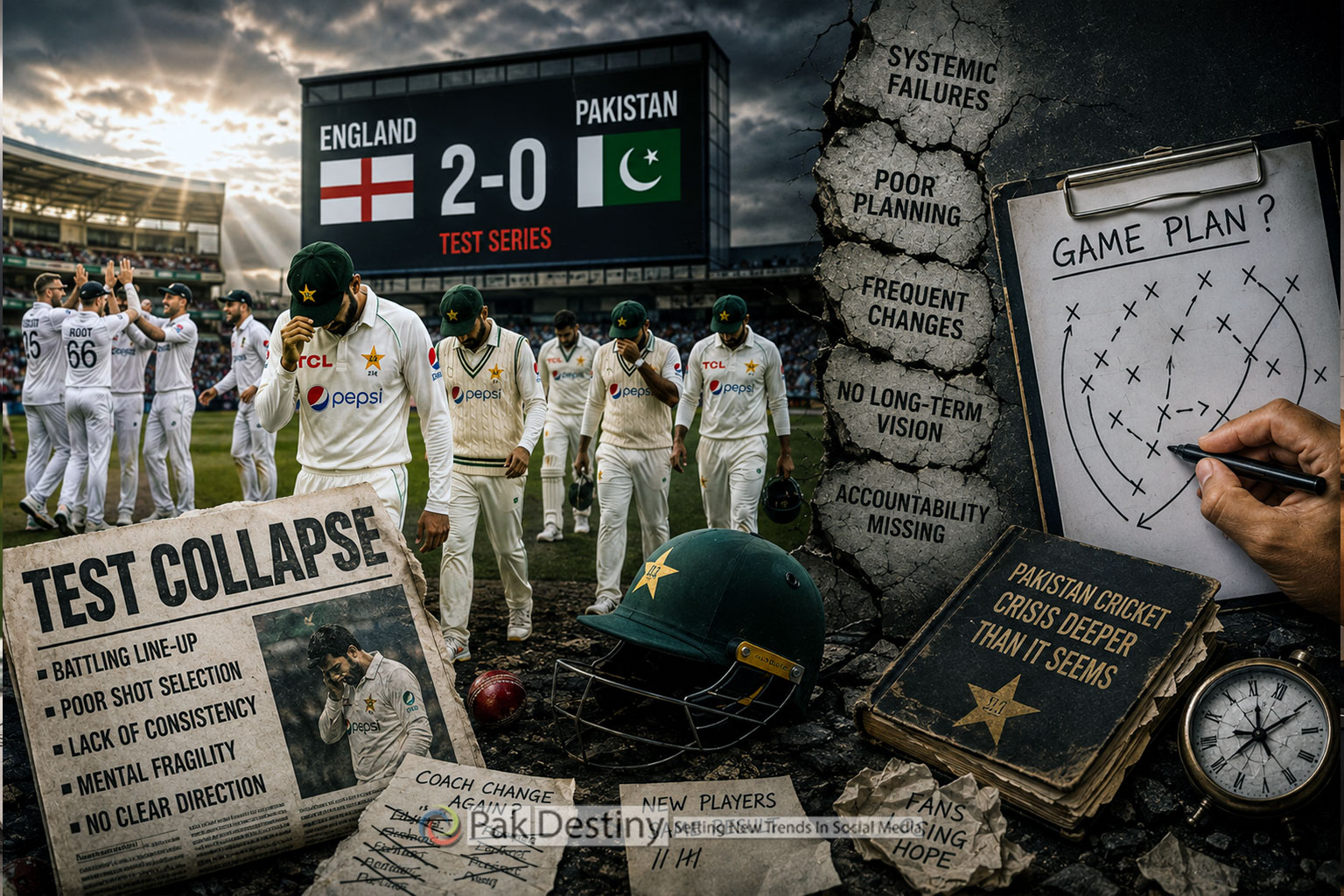
Pakistan’s first two Tests in England exposed a team short of preparation, discipline and strategic clarity, with the subsequent sacking of coaching staff and players appearing less like a considered reform plan and more like an attempt to shift blame.
The performances were marked by familiar failures: fragile batting under pressure, inconsistent bowling, poor fielding and a lack of imagination in crucial sessions. Pakistan repeatedly surrendered control after promising starts, allowing England to dictate the tempo and expose weaknesses that should have been addressed before the series began.
The batting unit failed to build sustained partnerships, while the bowlers struggled to maintain pressure once the ball softened. Fielding lapses further compounded the damage, turning manageable situations into decisive advantages for England. More troubling was the team’s inability to adapt when conditions changed, suggesting that the problem extended beyond individual mistakes to preparation and leadership.
Pakistan also appeared unprepared for the tactical demands of Test cricket in England. The team struggled to manage sessions, rotate bowlers effectively and respond when England’s batters changed the tempo. At crucial moments, Pakistan lacked the patience required to build pressure and the decisiveness needed to seize opportunities. These shortcomings pointed to weaknesses in planning as much as execution.
The response from the Pakistan Cricket Board was swift, with coaching staff and players removed after the disappointing results. Accountability is necessary, but dismissals alone will not repair a system that has repeatedly produced the same failures. If selections were flawed, the selectors must answer for them. If the coaching strategy was ineffective, the board must explain why it was approved and retained. And if senior players failed to perform, their reputations should not shield them from scrutiny.
The board must also examine how the team was prepared for the series. A strong Test side requires more than talented individuals; it needs a settled combination, clearly defined roles, reliable fitness standards and a domestic structure capable of producing players ready for international pressure. Frequent changes in personnel and strategy make it difficult for players to develop confidence or understand what is expected of them.
Pakistan cricket cannot continue with abrupt sackings presented as reform. The team needs a clear selection policy, competent coaching, stronger domestic preparation and leadership capable of making difficult decisions before a crisis, not after it. The first two Tests in England were not merely defeats; they were evidence of institutional complacency.
A meaningful recovery will require transparency from the board, consistency in selection and a long-term plan that is measured by improvement rather than immediate headlines. Coaches and players should be held accountable, but administrators must also accept responsibility for creating the conditions in which the team operates.
Unless the board addresses that deeper failure, changing coaches and dropping players will only rearrange the symptoms while leaving the disease untouched.

About the author: Wajih Ahmad Sheikh is a senior journalist associated with DAWN with more than two decades.
He writes on sports for digital platforms. He is found on X @wajihsheikh
He can be reached at [email protected]