By Wajih Ahmad Sheikh
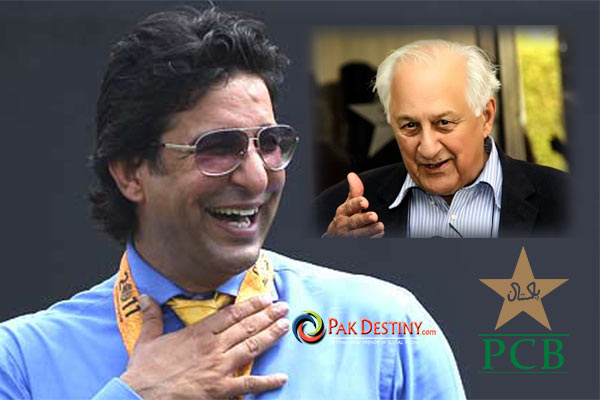
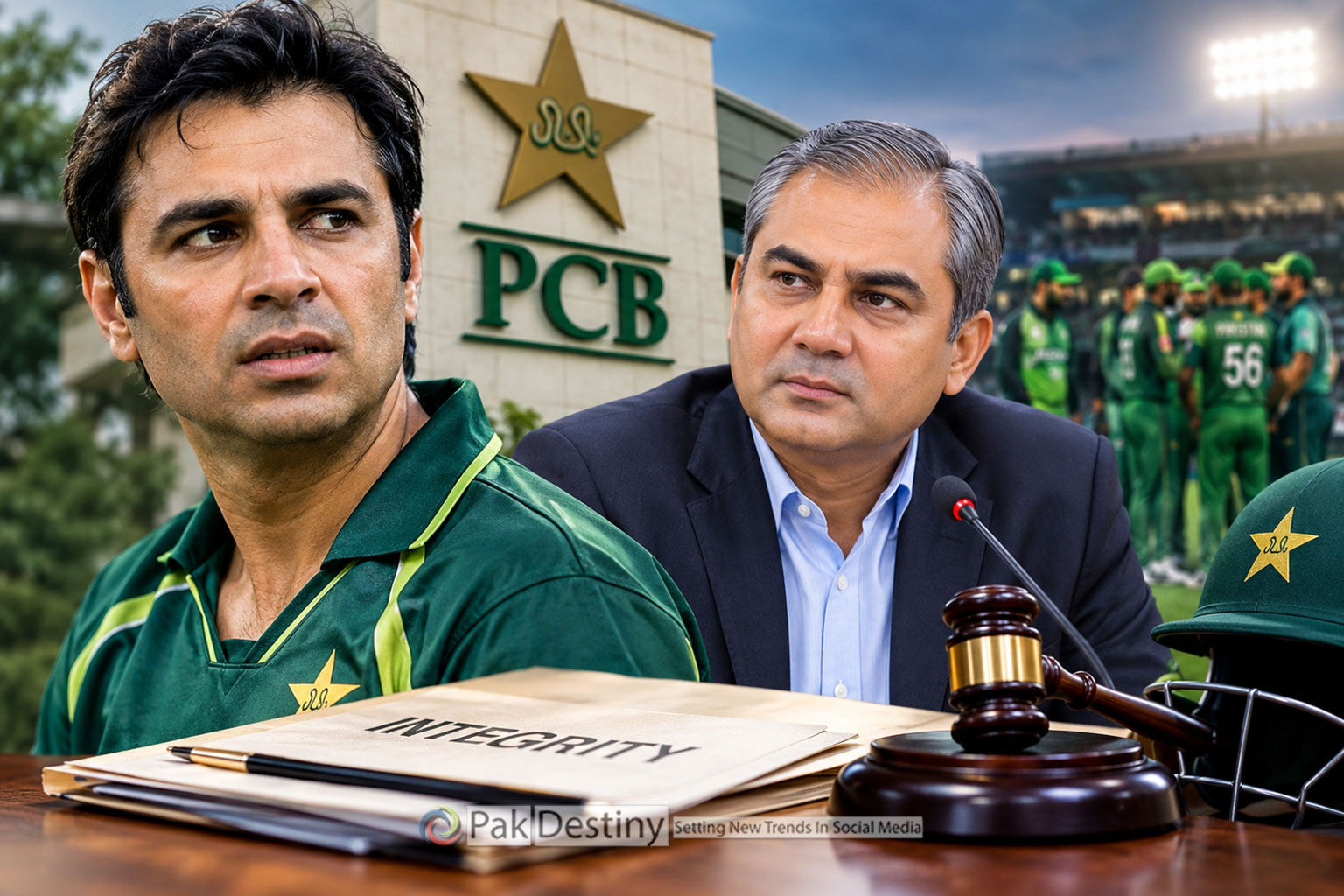
The Pakistan Cricket Board’s decision to include former Pakistan captain Salman Butt in the commentary panel for the ongoing T20I series against Sri Lanka has once again raised questions about the standards of governance, accountability and integrity in Pakistan cricket.
Butt was Pakistan’s captain during the 2010 spot-fixing scandal that badly damaged the country’s reputation in international cricket. He was subsequently found guilty by an International Cricket Council tribunal and served a ban from cricket. He was also convicted by a British court and sentenced to prison for his role in the spot-fixing conspiracy.
More than a decade later, his return to an official PCB commentary panel raises an important question: what message does the cricket board send when a player convicted in a major corruption scandal is given a prominent role in presenting international cricket?
The issue is not simply whether a former cricketer should be allowed to rebuild his professional life after serving his punishment. There is a legitimate argument that individuals who have completed their sentences should be allowed to return to society and pursue their careers. The more important question is whether the PCB has clear and transparent standards for deciding who can represent the organisation and Pakistan cricket in official roles.
The decision becomes particularly significant because commentary is not merely a private employment opportunity. Commentators are part of the public presentation of the game. They speak to millions of viewers and, in effect, become representatives of the sport during international matches.
The PCB’s decision therefore raises questions about whether integrity remains a serious consideration when appointments are made.
The contrast becomes even more striking because former Pakistan captain Ramiz Raja, who has regularly appeared as a commentator, was not part of the commentary panel for the series. However, there is no established evidence that Raja was removed specifically to make room for Butt. The issue should therefore not be reduced to a claim about one commentator replacing another. The broader question concerns the criteria used by the PCB in selecting individuals for official cricket-related roles.
Spot-fixing is fundamentally different from an ordinary disciplinary matter. It strikes at the core principle of competitive sport: that players and officials must allow matches to be determined by sporting performance rather than predetermined arrangements or illicit financial interests.
The 2010 scandal involving Butt, Mohammad Asif and Mohammad Amir exposed serious vulnerabilities in Pakistan cricket’s anti-corruption framework and resulted in severe consequences for the players involved. It also reinforced the importance of maintaining public confidence in the integrity of the game.
The PCB is, of course, entitled to believe that a former offender deserves a second chance. Rehabilitation and reintegration are not incompatible with accountability. But there is a difference between allowing someone to resume a career and placing that person in an official public-facing position on behalf of the sport’s governing body.
If the PCB considers Butt’s appointment appropriate, it should be able to explain the policy and criteria under which the decision was made. Was the appointment based solely on the fact that he had completed his punishment? Were his past offences considered? Does the PCB have written guidelines governing the appointment of individuals previously sanctioned for corruption? And, most importantly, are those standards applied consistently?
These are reasonable questions for a cricket board that has repeatedly emphasised the importance of protecting the integrity of the game.
The concern goes beyond Salman Butt himself. The real issue is the institutional message conveyed by such appointments. If a player convicted in a major match-fixing scandal can eventually return to an official role without a clearly communicated framework for rehabilitation and selection, supporters may reasonably ask whether corruption carries a lasting institutional stigma in Pakistan cricket.
At the same time, permanent exclusion cannot necessarily be the answer. A punishment must have a defined purpose and duration, and a person who has completed the punishment imposed by the relevant authorities cannot automatically be treated as permanently disqualified from earning a livelihood.
But the PCB has a responsibility beyond simply determining whether an individual is technically eligible to work. As the governing body of Pakistan cricket, it also has to consider public confidence, institutional credibility and the message its decisions send to current and future players.
The board’s handling of corruption cases has always been closely watched because Pakistan cricket has experienced repeated controversies involving match-fixing and integrity. Every decision involving a player with a history of corruption therefore carries significance beyond the individual concerned.
The question facing the PCB is consequently straightforward: does it have a coherent integrity policy, or are such decisions being made on a case-by-case basis without sufficient transparency?
If the board has decided that Salman Butt has served his punishment and is now eligible to work in an official cricket role, it should say so clearly. It should also publish the principles that determine when and how players previously involved in corruption cases can return to positions connected with Pakistan cricket.
Transparency would help the PCB demonstrate that the decision is part of a consistent policy rather than an arbitrary exercise of discretion.
Pakistan cricket does not merely need talented players, successful teams and commercially viable competitions. It also needs institutional credibility. The public must believe that the people entrusted with representing the game understand the importance of integrity and that corruption is treated as a serious matter.
Salman Butt’s return to the commentary box is therefore about more than one former cricketer. It provides an opportunity to examine the standards by which the PCB governs itself and communicates its values.
The board may consider Butt rehabilitated and eligible for professional work. But if that is its position, it should explain the principles behind it.
Ultimately, the credibility of Pakistan cricket depends not only on what happens on the field but also on the standards applied by those running and representing the game off it.

About the author: Wajih Ahmad Sheikh is a senior journalist associated with DAWN with more than two decades.
He writes on sports for digital platforms. He is found on X @wajihsheikh
He can be reached at [email protected]