By Zulqernain
With Donald Trump still projecting a posture of confrontation, Iran has shown little inclination to be intimidated by rhetoric or threats.
Yet, against this tense and volatile backdrop, a different narrative has quietly taken shape—one in which Pakistan emerges as a pivotal force for restraint, dialogue, and de-escalation.
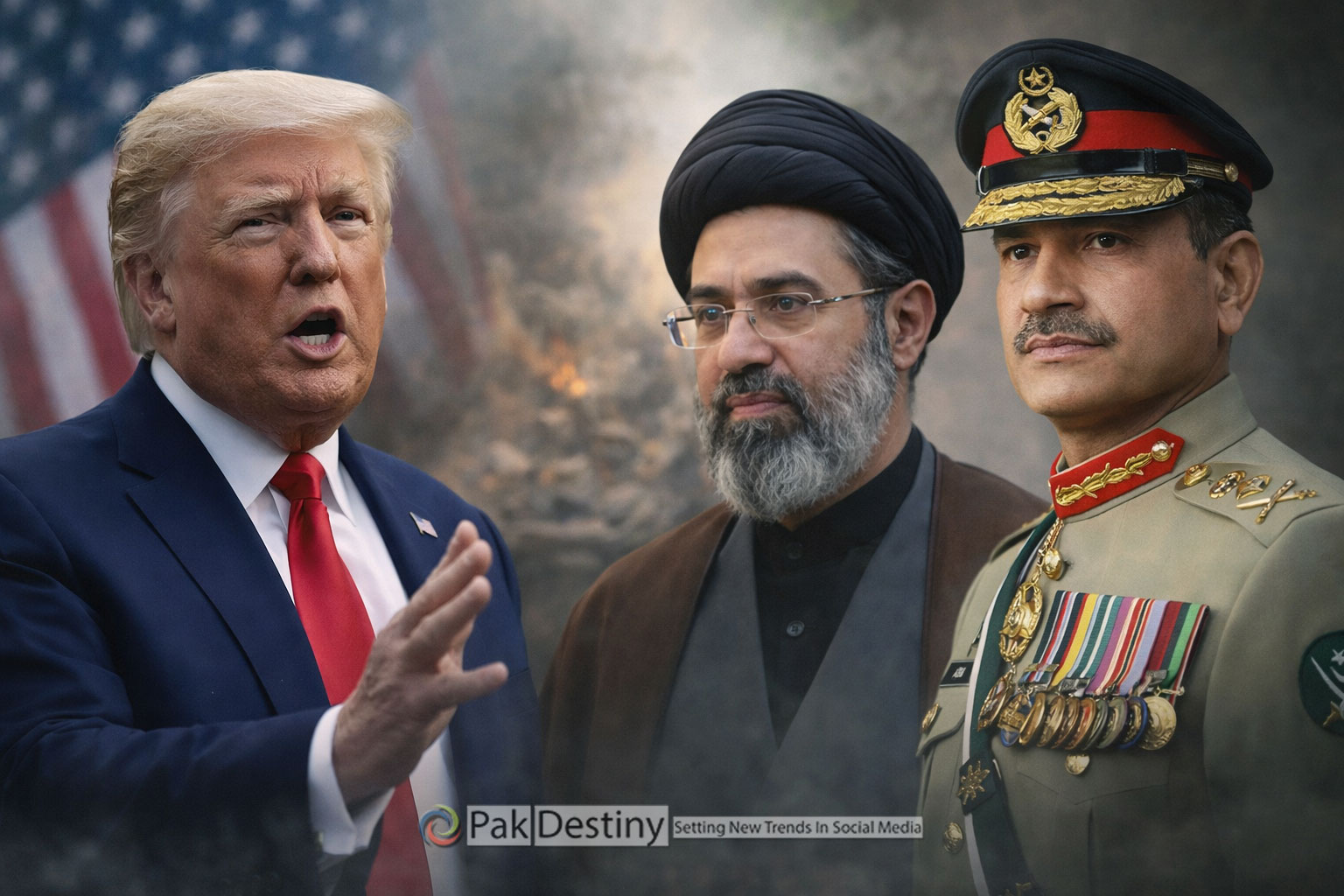
Pakistan’s leadership deserves significant recognition for its role in facilitating a ceasefire between the United States, Israel, and Iran. Prime Minister Shehbaz Sharif and Chief of Defence Forces, Field Marshal Asim Munir—ably supported by a discreet yet highly effective foreign service—managed to accomplish what, until the final hours, seemed an improbable diplomatic breakthrough.
To fully appreciate this achievement, one must consider the gravity of the moment. President Trump had issued a stark warning, threatening to “wipe out an entire civilisation” if Iran failed to comply with US demands by a specified deadline. Tehran, proud and resolute, responded with equal clarity: it would not bow to coercion or force under any circumstances.
From @WSJopinion: Pakistan has put itself back on the diplomatic map. Its army chief consolidates his power at home by brokering a cease-fire between Iran and the U.S., writes @dhume.https://t.co/sr1SuwDbWO
— The Wall Street Journal (@WSJ) April 9, 2026
My latest #TharoorThink column analyses the “Islamabad channel” and argues the case for India supporting peace in the #IranWar, whoever midwives it: pic.twitter.com/zOHvDQD11l
— Shashi Tharoor (@ShashiTharoor) April 9, 2026
Amid this gathering storm, Pakistan stood out as one of the few actors actively working toward a peaceful resolution. Civilian and military leadership navigated an extraordinarily complex landscape of geopolitical sensitivities, balancing competing interests while preventing a dangerous escalation. It was, by all accounts, one of the most challenging diplomatic undertakings in recent memory.
Undeterred, Pakistan persisted—engaging with both sides, building trust, and quietly laying the groundwork for dialogue. In the eleventh hour, those efforts bore fruit.
A ceasefire was secured, averting what could have spiraled into a catastrophic regional—or even global—conflict.
For this, the international community owes Pakistan a measure of gratitude.
Islamabad : 9 April, 2026.
— Prime Minister's Office (@PakPMO) April 9, 2026
Field Marshal Syed Asim Munir, NI (M), COAS & CDF called on the Honourable Prime Minister of Pakistan Mian Muhammad Shahbaz Sharif at the Prime Minister’s Office.
The dignitaries reviewed the progress of Pakistan’s mediatory efforts to achieve… pic.twitter.com/9Pe9dRj64T
Mia Khalifa in tears over Israel’s massive bombardment of Lebanon
— RT (@RT_com) April 9, 2026
'I don't know how to reconcile my tax dollars doing this to my homeland
160 airstrikes in 10 minutes on residential buildings' https://t.co/Gw9gGucylY pic.twitter.com/GF2V2hdR7V
امریکی صحافی بتا رہی ہیں کہ،
— Maleeha Hashmey (@MaleehaHashmey) April 9, 2026
"جب میں اسرائیل گئی تو وہاں مسلمانوں کے خلاف بہت خوفناک نفرت دیکھی۔
اسرائیل میں کوئی انسانیت نہیں، نہ انہیں غیر انسانی حرکتوں پر کوئی شرم ہے۔
دنیا کو اس بدمعاش اسرائیلی ریاست کو خود سے الگ کرنا ہو گا تب ہی بہتری آ سکتی ہے" pic.twitter.com/PViqQ3mq9S
Of course, the situation remains fluid, and many uncertainties persist. Yet, what has already been achieved is remarkable. Islamabad succeeded not only in bringing Tehran and Washington to the table but also in aligning other critical stakeholders toward an immediate cessation of hostilities.
What makes this accomplishment particularly striking is the delicate balancing act it required. Pakistan managed to maintain constructive engagement with Saudi Arabia, Iran, and the United States simultaneously—an intricate diplomatic feat in a region often defined by deep divisions. In doing so, it quietly constructed a pathway toward de-escalation when none seemed possible.
Today, Pakistan finds itself uniquely positioned. With strong ties across the Arab world, its status as a Muslim-majority nuclear state, and the trust it commands on both sides of the Persian Gulf, Islamabad has an opportunity to play a longer-term role in shaping regional peace.
This moment should not be squandered. Pakistan can—and arguably must—use its diplomatic capital to encourage both Arab states and Iran to move toward a broader framework of coexistence and mutual harmony. A regional pact is no longer a distant ideal; it is an urgent necessity.
Equally instructive has been the conduct of Arab states during this crisis. Faced with pressure to escalate, many appear to have exercised restraint, concluding that this was not their war to fight. If Pakistan’s quiet diplomacy helped shape that assessment, it reflects a depth of influence that should be carefully nurtured.
The path forward demands cooperation rather than confrontation. Instead of exhausting themselves in rivalries, regional powers must now focus on collective stability—particularly in light of Israel’s openly stated strategic ambitions, which many believe carry implications for the broader Middle East.
Pakistan, having earned its seat at the table, now faces a defining challenge: to help shape not just outcomes, but the agenda itself. The transition from crisis management to sustained peacebuilding will require vision, persistence, and courage.
What unfolded this week was more than a diplomatic success—it was a demonstration of what measured leadership, strategic patience, and principled engagement can achieve in an increasingly fragmented world.