— State-backed ceremonies in Tehran blend nationalism, religion and militarisation amid fears of renewed conflict and a fragile ceasefire
By Irum Saleem
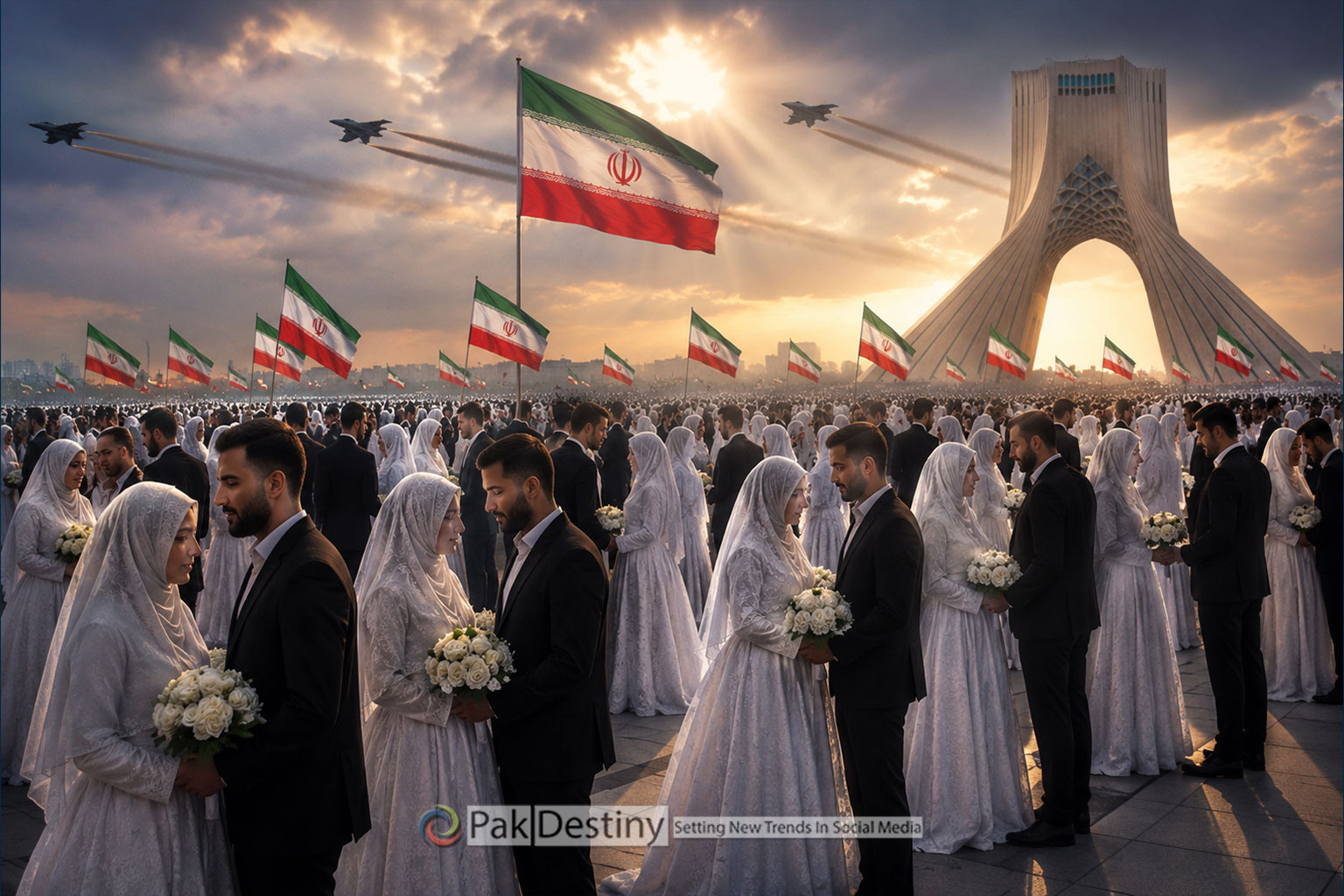
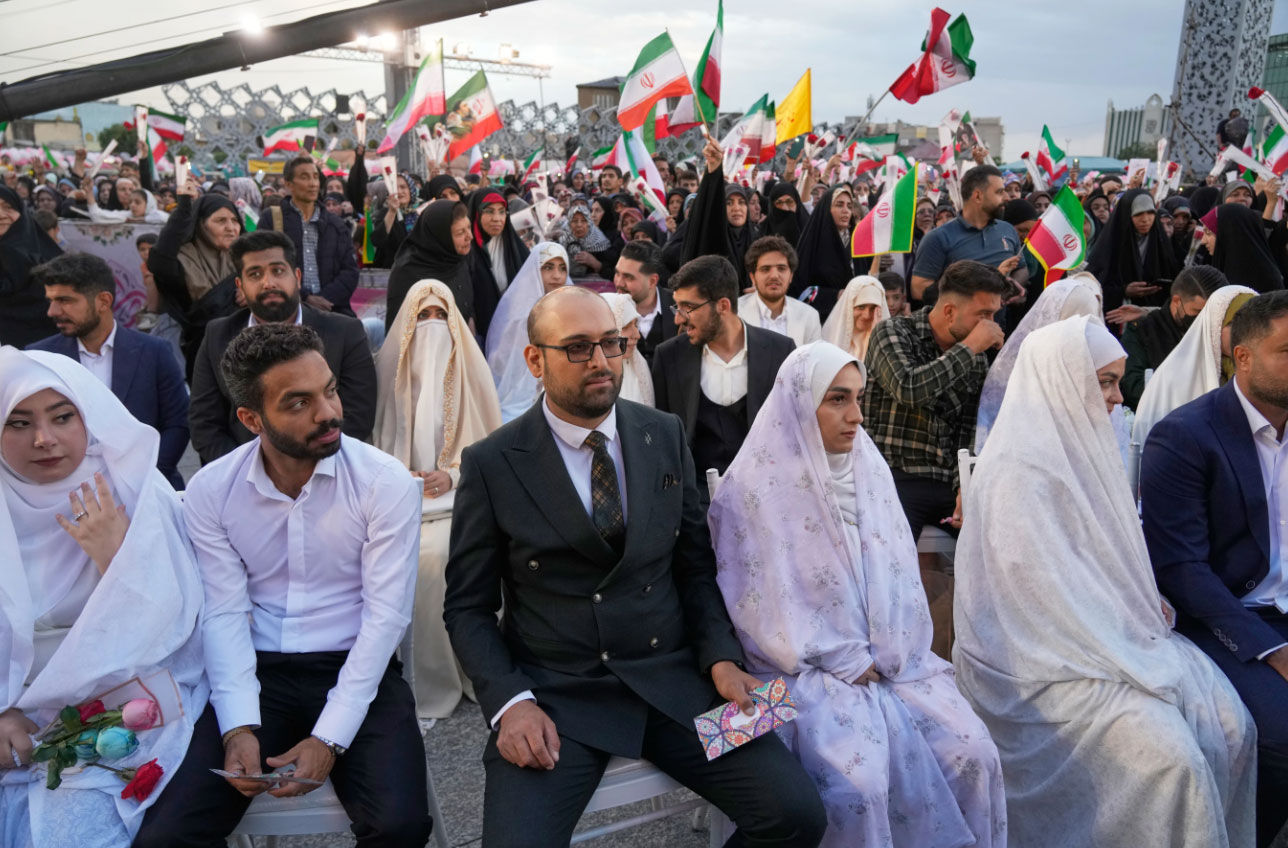
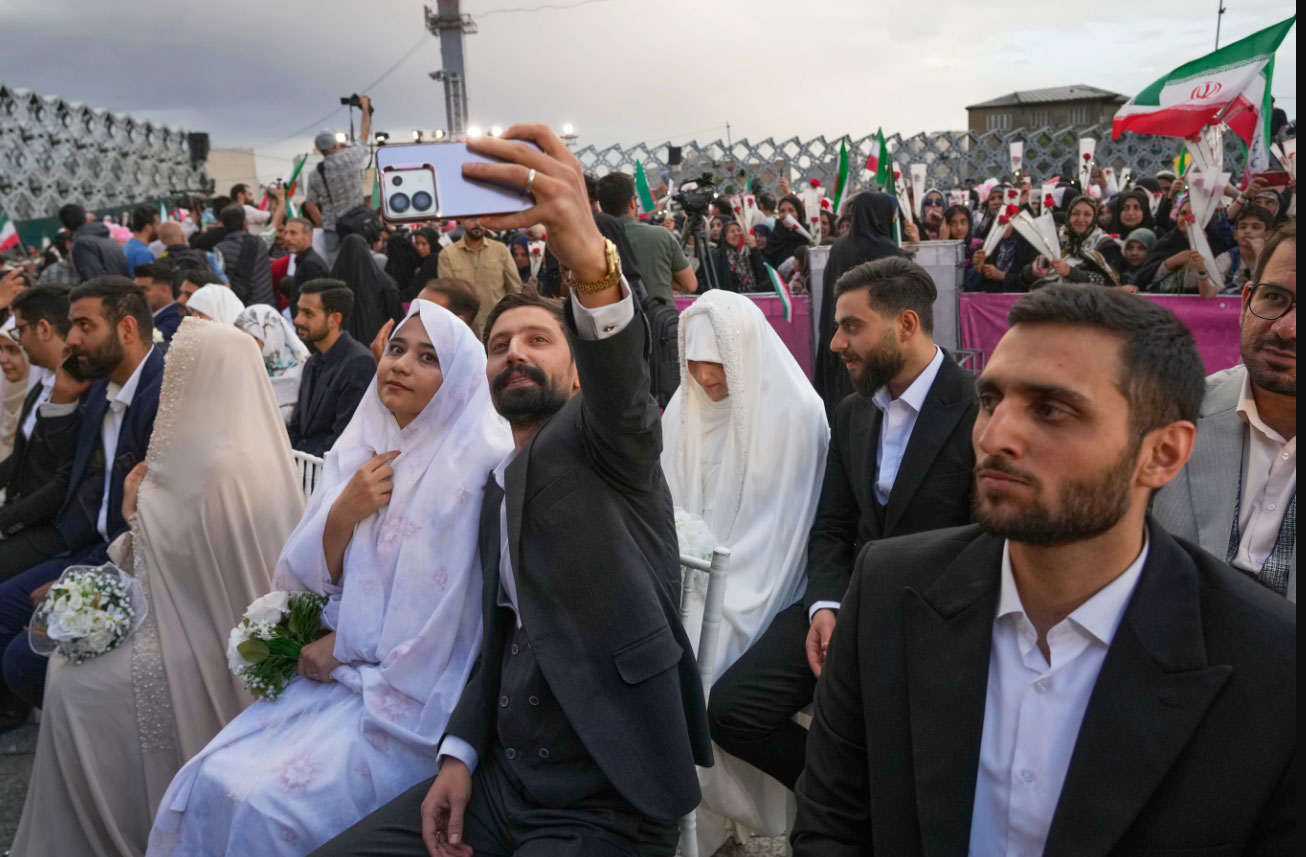
In a dramatic display of wartime mobilisation and ideological symbolism, Iranian authorities organised mass public wedding ceremonies in Tehran for hundreds of couples who enrolled in a state-sponsored “self-sacrifice” campaign, pledging their readiness to lay down their lives in any future conflict involving the United States and Israel.
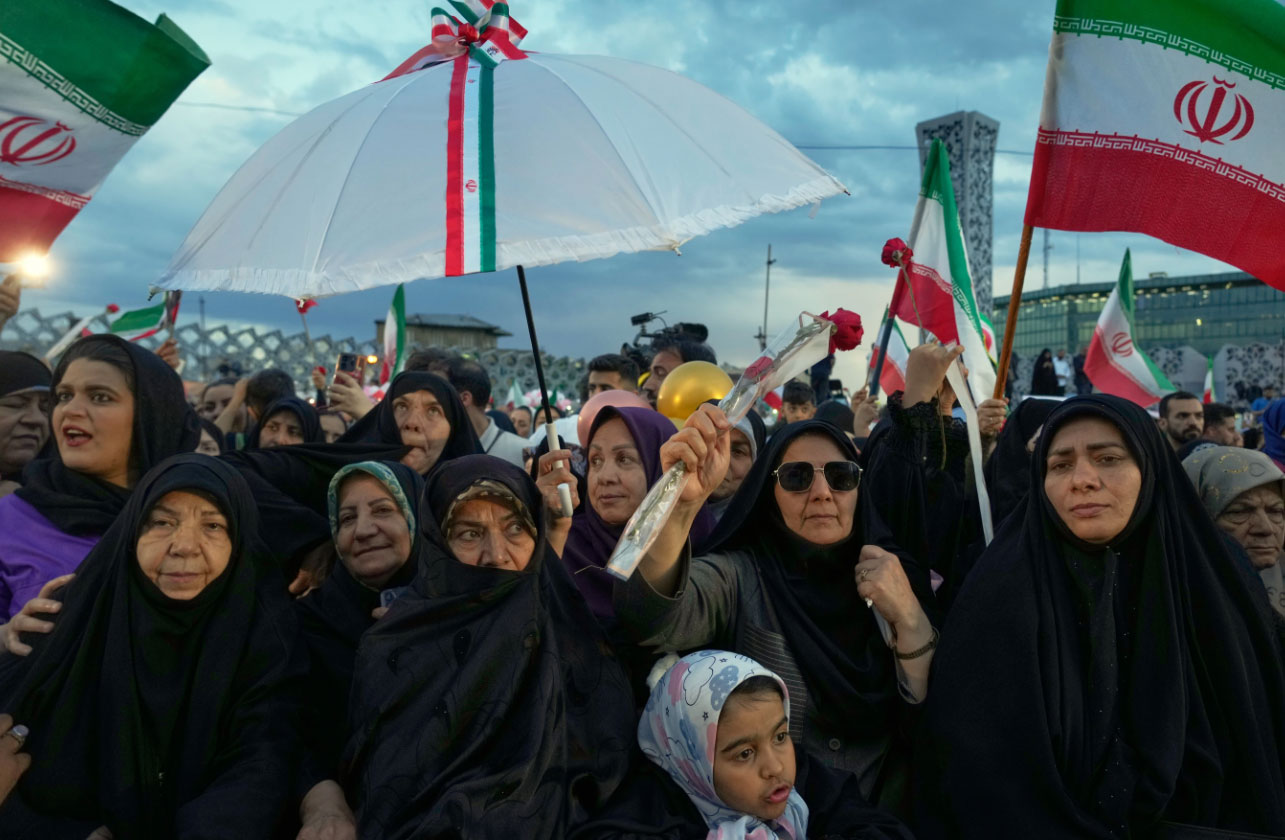
The highly choreographed ceremonies, held late Monday across several major squares in the Iranian capital, were broadcast extensively on state television as the leadership sought to project unity, resilience and revolutionary fervour during a tense and uncertain post-war atmosphere.
On the anniversary of the marriage of the first Shia Imam and the Prophet of Islam’s only daughter, 110 young couples held wedding ceremonies during street celebrations in Tehran.@iammoeen14 reports from Tehran.
— Press TV 🔻 (@PressTV) May 19, 2026
Follow: https://t.co/mLGcUTS2ei pic.twitter.com/3nHYGcIb5f
According to Iranian media reports, more than 100 couples were married at the sprawling Imam Hossein Square in central Tehran alone, while similar ceremonies took place simultaneously in other parts of the city.
The initiative comes at a time when tensions remain dangerously high despite a shaky ceasefire that halted fighting which erupted on February 28.
The mass weddings were directly linked to Iran’s controversial “self-sacrifice” initiative — known in Persian as janfada — under which participants formally declare their willingness to risk or sacrifice their lives in defence of the Islamic Republic.
Iranian authorities claim millions of citizens have enrolled in the campaign, including senior state figures such as Parliament Speaker Mohammad Bagher Ghalibaf and President Masoud Pezeshkian.
State media portrayed the ceremonies as a fusion of patriotism, faith and resistance.
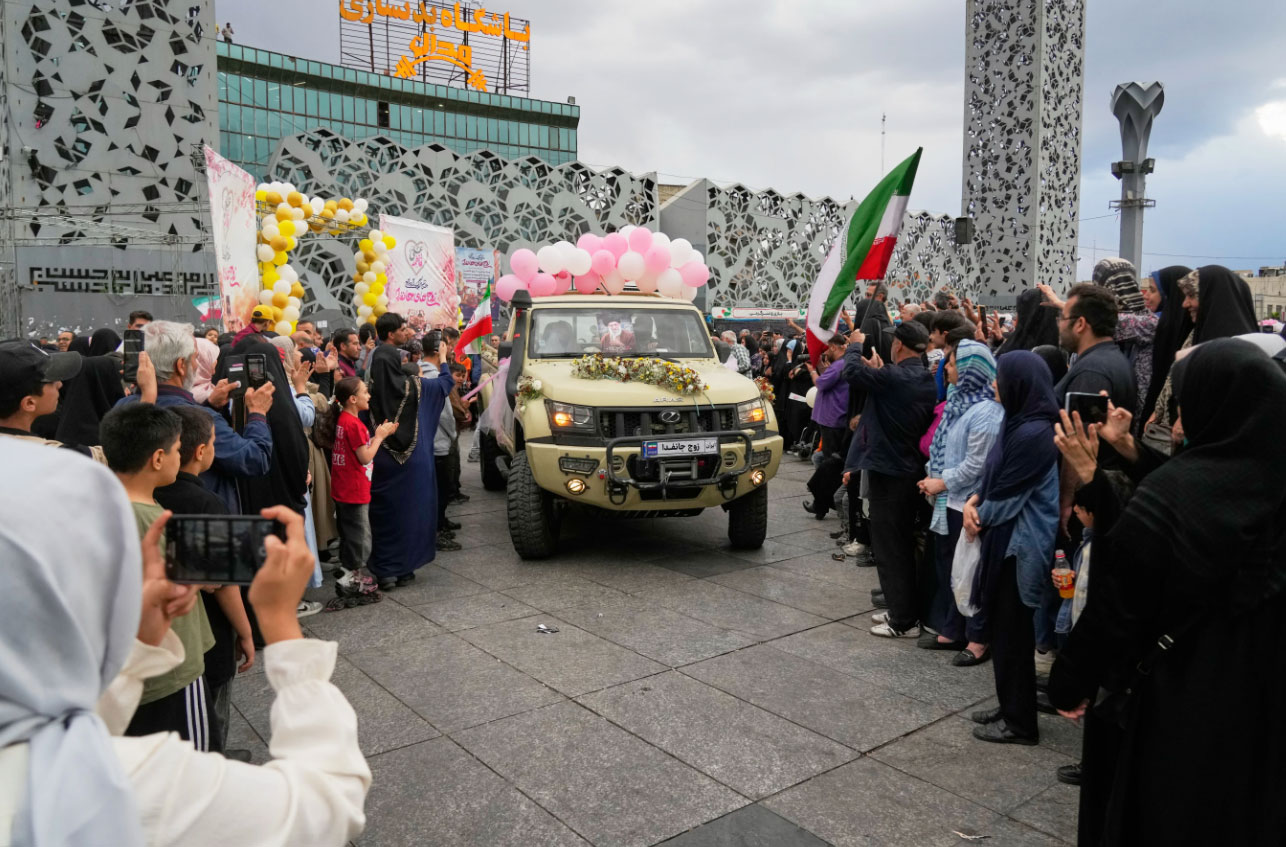
Newlywed couples arrived in military jeeps mounted with machine guns, underscoring the militarised tone of the event.
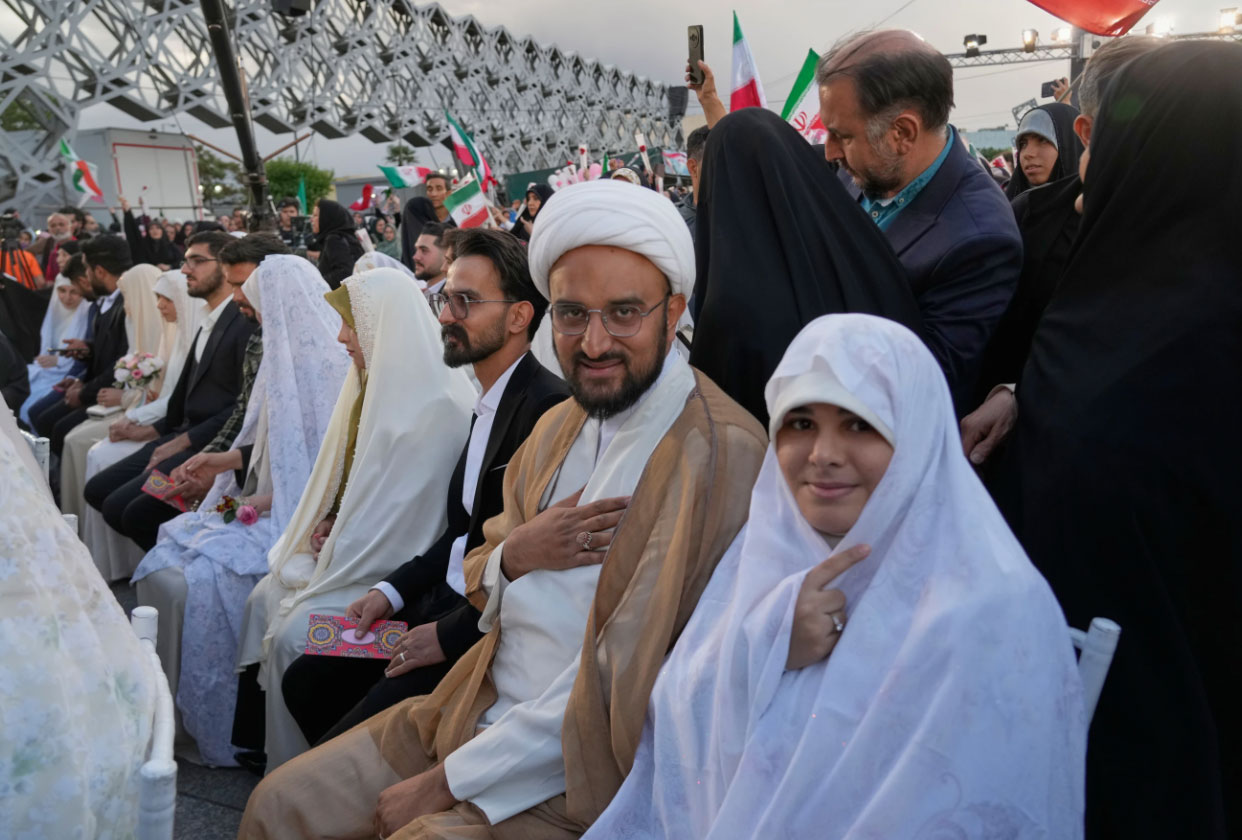
Clerics officiated the marriages from decorated stages adorned with balloons, revolutionary slogans and giant portraits of Supreme Leader Mojtaba Khamenei.
The symbolism carried even greater significance given the extraordinary political transition Iran has undergone in recent months.
Mojtaba Khamenei assumed the country’s highest leadership role following the assassination of his father and predecessor, Ali Khamenei, during the opening day of the recent war.
Notably, the new supreme leader has yet to appear publicly since taking office, fuelling speculation about security concerns and the internal political climate.
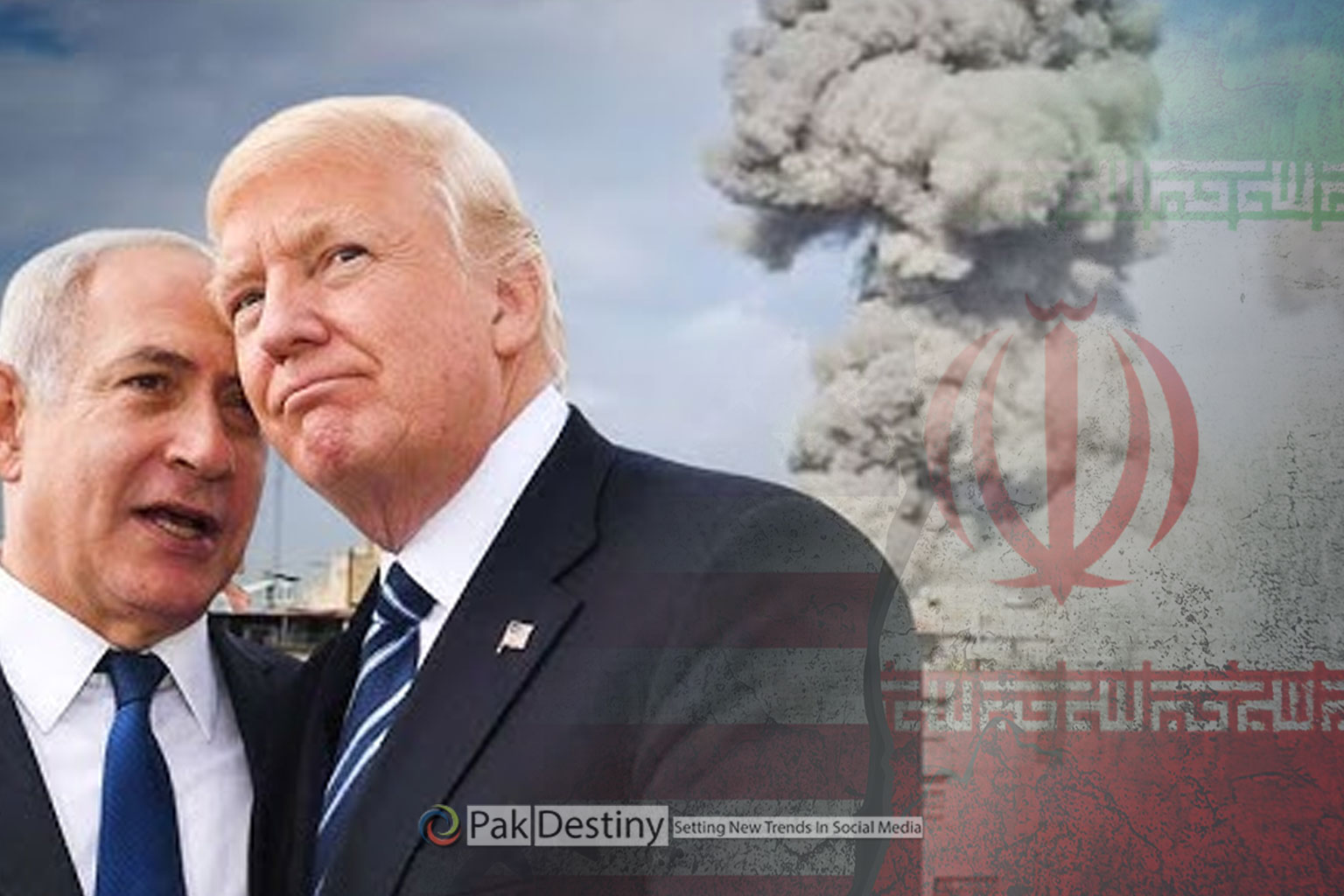
The ceremonies also appeared aimed at reinforcing public morale after weeks of conflict and amid repeated warnings from US President Donald Trump regarding possible renewed military action against Iran. Iranian state broadcasters framed the weddings as evidence that society remains committed to resistance despite economic hardship, regional instability and fears of another military confrontation.
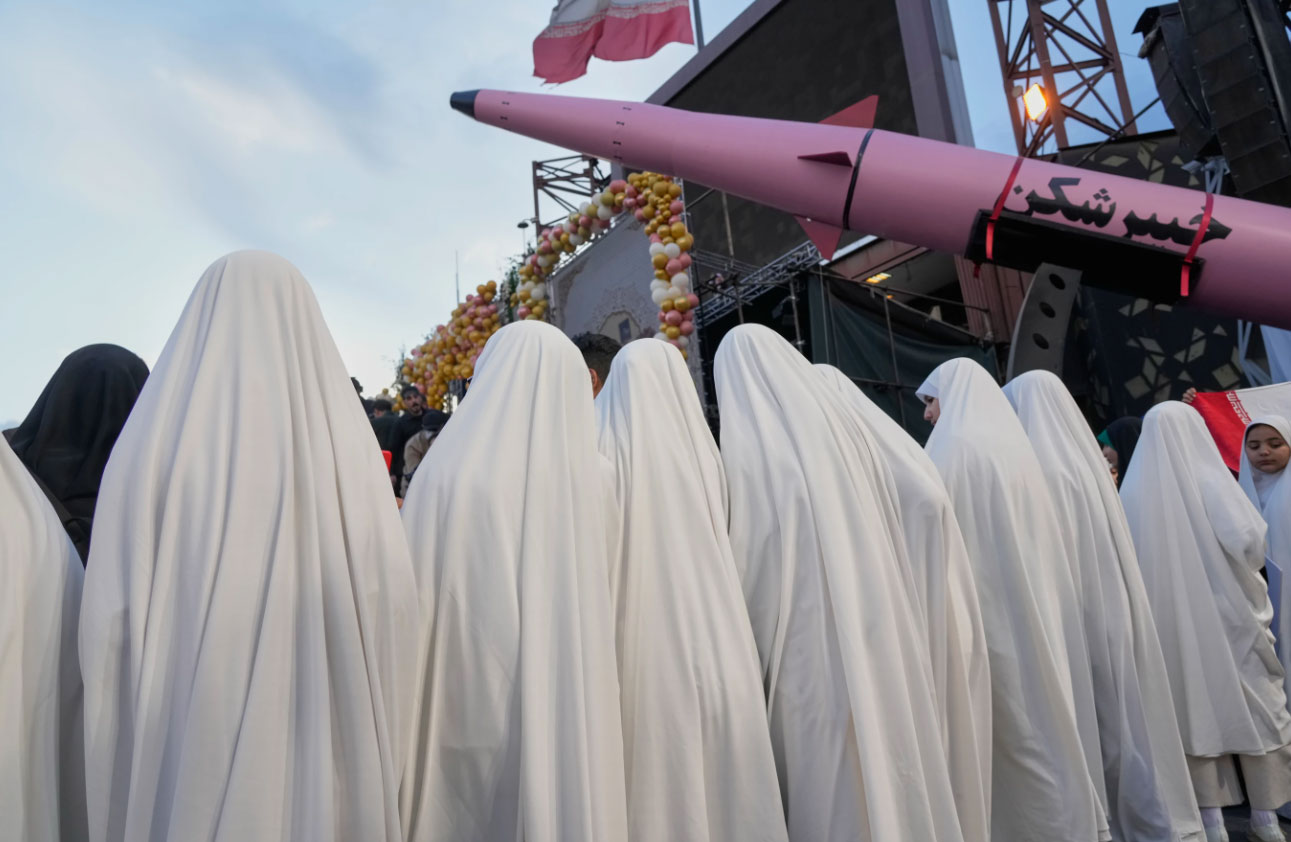
Analysts say the event reflects Tehran’s broader strategy of blending revolutionary ideology with public mobilisation, using highly visual state spectacles to reinforce loyalty during periods of crisis. By combining marriage — a deeply valued social and religious institution — with themes of martyrdom and national defence, authorities sought to send a message that sacrifice for the state remains intertwined with personal and spiritual duty.
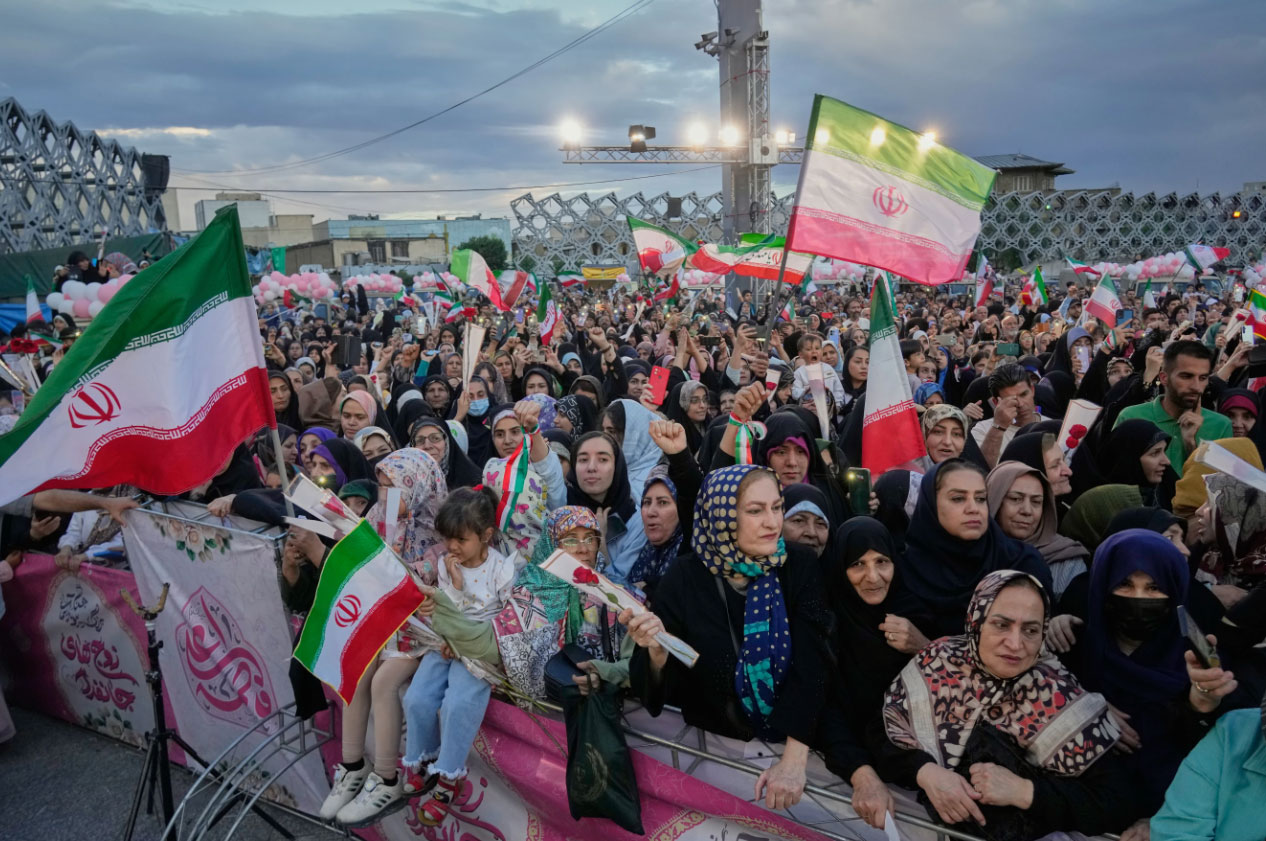
Critics, however, argue the ceremonies reveal the growing militarisation of Iranian society and the leadership’s increasing reliance on emotional and ideological narratives to consolidate support.
Images of brides and grooms posing beside armed vehicles and pledging wartime devotion have triggered intense debate online, with supporters praising the display as patriotic while opponents described it as deeply unsettling.
The “janfada” programme reportedly includes volunteer activities ranging from civil defence operations to forming human shields around sensitive infrastructure such as power stations and strategic facilities in the event of future attacks.
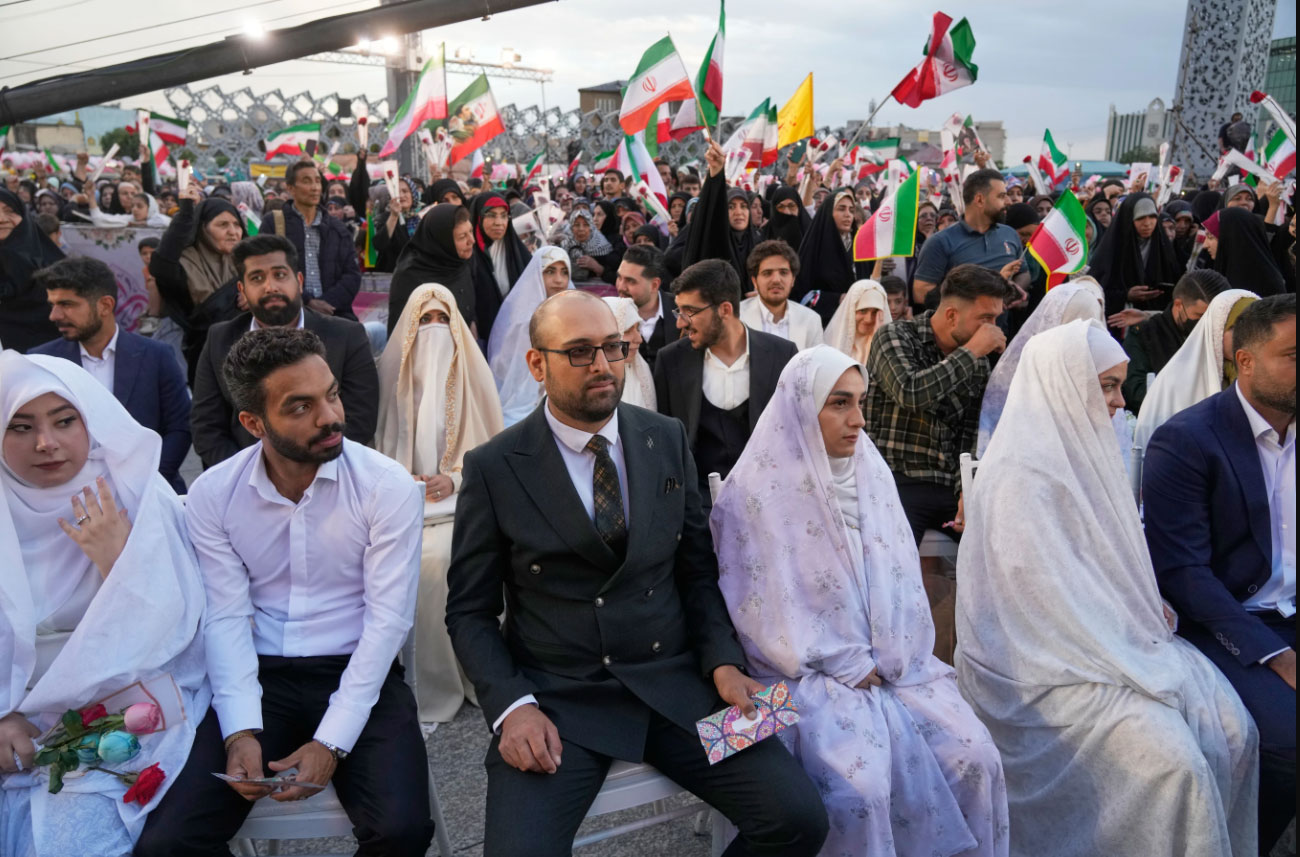
As the region remains on edge, the spectacle in Tehran offered a striking glimpse into how Iran’s leadership is attempting to rally public sentiment — not only through military preparedness, but through carefully staged displays of faith, nationalism and collective sacrifice.