By Irum Saleem
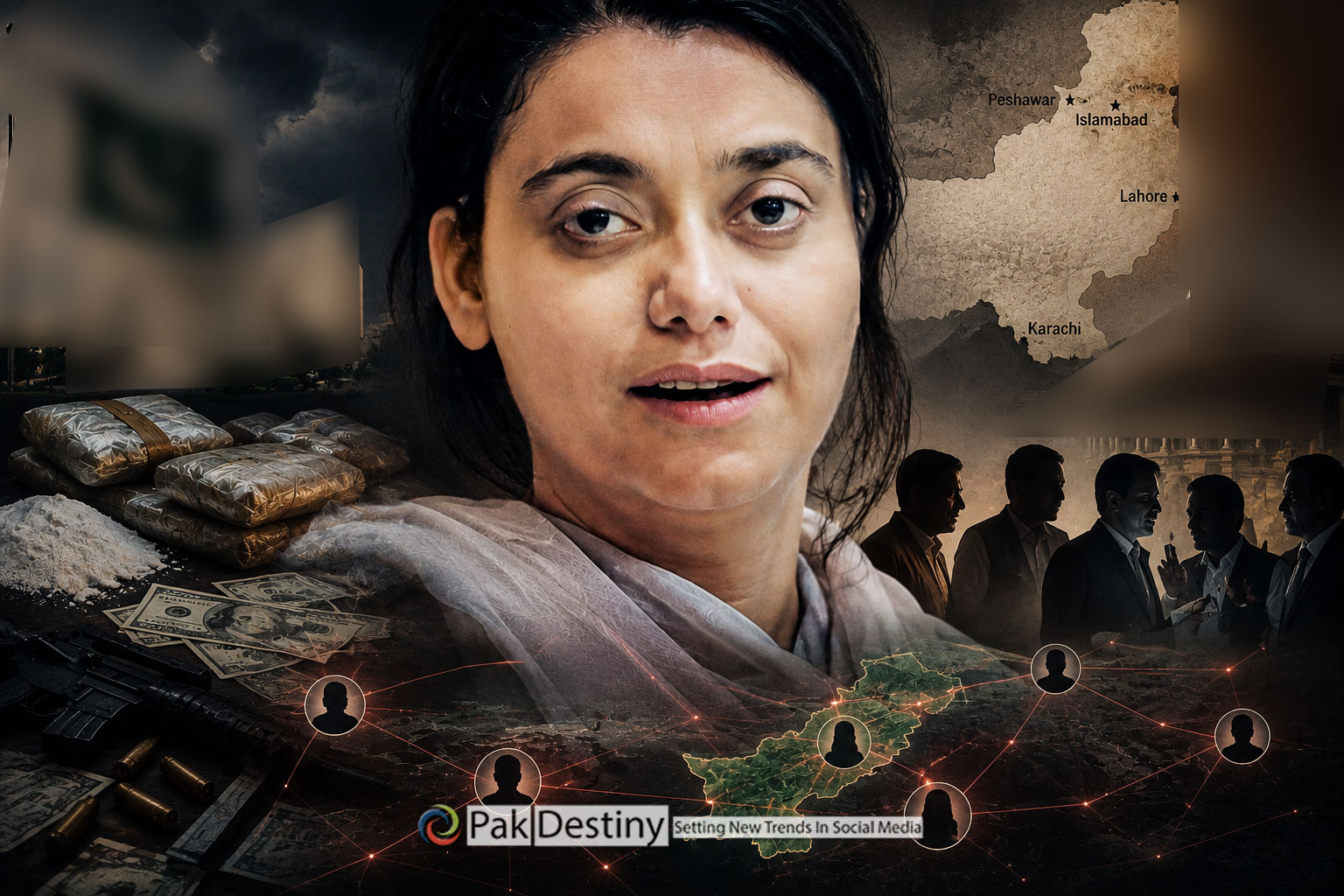
The arrest of alleged drug peddler Anmol “Pinky” has triggered one of the most sensational narcotics investigations in recent years, exposing what investigators describe as a sophisticated urban drug network operating across elite neighbourhoods, educational institutions and entertainment circles in Punjab.
What initially appeared to be a routine anti-narcotics operation has now evolved into a politically sensitive case after startling revelations allegedly made during interrogation, including claims about links with influential individuals, facilitators inside official circles and a growing synthetic drug trade targeting affluent youth.
Law enforcement agencies say the case has opened a window into the changing nature of Pakistan’s narcotics landscape — from traditional heroin trafficking routes to highly organised networks distributing crystal meth (“ice”), ecstasy pills, cocaine and designer drugs through social media platforms and private delivery systems.
The Arrest
According to investigators, Anmol Pinky was arrested during a targeted operation after months of surveillance by anti-narcotics authorities and intelligence agencies. Officials claim digital evidence, transaction records, mobile phone data and contacts recovered during raids helped trace an extensive network allegedly operated through intermediaries and trusted associates.
Authorities believe the gang used encrypted communication applications, online payment methods and courier-style deliveries to avoid detection. Investigators say customers largely belonged to affluent segments of society, including university students, party organisers and individuals associated with nightlife circles in major cities.
Officials allege the network had expanded operations beyond Lahore into Islamabad and other urban centres.
Several suspects, including alleged suppliers, transporters and street-level distributors, have reportedly been detained for questioning.
Revelations During Interrogation
Sources familiar with the investigation claim that Anmol Pinky made disclosures about the structure of the network, naming alleged facilitators and describing methods used to move drugs and money.
Investigators say the gang allegedly operated through compartmentalised cells in which lower-level handlers often did not know the identities of senior operators. This reduced the risk of the entire network being exposed if one individual was arrested.
The interrogation reportedly revealed:
use of women couriers to evade suspicion;
distribution through private parties and social gatherings;
recruitment of university students as intermediaries;
links with suppliers operating from outside Punjab;
use of online platforms to approach clients;
and laundering of proceeds through informal business arrangements.
Officials are also examining allegations that some members maintained connections with individuals having political influence or bureaucratic access, enabling the network to avoid scrutiny for extended periods.
However, investigators caution that many claims made during interrogation still require independent verification and legal corroboration before they can be treated as evidence in court.
Political Dimension Emerges
The case has gained political overtones after opposition parties and government critics began questioning whether influential figures had protected the alleged network.
Some political activists on social media claimed that photographs circulating online showed alleged associates of the accused with politicians and public figures.
However, investigators have not publicly confirmed any direct political involvement so far.
The controversy has intensified because narcotics cases in Pakistan have historically intersected with questions of power, patronage and law enforcement failures.
Analysts say the political debate surrounding the Anmol Pinky case reflects wider public concerns over the growing drug culture among urban youth and the perception that influential offenders often escape accountability.
A senior official associated with the investigation said authorities were under pressure to ensure transparency because “any perception of selective accountability could damage the credibility of the entire operation”.
Expanding Drug Economy
Security officials say the rise of synthetic drugs has transformed Pakistan’s urban narcotics market in recent years.
Unlike traditional heroin trafficking routes connected to Afghanistan, synthetic narcotics require smaller supply chains, generate higher profits and are easier to conceal.
Investigators say “ice” in particular has emerged as a major concern because of its addictive nature and increasing popularity among young users.
Officials believe organised drug groups are now exploiting social media, ride-hailing services and digital banking tools to operate with greater sophistication.
Experts warn that unemployment, social pressures, weak rehabilitation systems and growing online influence have contributed to increased drug consumption among urban youth.
Law Enforcement Challenges
Officials acknowledge that dismantling narcotics syndicates remains difficult because networks quickly reorganise after arrests.
Investigators say major urban drug operations often involve financiers, suppliers, transporters, distributors and local facilitators working in separate layers.
Law enforcement agencies are also facing criticism over allegations that some networks flourish due to corruption and political interference.
Former anti-narcotics officials say Pakistan lacks sufficient rehabilitation facilities and long-term prevention policies, while prosecution in narcotics cases frequently collapses because of weak evidence collection and procedural flaws.
Public Reaction
The case has dominated Pakistani social media platforms, where users are debating not only the criminal allegations but also broader issues relating to elite drug culture, governance failures and youth vulnerability.
Many users demanded action against all facilitators regardless of political affiliation, while others cautioned against turning the case into a media spectacle before judicial proceedings are completed.
Legal experts emphasise that all accused persons remain entitled to due process and fair trial protections under Pakistani law.
What Lies Ahead
Investigators are now focusing on financial trails, digital records and alleged supply chains connected to the network.
Officials say additional arrests cannot be ruled out as forensic analysis and interrogations continue.
The case is expected to test the state’s ability to pursue narcotics networks that allegedly operate across social and political boundaries.
For now, the Anmol Pinky investigation has become more than a criminal inquiry. It has evolved into a broader conversation about drugs, power, influence and the vulnerabilities of Pakistan’s rapidly changing urban society.