By Irum Saleem
Tensions between the United States and Iran have taken another sharp turn, with diplomacy hanging in the balance and both sides projecting starkly different narratives about the path forward.
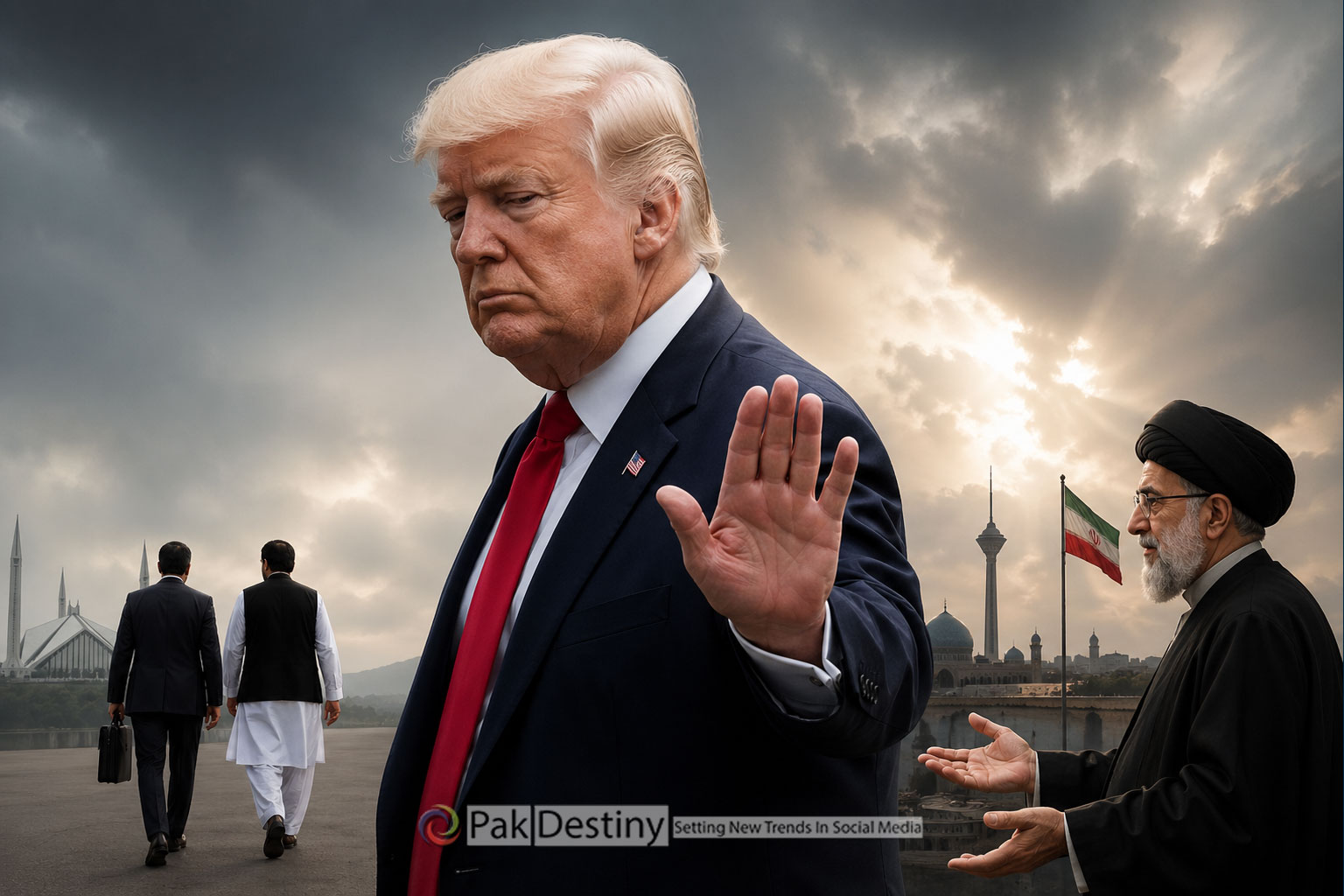
US President Donald Trump on Friday abruptly cancelled a planned visit by his envoys to Pakistan, a move that has cast uncertainty over ongoing efforts to broker a ceasefire and prevent further escalation. His remarks suggested deep scepticism about Tehran’s internal cohesion and its readiness to negotiate.
Negotiating with a regime that massacres its own people is a waste of time. stand with the Iranian people-not with those who oppress them.
— youtab (@miss_N26) April 25, 2026
Support the people of Iran under the leadership of Reza Pahlavi as a credible and legitimate figure for a future transition.@POTUS… pic.twitter.com/2gVfpt0iWz
“There is tremendous infighting and confusion within their ‘leadership’. Nobody knows who is in charge, including them,” Trump said in a strongly worded statement. He added that the door to diplomacy remained technically open, declaring, “If they want to talk, all they have to do is call!!!”
The decision to halt the diplomatic mission comes at a critical juncture, particularly as Pakistan had emerged as a potential venue for backchannel negotiations aimed at easing hostilities and exploring a framework for peace.
Very fruitful visit to Pakistan, whose good offices and brotherly efforts to bring back peace to our region we very much value.
— Seyed Abbas Araghchi (@araghchi) April 25, 2026
Shared Iran's position concerning workable framework to permanently end the war on Iran. Have yet to see if the U.S. is truly serious about diplomacy.
In contrast, Iran struck a more measured tone. Foreign Minister Abbas Araghchi described his recent visit to Pakistan as “very fruitful,” signalling Tehran’s willingness to engage—albeit cautiously.
In a post on X, Araghchi praised Pakistan’s role, stating that Tehran “very much values” Islamabad’s “good offices and brotherly efforts to bring back peace to our region.” He also revealed that Iran had shared its position on a “workable framework” to permanently end the conflict.
However, he stopped short of expressing optimism about Washington’s intentions. “Have yet to see if the US is truly serious about diplomacy,” he noted, underscoring the deep mistrust that continues to define US-Iran relations.
— Rapid Response 47 (@RapidResponse47) April 25, 2026
The contrasting tones highlight a widening perception gap. While Washington questions Tehran’s internal stability and negotiating capacity, Iran appears to be testing the credibility of US diplomatic overtures.
With both sides digging in rhetorically and key diplomatic engagements now in limbo, the situation increasingly resembles a high-stakes game of nerves. The coming days will be critical in determining whether backchannel efforts can revive dialogue—or whether miscalculations will push the two adversaries closer to open confrontation.
— TODAYS US (@uselessinfoonx) April 25, 2026
For now, the region watches anxiously as the fragile window for peace narrows, leaving the world to wonder:
Will Washington and Tehran return to the negotiating table—or drift further toward war?