By Dr. Syed Imran Ahmad Shah
Abstract
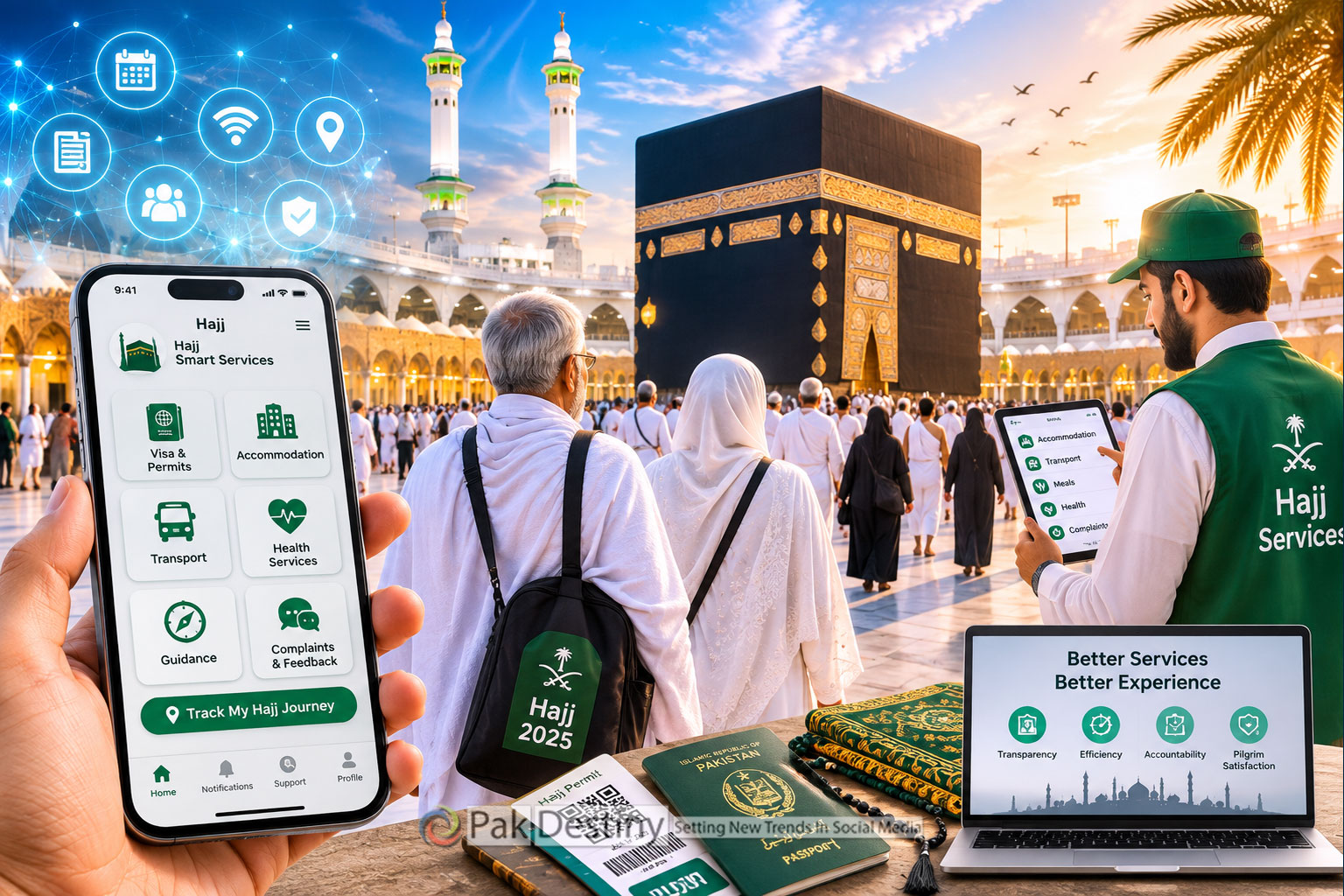
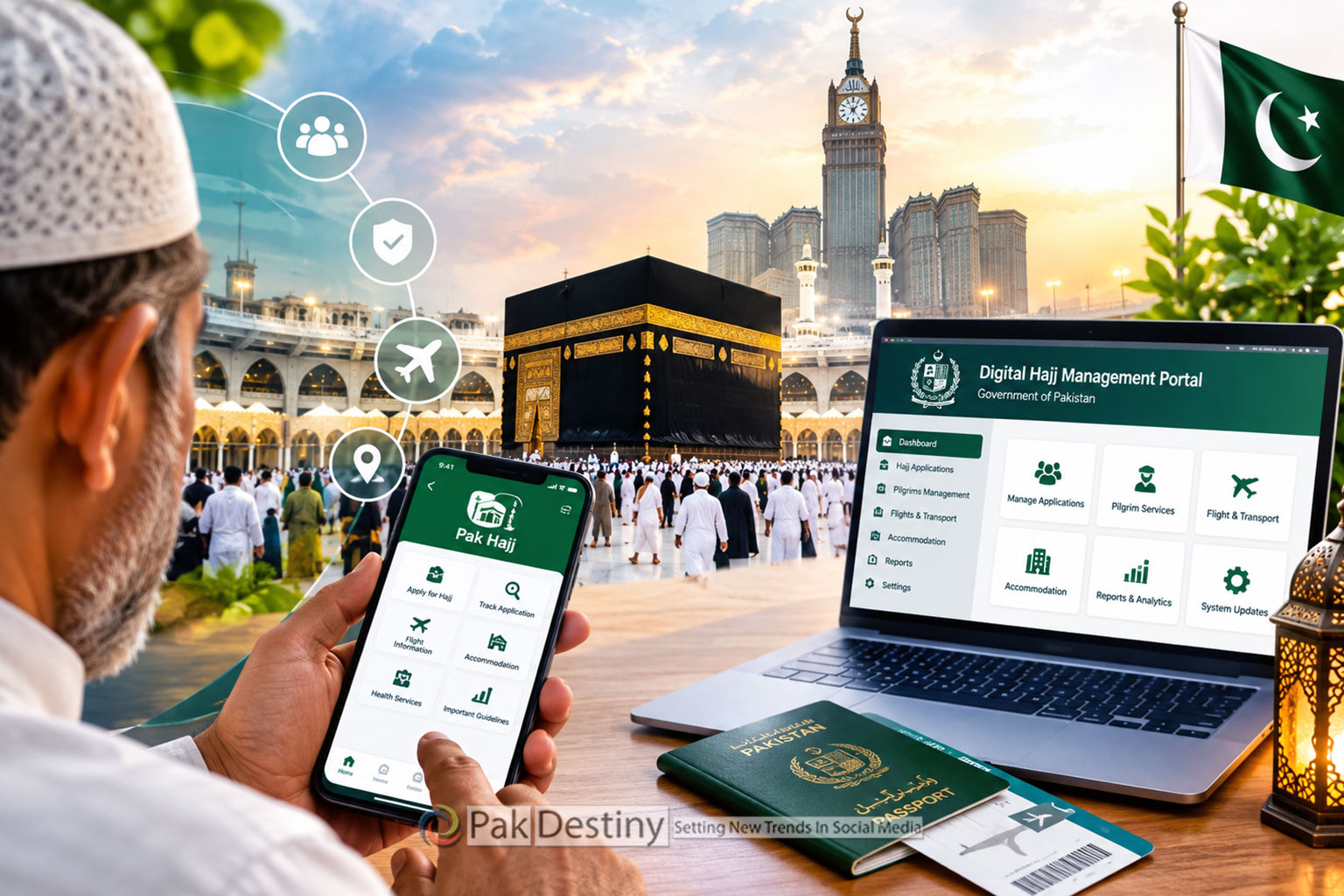
The digital transformation of public services has increasingly become an important component of modern governance. In Pakistan, the management of Hajj operations has traditionally involved extensive documentation, physical verification, banking procedures, medical certification, accommodation arrangements, and interaction with government offices. The introduction and expansion of the Pak Hajj App and Digital Hajj Portal, developed through collaboration between the Ministry of Religious Affairs and Interfaith Harmony and the National Information Technology Board (NITB), represent a significant shift toward citizen-centric digital service delivery.
Recent developments have introduced several digital services for government-scheme pilgrims, including modification of Hajj package duration, selection of accommodation types, online submission of medical fitness certificates, hardship applications for Mahram or helpers, cancellation of Hajj applications, and refund-related processes. These services are intended to reduce physical visits, paperwork, waiting time, and administrative burden while improving accessibility and convenience for pilgrims.
This article examines the digital transformation of Hajj administration in Pakistan from the perspectives of e-government, citizen-centric governance, digital communication, accessibility, transparency, and service delivery. Using a qualitative documentary research approach, the study analyzes official information released by the Ministry of Religious Affairs and NITB. The paper argues that the Pak Hajj App is evolving from a registration-oriented application into a broader digital Hajj service ecosystem. However, the success of this transformation depends not only on technological availability but also on digital literacy, cybersecurity, data protection, system reliability, accessibility for elderly pilgrims, and the availability of human assistance.
1. Introduction
Hajj is one of the most important religious obligations for Muslims and involves a complex administrative process for governments responsible for facilitating pilgrims. For Pakistan, Hajj management involves thousands of pilgrims and requires coordination among government institutions, banks, airlines, healthcare providers, accommodation service providers, transport authorities, and Saudi Arabian authorities.
Historically, many Hajj-related processes required pilgrims to visit banks, government offices, medical facilities, and other service points in person. Paper-based documentation and physical verification could increase administrative workload and create additional challenges, particularly for elderly pilgrims, persons with limited mobility, and overseas Pakistanis.
The growing adoption of digital governance provides an opportunity to redesign this process. The Pak Hajj App and Digital Hajj Portal represent an important development in this direction. The systems have increasingly moved beyond basic registration and payment functions toward integrated service delivery.
This transformation raises an important research question: To what extent can digital Hajj platforms transform traditional Hajj administration into a more accessible, transparent, efficient, and citizen-centric public service system?
2. Research Problem
Traditional Hajj administration can involve multiple administrative steps, physical documentation, verification processes, and interactions with different institutions. These procedures may create challenges for pilgrims and government officials alike.
The digitalization of these services has the potential to address several problems, including unnecessary physical visits, lengthy paperwork, repeated submission of information, difficulty accessing services from remote locations, delays in administrative processing, and limited real-time information.
However, digitization itself does not automatically guarantee better service delivery. A digital system must also be accessible, user-friendly, secure, reliable, and supported by adequate human assistance. Therefore, this study examines the transition from conventional Hajj administration toward digital and citizen-centric Hajj governance.
3. Research Objectives
The study has the following objectives:
- To examine the major digital services introduced through the Pak Hajj App and Digital Hajj Portal.
- To analyze the role of digital technology in improving Hajj service delivery.
- To examine the potential impact of digitalization on pilgrim convenience and accessibility.
- To explore the role of digital platforms in improving transparency and administrative efficiency.
- To identify challenges associated with digital Hajj administration.
- To examine the communication dimension of digital Hajj services.
- To propose recommendations for developing an integrated Digital Hajj Ecosystem in Pakistan.
4. Research Questions
RQ1: What major Hajj-related services have been digitized through the Pak Hajj App and Digital Hajj Portal?
RQ2: How can digital Hajj services reduce the administrative burden on pilgrims?
RQ3: How can digital platforms contribute to transparency and accountability in Hajj administration?
RQ4: What challenges may affect the effective adoption of digital Hajj services?
RQ5: What measures can further improve Pakistan’s digital Hajj service delivery model?
5. Research Methodology
This study uses a qualitative documentary research methodology. The analysis is based primarily on official information and policy material published by the Ministry of Religious Affairs and Interfaith Harmony, Government of Pakistan; the National Information Technology Board; official Hajj policy documents; and official announcements concerning the Pak Hajj App and Digital Hajj Portal.
The study examines the development of digital Hajj services from the perspective of public administration and communication. The study is exploratory and conceptual. It does not claim to measure user satisfaction statistically because no primary survey was conducted. Future empirical research should therefore examine pilgrims’ experiences, usability, satisfaction, adoption rates, and technical performance.
6. Digital Transformation of Hajj Administration
The digitalization of Hajj administration in Pakistan has developed progressively. The Hajj management system has increasingly incorporated online registration, digital payments, mobile applications, online complaint registration, monitoring systems, medical documentation, accommodation management, package modification, and cancellation and refund processes.
NITB has described its collaboration with the Ministry of Religious Affairs in developing digital Hajj registration and management systems, including the Pak Hajj App and Hajj Registration Management System. This demonstrates an important transition from a traditional administrative model to a digital service-delivery model.
7. Major New Features of the Pak Hajj App
The introduction of new features significantly expands the functionality of the Pak Hajj App. The platform is increasingly positioned as a broader service-delivery mechanism rather than only a registration tool.
| Feature | Potential Benefit |
| Hajj package modification | Greater flexibility for pilgrims |
| Long-to-Short package conversion | Ability to adjust duration |
| Short-to-Long package conversion | Option for extended stay |
| Two-bed accommodation | Individual accommodation choice |
| Three-bed accommodation | Flexible room selection |
| Family accommodation | Suitable for groups of 4–6 people |
| Sharing accommodation | Additional accommodation option |
| Medical fitness certificate | Digital documentation |
| Hardship application | Online application for eligible Mahram/helper |
| Cancellation facility | Remote submission of cancellation request |
| Refund facility | Simplified refund-related processing |
| Digital private Hajj booking | Greater transparency in booking and payment |
These developments indicate that the application is gradually evolving from a registration application into an integrated service-delivery platform.
8. Medical Fitness and Digital Documentation
Medical fitness is a critical component of Hajj preparation because pilgrims may face physically demanding conditions during the pilgrimage.
The digital process enables pilgrims to obtain the medical fitness certificate through the Pak Hajj App, have it verified by an authorized doctor, and subsequently upload the verified certificate to the application or portal.
This process can create several administrative benefits: reduction in paper-based documentation, centralized medical records, easier verification, reduced need for repeated physical visits, and greater convenience for overseas Pakistanis.
9. Accommodation Choice and Personalized Service Delivery
One of the notable developments is the ability of pilgrims to modify their accommodation preferences. Options include two-bed rooms, three-bed rooms, family rooms for groups of four to six people, and shared accommodation.
This represents a shift toward personalized public service delivery. Instead of treating all pilgrims as a uniform group, the system allows individuals and families to select arrangements according to their circumstances and preferences.
10. Package Modification and Administrative Flexibility
The ability to request conversion between long and short Hajj packages through the digital platform introduces an additional layer of flexibility. Pilgrims who initially select one package may subsequently request a change according to their circumstances.
This demonstrates how digital platforms can convert a traditionally bureaucratic procedure into a self-service administrative process.
11. Hardship Applications and Social Accessibility
Certain pilgrims may require the assistance of a Mahram or helper because of their individual circumstances. The introduction of a digital hardship application mechanism allows eligible pilgrims to submit their requests through the Pak Hajj App or Digital Hajj Portal.
This has important implications for inclusive governance. However, digitalization should not unintentionally create a new barrier for elderly or digitally inexperienced pilgrims. Digital services should therefore be accompanied by helplines, facilitation counters, assisted digital registration, simple Urdu-language instructions, and family-assisted procedures.
The principle should be: Digital-first, but not digital-only.
12. Cancellation and Refund Services
Cancellation and refund are financially sensitive aspects of Hajj administration. The availability of cancellation and refund-related digital features can potentially make these processes more convenient and transparent.
An integrated digital process can allow pilgrims to initiate a request and monitor its status without repeatedly visiting offices. From an administrative perspective, the digital record can also help establish a clear transaction history.
13. Private Hajj Scheme and Digital Consumer Protection
Digital transformation also extends to the private Hajj scheme. The Ministry of Religious Affairs has advised pilgrims to use the official digital Hajj portal for private Hajj booking and payment and to verify the status of Hajj operators through official channels.
This has an important consumer-protection dimension. A centralized digital platform can potentially help pilgrims verify authorized Hajj operators, available packages, available seats, booking status, and payment information. This can contribute to greater transparency in the private Hajj sector.
14. Digital Hajj as a Communication System
From a Media and Communication perspective, the Pak Hajj App should not be viewed solely as an administrative application. It can also function as a strategic communication platform.
During Hajj, pilgrims require timely information regarding flight schedules, accommodation, transportation, health instructions, training, emergency contacts, complaints, policy changes, and important announcements.
A digital platform can establish a two-way communication model in which the government provides information and pilgrims submit applications, complaints, feedback, and service requests. This creates a feedback loop that is essential for citizen-centric governance.
15. Transparency and Accountability
One of the potential advantages of digital administration is improved traceability. A well-designed digital system can record application submission, payment, verification, modification, approval, cancellation, refund, and complaint status.
Such electronic records can strengthen administrative accountability because transactions become easier to track and audit. However, effectiveness depends on data integrity, cybersecurity, access controls, audit trails, system availability, and institutional oversight.
16. Digital Divide and Accessibility
Digital transformation creates opportunities but also raises concerns about the digital divide. Not every pilgrim has the same level of smartphone literacy, internet access, digital confidence, or technological familiarity.
Elderly pilgrims may be particularly dependent on family members or facilitation staff. Therefore, the success of digital Hajj administration should not be measured only by the number of digital transactions. It should also be measured through accessibility, usability, inclusiveness, satisfaction, and reliability.
17. Cybersecurity and Data Protection
Digital Hajj platforms potentially process sensitive information, including CNIC details, passport information, medical records, contact information, financial transactions, and accommodation details.
Consequently, cybersecurity must be considered a fundamental component of Digital Hajj governance. Future development should include strong authentication, encryption, role-based access control, regular security audits, data backup and disaster recovery, clear privacy policies, and incident-response mechanisms.
18. Conceptual Framework
The study proposes a conceptual framework in which digital infrastructure supports the Pak Hajj App and Digital Hajj Portal, which in turn enable registration and payment, digital documentation, medical verification, package and accommodation personalization, hardship/cancellation/refund services, and communication and complaint management. These processes contribute to transparency, accessibility, and administrative efficiency, ultimately supporting citizen-centric Hajj service delivery.
Four factors should operate across the entire framework: Digital Literacy, Cybersecurity, System Reliability, and Human Facilitation.
19. Discussion
The available official information suggests that Pakistan’s Hajj administration is moving from a primarily registration-focused digital system toward a broader integrated digital service ecosystem.
This transformation is significant because it changes the relationship between the pilgrim and the administration. Previously, pilgrims often had to navigate several administrative institutions. A mature digital model can bring many of these interactions into one platform.
The emerging model can therefore be conceptualized as: One Pilgrim – One Digital Profile – Multiple Integrated Hajj Services.
However, the availability of digital features should not automatically be interpreted as evidence of successful digital transformation. Future research should empirically measure user satisfaction, application usability, system uptime, processing time, complaint-resolution time, digital adoption, error rates, and accessibility for elderly pilgrims.
20. Recommendations
Develop a unified digital Hajj dashboard containing payment, medical, accommodation, training, flight, complaint, and refund information.
Introduce an AI-based multilingual Hajj assistant to answer frequently asked questions.
Establish real-time complaint tracking with a unique tracking number for every complaint.
Introduce an elderly-friendly interface with larger fonts, simple navigation, voice instructions, and fewer steps.
Maintain physical facilitation so that digital services complement rather than completely replace human assistance.
Strengthen cybersecurity through regular independent security audits.
Introduce annual user-satisfaction surveys after every Hajj season.
Develop a Hajj data analytics system using appropriately anonymized data to identify common complaints, accommodation demand, medical trends, processing delays, and frequently requested services.
21. Future Research
Future researchers can extend this study through empirical research involving government-scheme pilgrims. A survey could measure perceived ease of use, perceived usefulness, digital literacy, trust, accessibility, satisfaction, intention to use, and technical reliability.
The Technology Acceptance Model (TAM) or UTAUT could provide a theoretical framework for examining adoption of the Pak Hajj App. Such research would move the discussion from conceptual assessment to empirical evaluation.
| Variable | Possible Measurement |
| Perceived Ease of Use | 5-point Likert scale |
| Perceived Usefulness | 5-point Likert scale |
| Digital Literacy | Self-assessment |
| Trust | Trust in government digital services |
| Accessibility | Ease of accessing services |
| Satisfaction | Overall satisfaction |
| Intention to Use | Future adoption |
| Technical Reliability | System experience |
The study could use the Technology Acceptance Model (TAM) or UTAUT as its theoretical framework.
This would allow the researcher to move from a conceptual assessment to an empirical evaluation of the Pak Hajj App.
22. Conclusion
The introduction of expanded digital services through the Pak Hajj App and Digital Hajj Portal represents an important development in Pakistan’s Hajj administration.
The system is increasingly moving beyond basic registration toward a comprehensive digital service model that includes package modification, accommodation selection, medical fitness documentation, hardship applications, cancellation, refund-related services, and private Hajj booking and payment.
The significance of this transformation extends beyond technological innovation. It has the potential to reshape the relationship between citizens and public institutions by making Hajj services more accessible, responsive, transparent, and convenient.
However, successful Digital Hajj governance requires more than a mobile application. It requires an integrated ecosystem combining technology, communication, human facilitation, cybersecurity, data protection, and accountability.
In the end, the value of the Pak Hajj App should be judged by whether it actually makes Hajj-related services easier, clearer, safer, and more accessible for pilgrims.
References
- Ministry of Religious Affairs & Interfaith Harmony, Government of Pakistan. Hajj Policy and Plan 2026.
- Ministry of Religious Affairs & Interfaith Harmony. Official Hajj 2027 announcements and digital service updates.
- National Information Technology Board. Official updates concerning the Pak Hajj App, Hajj Registration Management System, and Digital Hajj Management System.
- National Information Technology Board. Official information concerning online Hajj registration and digital Hajj services.
Research Note
This article is based on documentary analysis of official information and is designed as a research-paper draft. For journal submission, all current statistics, dates, policy provisions, and digital-service figures should be rechecked against the latest official Ministry of Religious Affairs and NITB publications. An empirical survey of pilgrims may be added to strengthen the paper’s findings and enable statistical testing of technology acceptance, usability, trust, and satisfaction.
By Dr. Syed Imran Ahmad Shah
PhD (Media Studies)
Former Research Fellow, Michigan State University, USA
Public Relations Professional and Researcher