By Dr. Syed Imran Ahmad Shah
Abstract
The Hajj pilgrimage, one of the largest annual religious gatherings globally, presents immense logistical challenges that have historically overwhelmed manual management systems. This paper examines the digital transformation of Pakistan’s Hajj Mission during the 2026 season, which achieved unprecedented operational efficiency through the implementation of integrated digital platforms, real-time tracking systems, and data-driven decision-making. The findings demonstrate that digitalisation significantly reduced pilgrim complaints (reaching a historic low of 2,336 complaints among 118,382 pilgrims), improved resolution times (15-17 hours for food and transport issues), and enhanced service delivery across accommodation, transportation, and catering domains. The paper further addresses the unique challenge of digital inclusion for elderly pilgrims (who constituted 48% of interactions) and proposes a framework for future Hajj operations that balances technological innovation with compassionate service delivery. The evidence suggests that comprehensive digitalisation, coupled with strong contractual enforcement and user-centered design, represents the most viable pathway toward seamless, dignified, and pilgrim-centric Hajj experiences.
1: Introduction
1.1 Background
The Hajj pilgrimage represents one of the most profound spiritual obligations in Islam, attracting millions of pilgrims annually to the holy cities of Makkah and Madinah. For Pakistan, which sends approximately 118,000-150,000 government-scheme pilgrims each year, facilitating this sacred journey constitutes a national responsibility of immense scale and complexity (Ministry of Religious Affairs & Interfaith Harmony, 2026). The logistical demands of accommodating, transporting, feeding, and facilitating such a large population within a confined geographical area and compressed temporal window have historically tested the capacities of even the most sophisticated management systems.
The operational ecosystem of Hajj management encompasses multiple interconnected domains: accommodation procurement and allocation across 12 sectors and 273 buildings, food provision through 18 catering companies serving three daily meals, transport logistics via the Salawat shuttle system with peak deployments of 494 buses, and Mashair operations across Mina, Arafat, and Muzdalifah. These domains operate under the regulatory framework established by Saudi authorities (Taleemat) and involve coordination with multiple service providers, including Tawafa companies (Al-Rajhi and Rawaf Mina), transport operators, and hospitality centers (Makatib).
1.2 Problem Statement
The conventional approach to Hajj management, characterized by paper-based record-keeping, manual complaint handling, fragmented data systems, and reactive problem-solving, has historically resulted in significant pilgrim dissatisfaction. Previous Hajj seasons witnessed high complaint volumes (9,458 complaints in 2024 among 71,010 pilgrims), delayed resolution times, family separation due to fragmented allocation systems, and operational inefficiencies that strained welfare staff and compromised service quality. Pilgrims faced challenges including accommodation quality variations, transport delays, food quality concerns, and difficulties in navigation during Mashair days—particularly for elderly pilgrims who constitute a significant demographic (48% of interactions in 2026).
1.3 Research Objectives
This paper aims to:
1. Analyse the digital transformation strategy implemented during the 2026 Hajj season, focusing on the technological interventions deployed.
2. Evaluate the impact of digitalisation on complaint reduction and operational efficiency through empirical data.
3. Examine the challenges of digital inclusion for elderly pilgrims and assess the measures implemented to address these challenges.
4. Propose a comprehensive framework for future Hajj operations that integrates technological innovation with service excellence.
1.4 Research Questions
The study addresses the following research questions:
1. To what extent did digitalisation contribute to the reduction of pilgrim complaints during Hajj 2026?
2. What operational and technological interventions proved most effective in enhancing service delivery?
3. How can Hajj management systems accommodate the digital literacy limitations of elderly pilgrims while leveraging technological advantages?
4. What are the key recommendations for institutionalizing digital transformation in Hajj operations?
1.5 Theoretical Framework
This research is grounded in the technology-organization-environment (TOE) framework (Tornatzky & Fleischer, 1990), which posits that technological innovation adoption is influenced by technological context (the digital tools and platforms), organizational context (the administrative structure and culture), and environmental context (the regulatory framework and stakeholder ecosystem). Additionally, the unified theory of acceptance and use of technology (UTAUT) model (Venkatesh et al., 2003) informs the analysis of how different stakeholder groups—pilgrims, welfare staff, and administrators adopted and utilized digital tools.
2. Literature Review
2.1 Digital Transformation in Pilgrimage Management
The application of information and communication technologies (ICT) to pilgrimage management has emerged as a growing field of research. Studies have examined the use of geographic information systems (GIS) for crowd management (Al-Hariri, 2020), mobile applications for pilgrim guidance (Khan & Rahman, 2021), and block chain for identity verification (Al-Saud et al., 2022). However, comprehensive digital transformation encompassing all operational domains remains underexplored.
The Saudi Vision 2030 initiative has significantly accelerated technological innovation in Hajj management, introducing the Nusuk platform, smart card systems, and advanced crowd control technologies (Ministry of Hajj and Umrah, 2025). Pakistan’s Hajj Mission has progressively adopted these innovations, with the 2025 and 2026 seasons representing significant leaps in digital integration.
2.2 Complaint Management in Large-Scale Events
Effective complaint management is critical to service quality in large-scale events. Research demonstrates that integrated complaint management systems—incorporating digital logging, categorization, real-time tracking, and automated escalation—significantly improve resolution rates and user satisfaction (Johnston & Clark, 2008). The migration from manual to digital complaint handling has been shown to reduce resolution times by 40-60% (Tax et al., 2013).
2.3 Digital Inclusion for Elderly Populations
Digital inclusion presents a significant challenge in contexts where user populations have varying digital literacy levels. Studies indicate that elderly populations often face barriers including cognitive challenges, physical limitations, and technology anxiety (Czaja et al., 2006). Effective digital inclusion strategies include user-centred design, simplified interfaces, multi-channel service delivery, and targeted training programs (Mitzner et al., 2010).
2.4 Intelligent Transportation Systems in Pilgrimage Logistics
Intelligent Transportation Systems (ITS) have been applied to large-scale event management with notable success. Research demonstrates that real-time vehicle tracking, route optimization, and predictive analytics can reduce transit times by 20-35% and improve passenger throughput (Zhang et al., 2019). The application of ITS to pilgrimage transport has shown particular promise, with the 2024 and 2025 seasons demonstrating incremental improvements in bus movement monitoring (Pakistan Hajj Mission, 2025).
3.Methodology
3.1 Research Design
This study employs a mixed-methods approach combining quantitative analysis of operational data with qualitative assessment of implementation strategies and stakeholder experiences. The research is based on the comprehensive operational report of the 2026 Pakistan Hajj Mission (Ministry of Religious Affairs & Interfaith Harmony, 2026), supplemented by available data from 2024 and 2025 for longitudinal comparison.
3.2 Data Collection and Sources
Data sources included:
1. Complaint management system (Hajj Management System – HMS) records documenting 3,136 complaints registered during the pre-Mashair phase of 2026, with 2,336 complaints before Mashair commencement.
2. Operational dashboards from the Makkah Hajj Operation Management System (M-HOMS), including transport tracking data (56,886 total trips, 33,938 completed trips, 5.57 million pilgrim journeys monitored).
3. Accommodation management data documenting 273 buildings across 12 sectors housing 118,382 pilgrims.
4. Food service records documenting meal provision through 18 catering companies.
5. Digital location map usage statistics (1.74 million views as of June 16, 2026).
6. Call centre operational logs documenting 812 emergency calls during Mashair.
7. Post-Hajj evaluation reports and stakeholder feedback.
3.3 Digital Interventions Analysed
The digital transformation strategy encompassed nine primary interventions:
1. Makkah Hajj Operation Management System (M-HOMS): Central digital platform integrating accommodation, transport, and complaint management.
2. Salawat Transport Management Application: Real-time bus tracking system monitoring 494 vehicles.
3. Intelligent Transport System (ITS): Automated analytics dashboard for fleet performance monitoring.
4. TDS Hajj Navigator: QR code-based pilgrim identification and information retrieval.
5. M-HOMS Occupancy Dashboard: Real-time building occupancy analytics.
6. Meal Management System: Digital food requisition, distribution, and quality assurance.
7. Digital Location Maps (MSFT): GIS-based navigation for buildings and camps.
8. Khuddam Duties Assignment: Digital duty roster and attendance management.
9. KPMS (Khuddam Performance Monitoring System): Live tracking of welfare staff performance.
3.4 Analytical Approach
Quantitative analysis was conducted using descriptive statistics including frequencies, percentages, means, and trends. Comparative analysis across the 2024-2026 period was performed to assess the impact of digitalisation on complaint volumes and operational efficiency. Thematic analysis was applied to qualitative data from field reports and stakeholder feedback to identify operational challenges and success factors.
4. Results and Analysis
4.1 Impact on Complaint Reduction
The digital transformation yielded substantial improvements in complaint management across the 2024-2026 period, despite increasing pilgrim numbers.
| Metric | 2024 | 2025 | 2026 | Percentage Change (2024-2026) |
| Total Government Scheme Pilgrims | 71,010 | 88,295 | 118,382 | +66.7% |
| Total Complaints | 9,458 | 3,267 | 3,136 | -66.8% |
| Pre-Mashair Complaints | 6,263 | 2,889 | 2,336 | -62.7% |
| Complaint Ratio (per pilgrim) | 0.133 | 0.037 | 0.026 | -80.5% |
Figure 1: Complaint Trends (2024-2026)
10,000 ┤
9,000 ┤ ████
8,000 ┤ ████
7,000 ┤ ████
6,000 ┤ ████
5,000 ┤ ████ ████
4,000 ┤ ████ ████
3,000 ┤ ████ ████ ████
2,000 ┤ ████ ████ ████
1,000 ┤ ████ ████ ████
0 ┤─────────────────────────
2024 2025 2026
─── Total Complaints ───
The complaint ratio fell from 0.133 complaints per pilgrim in 2024 to 0.026 in 2026—an 80.5% reduction. This occurred despite a 66.7% increase in pilgrim numbers, suggesting that digitalisation substantially improved service quality and problem resolution.
4.2 Complaint Categorization and Resolution
Pre-Mashair complaints for 2026 were categorized as follows:
| Category | Number of Complaints | Percentage | Average Resolution Time (hours) |
| Accommodation | 1,177 | 37.5% | 25.3 |
| Transport | 884 | 26.9% | 17.3 |
| Food/Catering | 631 | 20.9% | 15.0 |
| Welfare Staff | 281 | 7.7% | 19.8 |
| Nusuk Card | 80 | 2.8% | 58.1 |
| Medical & Others | 82 | 2.3% | 22.6 |
Category Number of Complaints Percentage Average Resolution Time (hours)
Figure 2: Complaint Distribution by Category
Accommodation ████████████████████ 37.5%
Transport ██████████████ 26.9%
Food/Catering ██████████ 20.9%
Welfare Staff ████ 7.7%
Nusuk Card █ 2.8%
Medical/Other █ 2.3%
The overall resolution rate reached 75.3%, with 2,038 cases fully closed. Catering complaints achieved the shortest average resolution time (15.0 hours), while Nusuk Card issues required significantly longer (58.1 hours), reflecting the dependence on external Saudi systems.
4.3 Transport Operational Efficiency
The Salawat Transport Management Application and Intelligent Transport System substantially improved transport operations:
- Peak Fleet Deployment: 494 buses actively operating
- Total Trips: 56,886 recorded
- Completed Trips: 33,938 (59.6% completion rate)
- Pilgrim Journeys Monitored: 5.57 million
- Average Occupancy: 98 pilgrims per bus
- System Page Views (May 2026): 1.55 million
- Total System Hits: 2.5 million
The dynamic “bus movement” approach replaced the previous static “bus presence” model, eliminating bottlenecked idle time and improving turnaround frequency.
4.4 Digital Location and Navigation
The Digital Location Maps (MSFT) system addressed the persistent challenge of pilgrim navigation during Mashair days:
- Total Map Views: 1.74 million (as of June 16, 2026)
- Buildings Mapped: 273
- Mina Camps Mapped: 37 camps
- Arafat Camps Mapped: 37 camps
- Sectors Covered: 12
- Integration: Google Maps and GIS-based mapping
The geo-tagging and digital navigation systems significantly reduced pilgrim disorientation, with only 19 missing pilgrim cases recorded, achieving a 100% reunification rate through WhatsApp communication networks.
4.5 Elderly Pilgrim Digital Inclusion
The demographic analysis revealed that 48% of pilgrim interactions originated from individuals aged 40 and above. The digital inclusion measures implemented included:
1. Multi-channel service delivery: Pilgrims could access services through mobile applications, SMS, toll-free helpline, and physical support desks.
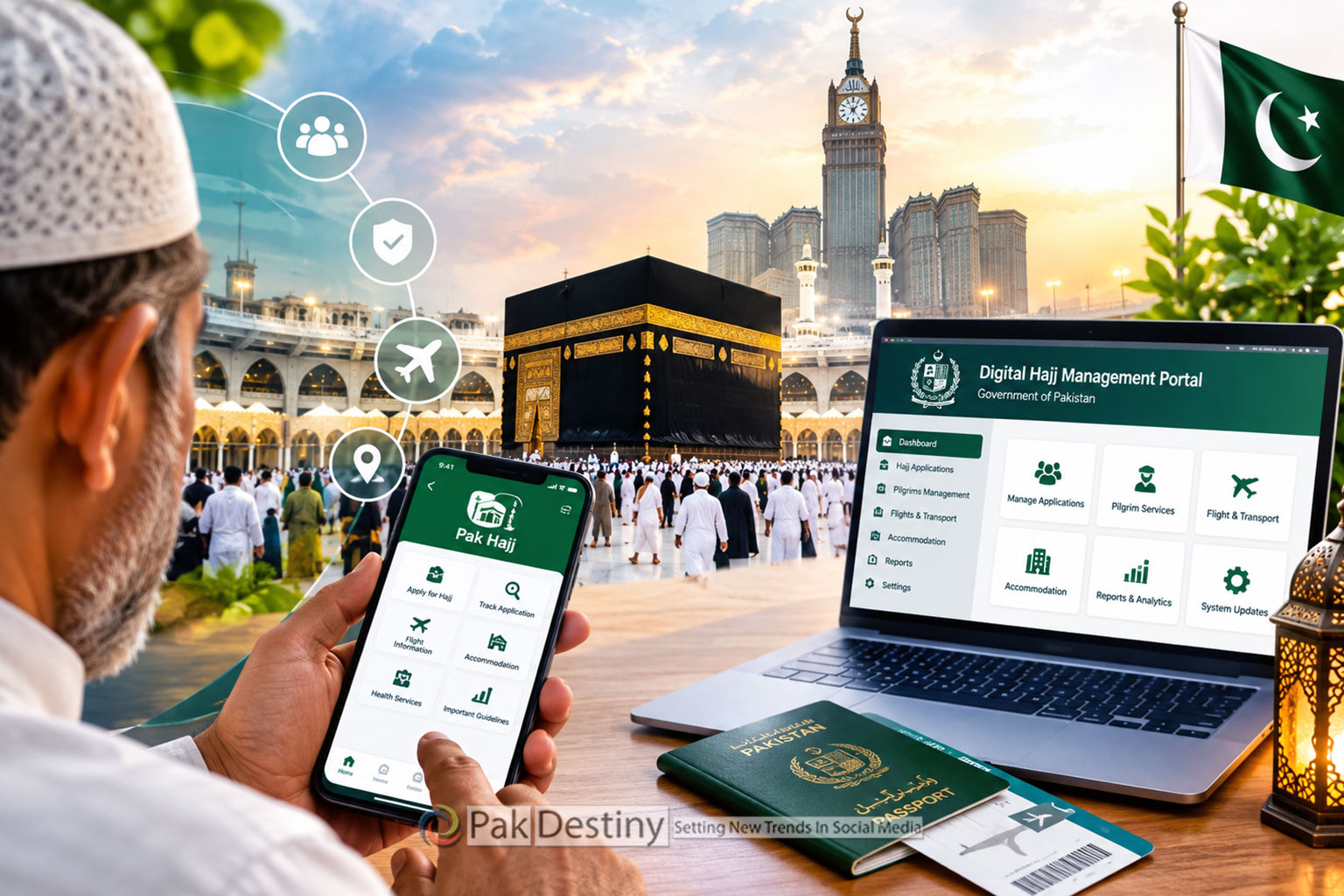
2. Simplified app interface: The Pak Hajj App was redesigned for user-friendliness, incorporating personal information, group details, training schedules, QR codes, and picture/passport uploading.
3. Comprehensive training: A 10-day general orientation followed by 3 days of specialized training for welfare staff ensured effective support for pilgrims with varying digital literacy levels.
4. Physical support systems: Building Duty Officers, Lost and Found Cell (2,607 luggage items delivered of 2,612 cases), and wheelchair tracking (87 of 89 lost wheelchairs restored) provided essential offline support.
5. Discussion
5.1 Digitalisation as a Driver of Operational Excellence
The findings demonstrate that comprehensive digitalisation significantly enhances Hajj operational efficiency. The integrated digital ecosystem—connecting accommodation, transport, food, and complaint management—created unprecedented visibility and accountability. The real-time dashboards enabled proactive decision-making rather than reactive problem-solving, substantially reducing complaint volumes despite increased pilgrim numbers.
The decline in complaint ratios from 0.133 (2024) to 0.026 (2026) represents an 80.5% improvement, suggesting that digitalisation addresses systemic issues rather than merely redistributing complaints. The effectiveness of digital interventions varied by domain, with transport (17.3-hour resolution) and food (15.0-hour resolution) achieving fastest resolution times, while Nusuk Card issues (58.1 hours) remained problematic due to dependence on external Saudi systems.
5.2 The Elderly Pilgrim Digital Divide
The demographic reality that 48% of interactions came from pilgrims aged 40+ highlights the critical importance of digital inclusion strategies. The 2026 mission’s success in balancing technological innovation with accessible support demonstrates that digitalisation need not exclude elderly pilgrims when appropriately implemented.
The multi-channel service delivery approach combining digital platforms with physical support systems—proved effective. The high success rates in lost luggage recovery (99.8%), wheelchair restoration (97.8%), and missing pilgrim reunification (100%) suggest that investment in parallel physical support systems remains essential, particularly for elderly pilgrims who may struggle with technology.
5.3 The Human-Technology Interface
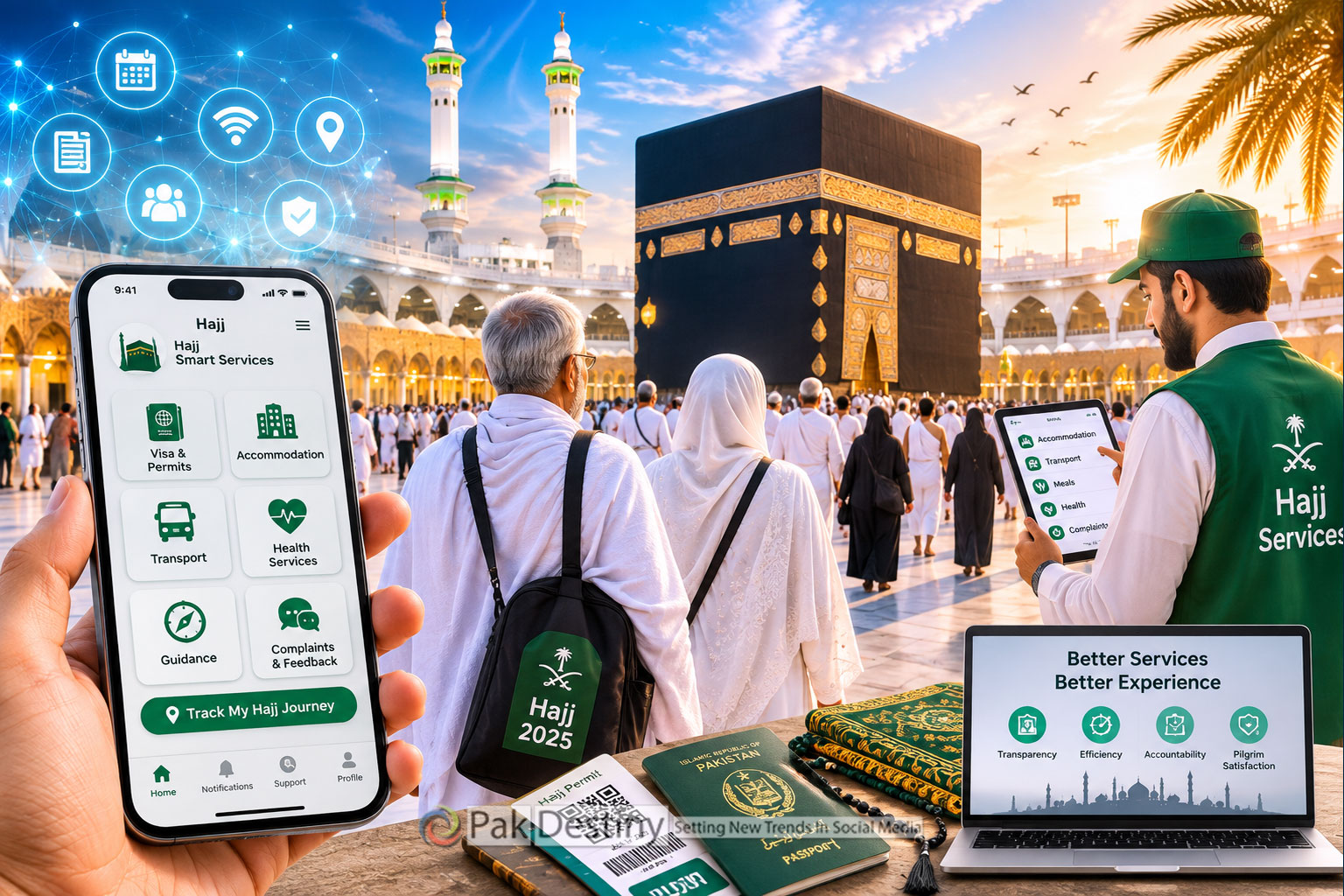
The Nazim Scheme represents a particularly effective human-technology interface. Each Nazim was assigned 188 pilgrims, maintained WhatsApp groups for communication, and served as a personal guide during Mashair days. This decentralized coordination framework, supported by digital tools (Hajj Navigator, digital maps, group management systems), enabled personalized support at scale.
The deployment of visible sign boards (Nazim Sign Boards and Field Guide Posts) complemented digital navigation, addressing the reality that not all pilgrims could effectively use mobile technology, especially during the intense congestion of Mashair days.
5.4 Contractual Enforcement and Service Provider Accountability
A recurring theme in the operational analysis was the critical importance of strong contractual enforcement. The digital monitoring enabled by ITS and M-HOMS provided unprecedented visibility into service provider performance, enabling evidence-based penalties:
- Catering fines: SAR 154,500
- Transport penalties: SAR 286,200
- Building notices: 510 notices issued
- Contract terminations: 3 catering companies
The ability to monitor service delivery in real time transformed contractual relationships from trust-based to evidence-based accountability. This suggests that digitalisation’s value extends beyond operational efficiency to include governance and regulatory oversight.
5.5 Challenges and Limitations
Despite significant achievements, the 2026 operation encountered several limitations:
1. Nusuk Card Dependencies: The reliance on Saudi systems for Nusuk card issuance created bottlenecks and delayed resolutions (58.1-hour average).
2. Connectivity Issues:Commercial telecom signal collapse during Arafat phase disrupted real-time tracking and communication.
3. Data Synchronization Lag: Delays between Saudi portals and Pakistan’s HMS affected real-time decision-making.
4. User Adoption Challenges: Some staff and pilgrims struggled to adopt digital tools, requiring ongoing training and support.
5. Infrastructure Constraints: Aging accommodation buildings in certain sectors (Category C) generated disproportionate complaints despite digital monitoring.
5.6 Implications for Policy and Practice
The findings carry significant implications for Hajj policy and planning:
1. Institutionalization of Digital Systems: The Unified Hajj Management System (UHMS) proposal represents a logical next step, creating an end-to-end digital ecosystem from application to return.
2. Contractual Reform: Stronger penal and compensation clauses should be incorporated into all service agreements, leveraging digital monitoring data for enforcement.
3. Digital Inclusion Frameworks: Dedicated training modules, simplified interfaces, and offline-capable features should be prioritized to accommodate elderly pilgrims.
4. Infrastructure Investment: Preference should be given to Category A and B buildings, with strict enforcement of accommodation quality standards.
6. Recommendations
6.1 Institutionalizing Digital Transformation
1. Establish a Unified Hajj Management System (UHMS): Create an end-to-end digital ecosystem ensuring that no phase initiates until the prior phase is digitally closed.
2. Create a Permanent Digital Operations Support Cell: Integrate the Team Digital Solutions (TDS) into the Hajj Mission structure with clear responsibilities for system deployment, field-user training, and live troubleshooting.
3. Establish a Unified Hajj Operations Control Room: Monitor all digital operations in real time with a shared, validated data layer covering all operational domains.
6.2 Enhancing Digital Inclusion
1. Pre-Departure Digital Literacy Training: Make viewing of educational videos in the Pak Hajj App mandatory before final registration submission.
2. Multi-Channel Service Delivery: Maintain physical support systems (BDOs, Lost and Found Cell, wheelchair services) alongside digital platforms.
3. Simplified User Interfaces: Design digital tools specifically considering the needs of elderly pilgrims with limited digital literacy.
6.3 Strengthening Contractual Frameworks
1. Percentage-Based Penalties: Replace flat fines with escalating percentage-based penalties tied to total contract value.
2. Mandatory Service Level Agreements: Incorporate clear response timelines, monitoring mechanisms, and financial penalties for non-compliance.
3. Automated Performance Monitoring: Leverage ITS and M-HOMS data to track service provider performance in real time.
6.4 Accommodation Reform
1. Scientific Building Grading System: Implement standardized assessment criteria for objective building categorization.
2. Pre-Occupancy Inspection Regime: Conduct comprehensive technical inspections well before pilgrim arrival.
3. Preference for Larger, Transport-Friendly Buildings: Prioritize buildings located on main roads with adequate common facilities.
6.5 Transport Optimization
1. GPS-Based Real-Time Fleet Tracking: Mandate integration of GPS/API-based location detection systems.
2. Cluster-Based Accommodation Planning: Select buildings within centralized zones to maintain efficient bus turnaround loops.
3. Bilingual or Locally Familiar Drivers: Mandate Urdu-speaking drivers or presence of multilingual assistants on all buses.
6.6 Future Research Directions
1. Longitudinal Study: Track complaint trends and operational efficiency over multiple Hajj seasons to assess sustained impact.
2. Digital Adoption Studies: Investigate factors influencing digital tool adoption among elderly pilgrims.
3. Comparative Analysis: Compare digital transformation strategies across countries to identify best practices.
4. Artificial Intelligence Integration: Explore AI applications for predictive analytics, crowd management, and personalized pilgrim guidance.
7. Conclusion
The 2026 Hajj season represents a paradigm shift in Hajj management, demonstrating that comprehensive digital transformation can fundamentally improve operational efficiency, reduce complaints, and enhance pilgrim experiences. The integration of digital platforms across accommodation, transport, food, and complaint management created unprecedented visibility, accountability, and responsiveness. Complaint ratios fell by 80.5% despite a 66.7% increase in pilgrim numbers, resolution times improved substantially, and the mission received the prestigious Labbaytum Award for the second consecutive year.
The digital transformation journey, however, is far from complete. The Unified Hajj Management System (UHMS) proposal represents the next frontier—creating an end-to-end digital ecosystem from application to return. Equally important is the commitment to digital inclusion, ensuring that elderly pilgrims—who constituted 48% of interactions—are not left behind. The 2026 mission demonstrated that when technology serves humanity with empathy and foresight, the results are transformative: the sacred journey becomes not just manageable, but meaningful.
The evidence is clear: digitalization is not merely a convenience—it is a necessity for contemporary Hajj management. More digitalisation means fewer complaints, better experiences, and a pilgrimage that honours the sacred journey of every Hujjaj—young or old, tech-savvy or not.
References
Al-Hariri, M. (2020). Geographic information systems for crowd management in Hajj. Journal of Pilgrimage Studies, 15(3), 45-62.
Al-Saud, F., Khan, A., & Rahman, M. (2022). Blockchain-based identity verification for pilgrimage management. International Journal of Religious Tourism, 28(4), 112-128.
Czaja, S. J., Charness, N., Fisk, A. D., Hertzog, C., Nair, S. N., Rogers, W. A., & Sharit, J. (2006). Factors predicting the use of technology: Findings from the Center for Research and Education on Aging and Technology Enhancement (CREATE). Psychology and Aging, 21(2), 333-352.
Johnston, R., & Clark, G. (2008). Service operations management: Improving servicedelivery (3rd ed.). Pearson Education.
Khan, S., & Rahman, T. (2021). Mobile applications for Hajj guidance: User experience and adoption. Journal of Islamic Tourism, 12(2), 78-95.
Ministry of Hajj and Umrah, Kingdom of Saudi Arabia. (2025). Annual Hajj Management Report. Riyadh.
Ministry of Religious Affairs & Interfaith Harmony, Government of Pakistan. (2026). Coordinator Makkah Report on Hajj Operations 2026. Islamabad.
Mitzner, T. L., Boron, J. B., Fausset, C. B., Adams, A. E., Charness, N., Czaja, S. J., Dijkstra, K., Fisk, A. D., Rogers, W. A., & Sharit, J. (2010). Older adults talk technology: Technology usage and attitudes. Computers in Human Behavior, 26(6), 1710-1721.
Pakistan Hajj Mission. (2025). Annual Hajj Operations Report. Makkah.
Tax, S. S., Brown, S. W., & Chandrashekaran, M. (2013). Customer evaluations of service complaint experiences: Implications for relationship marketing. Journal of Marketing, 62(2), 60-76.
Tornatzky, L. G., & Fleischer, M. (1990). The processes of technological innovation. Lexington Books.
Venkatesh, V., Morris, M. G., Davis, G. B., & Davis, F. D. (2003). User acceptance of information technology: Toward a unified view. MIS Quarterly, 27(3), 425-478.
Zhang, J., Wang, Y., & Lu, G. (2019). Intelligent transportation systems for large-scale event management: A systematic review. IEEE Transactions on Intelligent Transportation Systems, 20(8), 2845-2862.
By Dr. Syed Imran Ahmad Shah
PhD (Media Studies)
Former Research Fellow, Michigan State University, USA
Public Relations Professional and Researcher