— The Centre secures parliamentary approval for extraordinary intervention in PTI-ruled province, but bitter exchanges expose the deepening political divide over counterterrorism, constitutional authority and the future of federal-provincial relations
By Raza Ruman
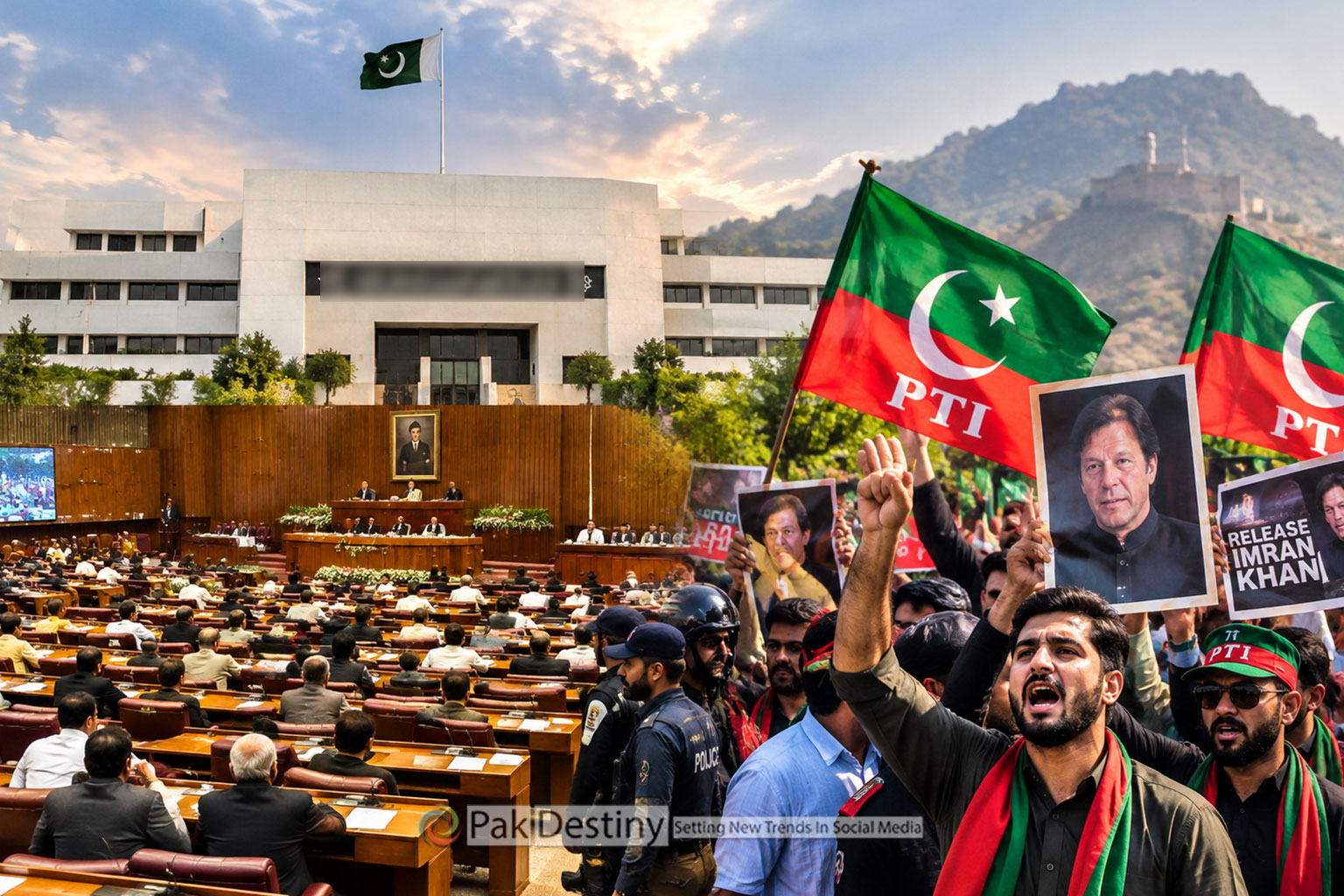
Parliament’s joint sitting on Thursday endorsed the imposition of emergency and governor’s rule in Khyber Pakhtunkhwa, giving the federal government parliamentary backing for its extraordinary intervention in the PTI-governed province amid vociferous opposition protests and competing claims over the fight against terrorism.
The approval, secured after an acrimonious debate, marked a significant escalation in the confrontation between the PML-N-led federal government and the PTI, which has accused the Centre of using security concerns to undermine its elected government in KP.
While the treasury benches defended the move as a constitutional necessity dictated by the deteriorating security situation, opposition leaders warned that branding an entire province as sympathetic to terrorism risked alienating its people and deepening an already dangerous political divide.
The federal government announced the measures on Oct 11, accusing the KP administration of deliberately disengaging from counterterrorism efforts. The decision followed weeks of strained relations, failed attempts to bridge differences and the PTI’s call for a long march to Islamabad to demand the release of its incarcerated founder, Imran Khan.
At Thursday’s joint sitting, opposition lawmakers displayed placards declaring “emergency na manzoor” (emergency is unacceptable) as Parliamentary Affairs Minister Tariq Fazal Chaudhry moved the resolutions under Articles 232 and 234 of the Constitution.
The House first approved a motion to suspend certain procedural requirements by 214 votes to 56, paving the way for the resolutions. Following hours of debate, the joint sitting adopted both measures.
Prime Minister Shehbaz Sharif attended part of the proceedings and exchanged handshakes with opposition leaders, including Senate Opposition Leader Allama Raja Nasir Abbas, in a brief display of parliamentary courtesy amid the bitter political confrontation.
Security or political confrontation?
Law Minister Azam Nazeer Tarar argued that the KP government had repeatedly been advised to take effective measures against terrorism but had failed to respond adequately. He defended governor’s rule under Article 234 on the grounds that the provincial government was allegedly not functioning in accordance with the Constitution.
Interior Minister Mohsin Naqvi, meanwhile, insisted that the federal government had been left with no option but to intervene, despite its efforts to reach an understanding with the provincial administration.
Recalling negotiations held on Oct 3, he claimed that the Centre had offered to declare an emergency in 12 districts of KP and that PTI leader Asad Qaiser had been willing to sign an agreement, subject to consultation with the provincial government.
Naqvi said both sides had shared a clear position on fighting terrorism and that the federal government had attempted until the last moment to avoid imposing the measures.
He also accused Chief Minister Sohail Afridi of failing to participate in military operations and attend funerals of security personnel, alleging that political considerations had constrained the provincial administration.
However, the government’s account was strongly contested by the opposition, which rejected the suggestion that the PTI or its provincial government was soft on terrorism.
PTI interim chairman Barrister Gohar Ali Khan described the situation as fragile and demanded an apology from the prime minister for allegedly suggesting that the people of KP were supporting terrorists.
He argued that such statements damaged the reputation of an entire federating unit and ignored the sacrifices made by its residents in the fight against militancy.
Mr Gohar also recalled the PTI’s support for the federal government during the recent conflict with India, lamenting that the party was now being accused of backing terrorists. He rejected the emergency proclamation and said the PTI remained committed to eliminating terrorism.
The opposition leader further claimed that PTI leaders, including himself, had attended funerals of victims of terrorist attacks, disputing the government’s assertions about their absence.
Opposition warns of consequences
National Assembly Opposition Leader Mehmood Khan Achakzai placed the confrontation within a broader historical context, arguing that faulty decisions by successive rulers had contributed to the country’s security crisis.
He questioned the reported preventive detention of Mr Afridi and criticised National Assembly Speaker Ayaz Sadiq over the conduct of the proceedings.
Mr Achakzai said the opposition was prepared to extend unconditional support for counterterrorism efforts if the government agreed to meaningful dialogue on strengthening Parliament and eliminating terrorism in all its forms.
He also traced the roots of militancy to Pakistan’s involvement in the Soviet-Afghan war, arguing that fighters brought into the region were left behind after the conflict and subsequently turned their guns on Pakistanis.
The opposition leader warned against treating the KP crisis merely as a law-and-order issue, invoking the separation of East Pakistan in 1971 as a cautionary example of the consequences of political alienation.
He also demanded that Imran Khan be allowed to meet his family, friends and party workers.
The exchanges underscored the central dilemma confronting the government: the need to address a worsening security situation without further eroding political trust between the Centre and a province that has borne a heavy burden of militancy.
Constitutional test ahead
The parliamentary endorsement provides the federal government with legislative backing for its intervention, but it does not settle the wider political dispute over the necessity, proportionality and consequences of the measures.
Article 232 governs the proclamation of an emergency, while Article 234 provides for federal intervention when a provincial government cannot be carried on in accordance with the Constitution. The latter proclamation must be placed before a joint sitting and, unless approved for continuation, ceases to operate after two months. It cannot remain in force beyond six months.
The emergency proclamation is also subject to the constitutional approval requirements applicable to it.
The proceedings therefore leave questions extending beyond the passage of resolutions. Whether extraordinary constitutional powers can help restore security, and whether they will instead intensify public resentment and political polarisation, will depend on how the intervention is implemented and whether the government can demonstrate tangible improvements in security.
For now, Parliament’s endorsement has strengthened the Centre’s formal position, but Thursday’s debate offered little evidence of a political consensus on how to defeat militancy in KP. The challenge remains to ensure that counterterrorism becomes a shared national undertaking rather than another front in the country’s prolonged struggle between rival political forces.