By Irum Saleem
The controversy surrounding Pakistani TV anchor Gharidah Farooqi once again highlights the deep intersection of media, politics, and societal attitudes toward women in the public sphere.
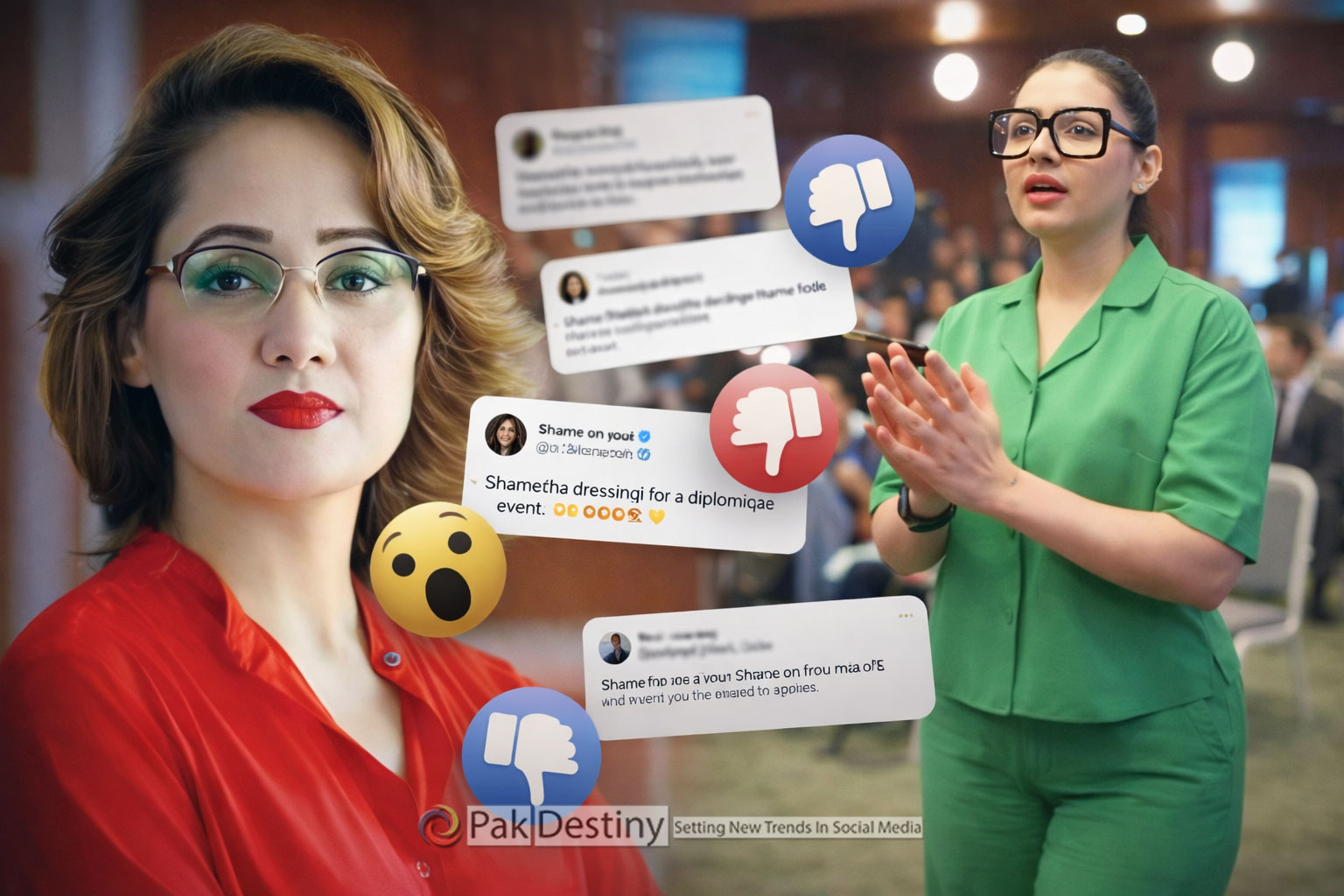
During the high-profile “Islamabad Talks” between the United States and Iran, Farooqi was present on the ground, covering what many considered one of the most consequential diplomatic engagements in recent times. However, instead of her reporting, analysis, or access, public discourse—particularly on social media—shifted toward her attire. What should have remained a moment of journalistic engagement quickly spiraled into a debate that says far more about society than it does about the individual at its center.
Farooqi, who has often been labeled by supporters of Imran Khan and the Pakistan Tehreek-e-Insaf (PTI) as “pro-PMLN” or aligned with the establishment, is no stranger to criticism. Yet this episode marked a shift from political critique to personal policing—particularly gendered scrutiny of appearance.
🚨🚨
— Asad Ali Toor (@AsadAToor) April 12, 2026
Both, and both chosen the dress of their choice and nobody has the right to talk about a woman should wear and what should not wear. This nonsense criticism on @GFarooqi attire is not only disgusting but problematic in many ways too! https://t.co/1w5DmGhPms
Social Media Reaction: A Divided Space
On platforms like X (formerly Twitter), reactions ranged from outright condemnation to strong defense of Farooqi:
“Why is a journalist’s dressing more important than the diplomacy she’s covering? This obsession says everything about us.”
“You may disagree with her politics, but dragging her over clothes is unacceptable. This is harassment, plain and simple.”
“Our society will never progress if women are judged for what they wear instead of what they do.”
At the same time, critics—some cloaked in moral language—continued their attacks:
“Public figures should maintain cultural values. This is not the West.”
“There should be some decorum when representing Pakistan at international events.”
This polarized reaction reflects a broader ideological divide in Pakistan, where conversations about media credibility, political bias, and morality often overlap—and sometimes dangerously blur.
This is NOT criticism neither on attire. A picture taken without my consent from a private angle, then MORPHED, and turned into a planned smear vile campaign of harassment. Not the first time against me, A picture taken without my consent from a private angle, then MORPHED, and… https://t.co/lCX1Yubuqw
— Gharidah Farooqi (T.I.) (@GFarooqi) April 13, 2026
Dawn’s Rebuke
In a strongly worded editorial stance, Dawn condemned the backlash, calling it a “sickening, regressive display” of societal attitudes toward women. The paper deliberately refused to describe Farooqi’s attire, arguing that doing so would validate the very scrutiny it was criticizing.
Instead, Dawn reframed the issue:
The problem was not what Farooqi wore
The problem was the societal impulse to police women’s bodies
The problem was the normalization of public shaming under the guise of morality
Their commentary pointed out a recurring pattern: regardless of profession, achievement, or context, women in Pakistan are often reduced to their appearance. Even in a high-stakes diplomatic setting, where global security and regional peace were under discussion, attention drifted toward a female journalist’s clothing.
ڈاکٹر صاحب 😂
— Ahmad Hassan Bobak (@ahmad__bobak) April 12, 2026
غریدہ فاروقی پجاما پہن کر ہی کنونشن سینٹر آ گئیں پجاما بھی سونے والا ڈریس تھا میرے پاس بلکل ایسے ہی پجامے ہیں جیسے محترمہ پہن کر آ گئیں بڑی عینک لگا کر ناک سے انگلش بول کر مغربی کپڑے پہن کر سمجھنا شروع کر دیا کہ ہم ماڈرن ہیں pic.twitter.com/9Zjuvijpxl
Gender, Media, and Power
This episode underscores a persistent challenge in Pakistan’s media landscape: women journalists face scrutiny that goes far beyond their professional work. While male anchors are typically judged on their analysis or political leanings, women often have to navigate an additional layer of public judgment tied to appearance, behavior, and perceived “respectability.”
Farooqi’s case is particularly telling because:
She was performing her professional duty at an international event
There were no complaints from organizers or attendees
The backlash originated largely from remote observers on social media
As Dawn pointedly noted, many of those passing judgment were likely far removed from the event itself—yet felt entitled to critique and amplify their opinions.
Beyond One Individual
What makes this incident significant is not just the targeting of one journalist, but what it reveals about societal priorities. At a time when discussions could have focused on nuclear diplomacy, regional stability, or Pakistan’s role as a mediator, a segment of public discourse veered toward moral policing.
This reflects a broader cultural tension: Between modern professional spaces and traditional expectations.
Between women’s autonomy and societal control. Between substantive discourse and superficial controversy
The Bigger Picture
Ultimately, the debate around Gharidah Farooqi is less about her and more about the environment in which women operate in Pakistan. It raises uncomfortable questions:
Why are women’s appearances still a subject of public debate in professional settings?
Why does political disagreement so often translate into personal attacks?
And why, even in moments of global significance, does gendered scrutiny take center stage?
As the dust settles on both the Islamabad Talks and the social media storm that followed, one reality remains clear: while diplomacy may proceed behind closed doors, the battle over narratives—especially those involving women—continues to play out loudly in the public domain.
But one thing is sure this Farooqi knows the art how to remain in news.