— Pakistan and China have launched an “Information Corridor” to fight misinformation and build mutual understanding
— But in a country where journalists face censorship, blocked platforms and shrinking editorial space, the promise to counter “falsehoods with fact” raises a more uncomfortable question: who gets to decide what counts as truth?
By Zulqernain
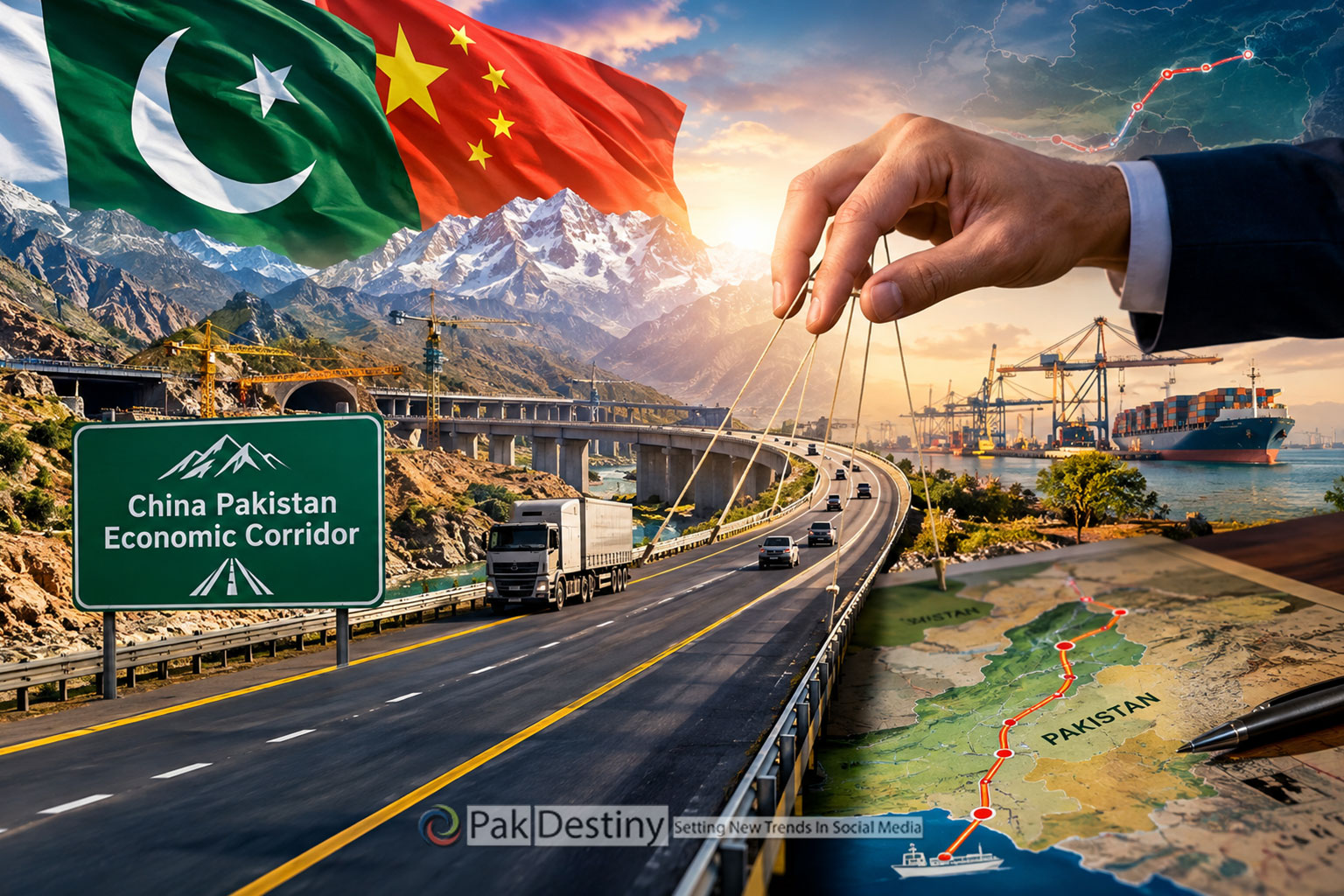
Pakistan and China have built many corridors together — of roads, energy, trade and connectivity. Now they are building one for information.
The launch of the China-Pakistan Information Corridor (CPIC) has been presented as the next logical extension of the bilateral relationship — a digital bridge designed to promote media cooperation, cultural exchange, think-tank collaboration, tourism and, crucially, to counter misinformation.
Information Minister Ataullah Tarar described it in striking terms: CPEC connected “lands”; CPIC would connect “minds”. He spoke of a highway made not of rocks but of truth, carried not on trucks but on voices.
The metaphor is powerful. The timing is harder to ignore.
Because Pakistan’s information landscape is already crowded with barriers — restrictions on journalists, pressure on news organisations, blocked or throttled digital platforms, censorship concerns and an increasingly contested space for political speech. In such an environment, any state-led initiative promising to fight “misleading narratives” inevitably raises a fundamental question:
Who decides which narrative is misleading?
There is nothing inherently objectionable about fact-checking. Democracies need credible journalism, verification mechanisms and institutions capable of exposing propaganda and disinformation.
Cross-border media exchanges and cultural programmes can also help societies understand one another beyond stereotypes.
But fact-checking becomes problematic when it is indistinguishable from official narrative management.
CPIC’s stated objectives therefore deserve scrutiny not simply for what they promise, but for what they might enable.
The proposed media pillar includes 18 Pakistani and Chinese organisations, news exchanges and a dedicated mechanism to counter misleading narratives.
The business pillar will promote trade and investment stories; think tanks will produce joint research; tourism and cultural exchanges will deepen people-to-people contact.
All of that sounds benign.
Yet there is a missing pillar: independent journalism.
There is little comfort in promising to counter falsehoods if journalists cannot freely investigate the powerful, question official claims or publish inconvenient facts.
A society does not protect itself from misinformation by narrowing the space in which uncomfortable information can be reported.
This is particularly relevant in Pakistan, where the state has repeatedly justified restrictions on information in the language of national security, public order, responsible communication and the fight against fake news.
The danger is not that Pakistan will cooperate with China on information.
The danger is that information cooperation could gradually become narrative cooperation.
China has its own highly managed information environment, where the state exercises extensive control over media and online discourse.
Pakistan, despite having a different political and media system, has its own long-running tensions between governments, security institutions, journalists and digital platforms.
Against that backdrop, CPIC should not merely be judged by the number of podcasts produced, trade portals launched or media organisations exchanging content.
It should be judged by a much simpler test:
Will it create more space for independent information — or more mechanisms for controlling it?
Tarar’s line that CPIC will counter “falsehoods with fact, isolation with exchange, and suspicion with trust” is an admirable aspiration.
But trust cannot be manufactured by official messaging. It is earned when citizens believe they are allowed to see the whole picture.
A student in Lahore should indeed be able to understand the China of today rather than a caricature of China.
But the same principle must work in the other direction.
A family in Chengdu should not only see an officially curated Pakistan of warmth, resilience and potential. It should also be able to encounter Pakistan’s contradictions: its political arguments, independent journalists, dissenting voices, social problems, vibrant civil society and fiercely contested public debate.
Otherwise, CPIC risks becoming less a corridor between societies and more a pipeline between official narratives.
There is an irony here
Pakistan and China are celebrating a new information highway at precisely the moment when Pakistan’s own information highways are increasingly contested. If the state wants CPIC to be taken seriously as a project for truth, it must demonstrate that truth is not something governments distribute from the top down.
The real test of an information corridor is not how efficiently it carries approved messages.
It is whether unapproved truths can travel on it too.
If CPIC genuinely connects minds, it should make room for disagreement.
If it genuinely combats misinformation, it should tolerate scrutiny.
And if it genuinely represents a shared future, it should recognise that trust between two peoples cannot be built through curated narratives alone.
CPEC may have connected Pakistan and China through steel and concrete.
CPIC now promises to connect them through information.
The question Pakistan must answer is whether that new highway will carry journalism — or simply the narratives that power wants people to hear.