By Irum Saleem
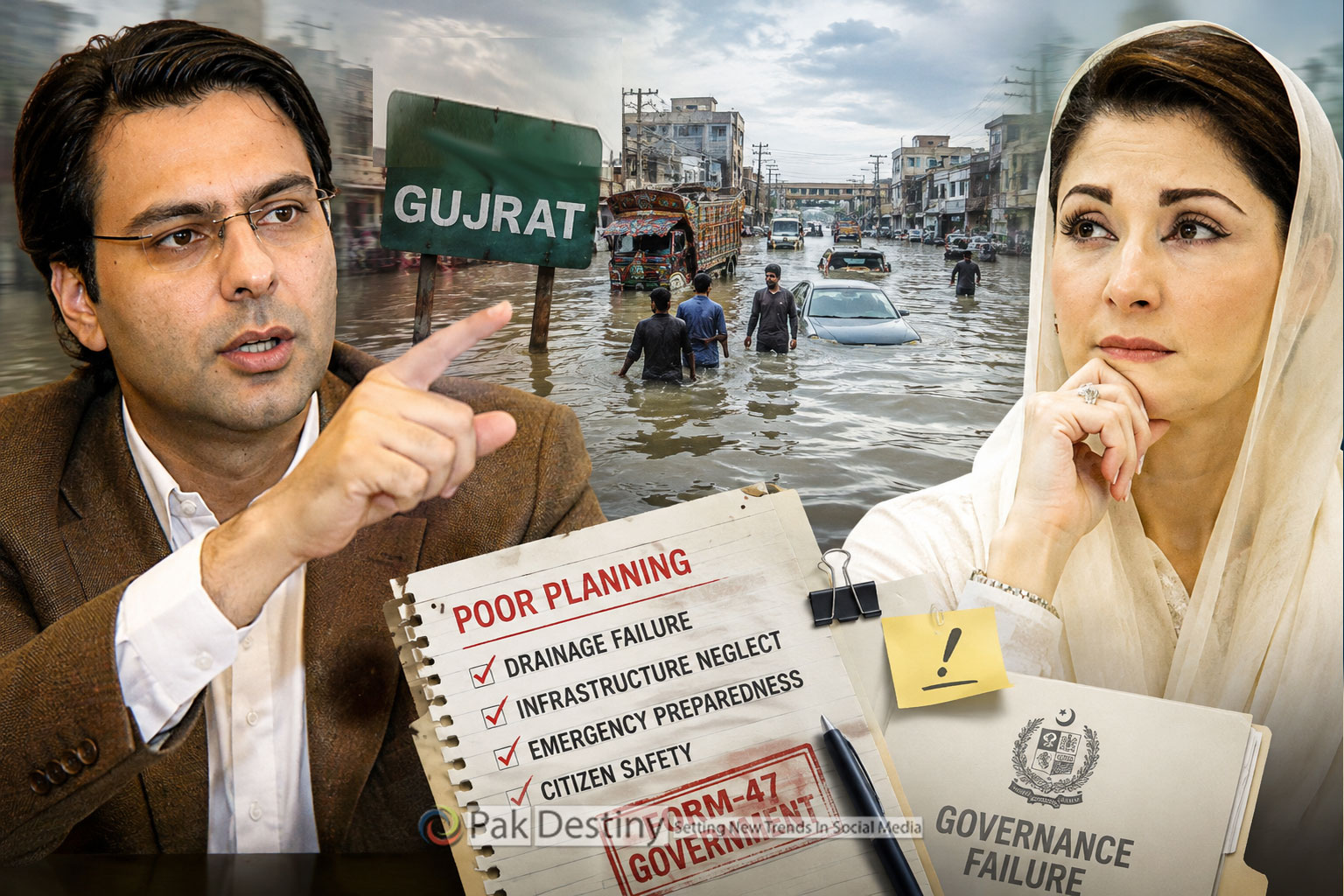
Pakistan Tehreek-i-Insaf senior leader and former federal minister Moonis Elahi on Tuesday launched a scathing attack on the Punjab administration after heavy rains inundated parts of Gujrat, saying the authorities had failed to prepare the city for the monsoon season.
گجرات بھمبر روڈ دریائے بھمبر بن گیا۔ نالائق انتظامیہ اور فارم 47 کے نااہل طفیلی فنڈز پر ہاتھ صاف کرنے کی بجائے نالوں کی صفائی، مناسب منصوبہ بندی اور برسات کی تیاری پر توجہ دیتے تو گجرات یوں نہ ڈوبتا۔ pic.twitter.com/PbgsYcKoBO
— Moonis Elahi (@MoonisElahi) September 1, 2026
In a post on social media platform X, Moonis Elahi said the Gujrat-Bhimber Road had virtually turned into a river, blaming what he described as the incompetence and poor planning of the authorities for the situation.
“Gujrat-Bhimber Road has become the Bhimber River,” he said, alleging that those in power had failed to focus on essential measures such as cleaning drainage channels, undertaking proper urban planning and preparing for the monsoon.
Taking a swipe at the ruling authorities, Mr Elahi alleged that public funds were being misused instead of being spent on improving the city’s drainage infrastructure and preventing urban flooding.
He also used the term “Form 47”, a reference frequently employed by opposition politicians to question the legitimacy of the governments that emerged following the February 2024 general elections.
Moonis Elahi said that had the authorities taken timely steps to clean stormwater drains and improve the drainage system, Gujrat would not have faced such widespread inundation.
His criticism came against the backdrop of recurring urban flooding in the district during this year’s unusually intense monsoon season.
Gujrat has been among the Punjab cities repeatedly affected by heavy downpours and waterlogging in recent weeks. In August, a six-hour spell of heavy rain submerged several roads and localities in the city, with the Water and Sanitation Agency reporting as much as 176 millimetres of rainfall during one such spell. Bhimber Road was among the areas severely affected by the inundation.
The country’s flood forecasting authorities had also repeatedly warned about the possibility of high flows in Nullah Bhimber and other seasonal streams connected to the Chenab and Jhelum river systems, as well as the risk of urban flooding in Gujrat and other cities of Punjab during periods of heavy monsoon rainfall.
The flooding has once again highlighted longstanding concerns over urban planning and drainage infrastructure in Gujrat, where intense rainfall has repeatedly left major roads and residential and commercial areas under water.
The allegations, however, represent Mr Elahi’s political criticism of the administration. There was no immediate response from the Punjab government or the district administration to his latest remarks.
The issue of Gujrat’s drainage system has also become a subject of political debate between rival parties. Members of the Elahi family have previously blamed successive Punjab governments for inadequate planning and for allegedly obstructing the natural flow of rainwater through the city, while government representatives have rejected such criticism and, in the past, accused the Elahi family of failing to address the city’s infrastructure problems during their own periods in power.
As another spell of monsoon rains exposes the vulnerabilities of Gujrat’s urban infrastructure, Mr Elahi’s comments are likely to add to the political controversy surrounding responsibility for the city’s recurring flooding.