In 1976, Sri Lanka was facing severe economic and political instability. Concerned about our future, my parents made the difficult decision to move overseas for our education. At that time, my family knew the Sri Lankan High Commissioner in Pakistan, Her Excellency Mrs. Theja Gunawardhana. After consulting her, she reassured us that Pakistan was a wonderful country for children’s education, safety, and moral values.
Encouraged by her advice, my parents chose Pakistan. To support us, my mother accepted a position as Head of Nursing at a leading private hospital in Rawalpindi, later becoming the Principal of St. Paul’s Nursing School, and eventually starting a hospital with my father to cover our educational expenses.
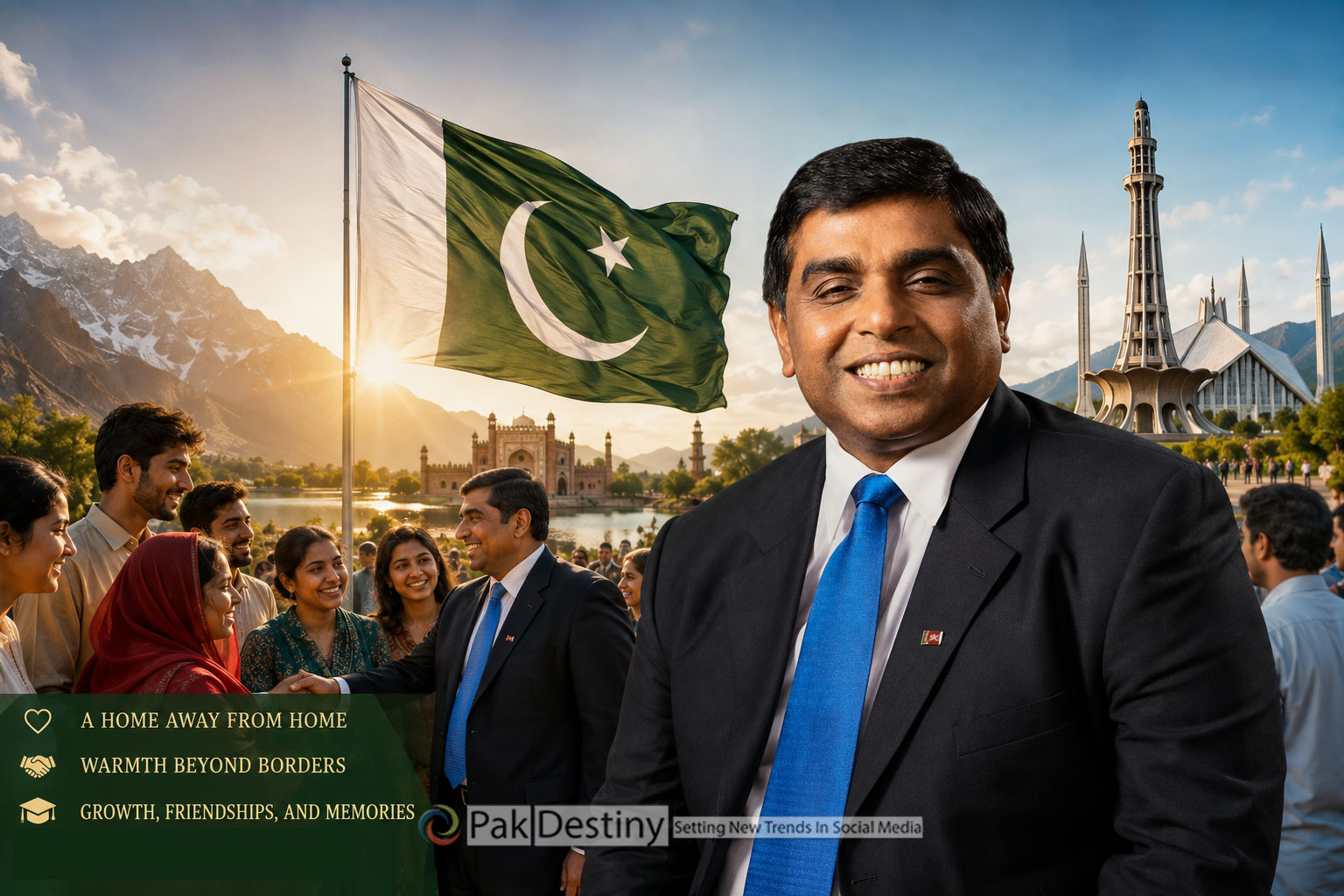
In 1976, as a 19-year-old Sri Lankan Buddhist, I entered the University of Engineering and Technology (UET), Lahore the leading engineering institution in Pakistan at the time. Filled with hope, curiosity, and a deep desire to learn, I embarked on a journey that would change my life forever. Looking back after nearly fifty years, my heart overflows with gratitude for the country, its people, my university, faculty members , and friends who shaped my journey.
For my university admission, approval from the Pakistan Foreign Ministry was required, along with a no-objection letter from the Sri Lankan Government. My very first experience with Pakistani public servants was with Mr. S. A. Qadeer, a senior director at the Foreign Ministry. He treated me like his own son guiding me through the process and even criticizing the Sri Lankan High Commission for delaying the necessary documents for my admission. I will always remain deeply grateful for his kindness, and over the time, his entire family became close family friends of ours.
My two sisters completed their secondary schooling in Rawalpindi women’s college and pursued their university education in Lahore—one at King Edward Medical College and the other at the University of Home Economics. As young girls in a foreign country, they were too treated with respect and kindness, facing no barriers or discrimination.
For five unforgettable years, Pakistan became our second home. We were never seen as outsiders but welcomed as one of their own every interaction with a Pakistanis. As non-Muslims, we never once experienced prejudice. On the contrary, we were treated with extraordinary warmth and generosity. I often felt like a VIP wherever I went. The hospitality of ordinary people, the unwavering support of my teachers, and the openhearted friendships I built allowed me to thrive academically and personally.
When I was in my first year, someone told me, after finding out that I was not a Muslim, that I would never graduate because there were Moulvi Professors (religious professors) who would make it impossible for me to succeed. I felt the weight of prejudice before I had even begun.
One of my most challenging subjects was AC Machines, taught by Associate Professor Yasin. He was known to be extremely tough, and everyone said I would fail—not because of my intellect, but because of my religion. Yet, I didn’t just pass; I earned a distinction. More than that, he and I developed a special bond. I believe I was the only student ever welcomed into his home.
When my father passed away in Sri Lanka during my final year, Professor Yasin sent me a telegram of condolence. But what moved me most were his words: “If you have any financial difficulties, please let me know. You should never give up your studies because of money.”
I will never forget this act of kindness. He never preached Islam to me, but through his compassion, generosity, and humanity, he showed me the true essence of Islam,lived, not spoken.
I remember a time of emergency when we had to return to Sri Lanka but were short of money. We went to the parents of one of her sister’s friends to borrow 20,000 rupees, promising to repay it upon our arrival. I will never forget what he told us: “Don’t worry, children. If you are unable to return it or even if you don’t, Allah will give it back to me. And in any case, I will never be poor.” Those profoundly compassionate words touched my heart deeply, and I will carry their kindness with me forever.
I still vividly recall the political unrest of 1981, during my final year at UET. Violence erupted on campus, and tragically, two students lost their lives. Amid that chaos, two of my friends belonging to opposing groups yet entirely innocent came to me in desperation. They asked if they could stay in my room, trusting that the authorities would not search the rooms of foreign students.
Out of compassion, I agreed. Later, when the police raided the hostels, my room in Quaid-e-Azam Hostel clearly marked on the door “Sri Lanka” and inside the room with a large poster of the standing Buddha was the first they notice.. Yet, an officer greeted me kindly and said, “I know you are Sri Lankan and not involved in this unrests and apologised for disturbing ,” before leaving, I was deeply moved. That moment of respect, extended not just to me but to my country, is etched in my heart.
All this respect and honour we received shows how deeply connected our nations are, always ready to help one another. It reflects a bond that goes beyond religion and touches the essence of true spirituality
Throughout my time in Pakistan, whether I was meeting ordinary villagers, public servants, defence personnel, or even politicians, I was always treated with dignity. I believe this remarkable hospitality stemmed from the strong bonds of friendship and the shared non-aligned political vision between Sri Lanka and Pakistan. It reflects the long-standing relationship that began during the Non-Aligned Movement under the leadership of the world’s first woman Prime Minister, Mrs. Sirimavo Bandaranaike, and Prime Minister Zulfikar Ali Bhutto bonds that continue to this day.
Even the humblest person on the roadside, when asked for directions, would first tell me “ Oh we love Bandaranayke “ and then insist on offering me a cup of tea before guiding me warmly. This generosity remains unforgettable.
Almost every weekend, I visited my two sisters at their hostels. Traveling by three-wheeler was expensive, and whenever I was short of money, I would hitchhike and ask for lifts. Remarkably, more than 75% of the time, kind strangers stopped to help me. Sometimes, to reach one destination, I had to take three or four different lifts. I will always remember their generosity. Even today, wherever I go, I gladly give a lift to anyone in need honouring the Pakistanis who once taught me to help fellow travellers.
As a Buddhist, my years in Pakistan also gave me the gift of understanding and respecting the values of Islam, many of which I still practice today:
Avoidance of alcohol and gambling – a safeguard for dignity, self-discipline, and social harmony.
Prohibition of interest – promoting fairness, justice, and equity in financial dealings.
Compulsory charity (Zakat) – a sacred duty to share a portion of wealth with the less fortunate, fostering compassion and reducing inequality.
Hospitality – extended unconditionally to guests and strangers as an expression of generosity and humanity.
Respect for non-Muslims – upholding dignity, coexistence, and mutual respect across different faiths.
Protection of minorities – ensuring that when Muslims are the majority, the rights, freedoms, and safety of minority communities are safeguarded.
Minority responsibility – when Muslims live as minorities, they are obliged to respect and abide by the laws of their host country.
Islamic banking – rooted in ethical, just, and interest-free financial practices.
Respect for elders – a value deeply ingrained within households, symbolizing honour and gratitude.
Fasting during Ramadan – more than a spiritual discipline; it is also a profound lesson in empathy for the poor, self-control, and inner reflection etc.
These values, together with the teachings of the Buddha, have enriched my life and continue to guide me today helping me succeed in my family, community, and professional life, while enabling me to engage comfortably with people of any ethnic, cultural or religious background and win the hearts of those I encounter.
Those years in Pakistan gave me friendships that transcended religion and nationality. We studied together, laughed together, and dreamed together of building better futures for our nations. The respect, kindness, and camaraderie I experienced in Pakistan remain engraved in my soul.
Half a century later, I bow my head in gratitude to the Government of Pakistan, the people, UET Lahore, my professors, and my classmates. They gave me not only an education in engineering but also a lifelong education in humanity.
For me, Pakistan will always remain- My Beloved Pakistan.
About the Author:
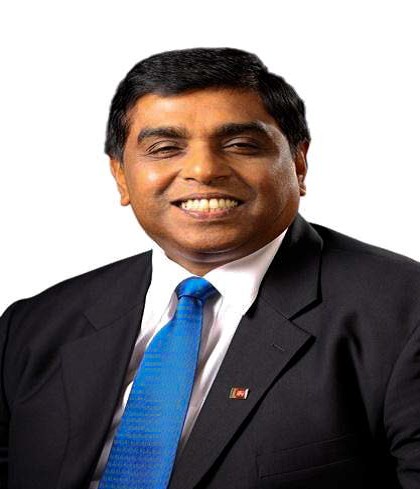
Lalith de Silva is an experienced board director and former executive with decades of international experience spanning the public, private, and non-profit sectors. He is the former Group CEO of Sri Lanka Telecom. Lalith is deeply passionate about promoting ethical governance and developing capable, responsible boards. In addition, he serves as a leadership coach and mentor, supporting organizations in areas such as digital transformation, mental health, drug rehabilitation, startups, and youth development. Based in Australia, he welcomes readers to share their questions or reflections via email at [email protected]




Lovely, thanks for sharing your life experiences in Lahore.