An Evidence-Based Analysis of Emerging Transport Trends, Road Safety Risks, and Policy Implications
By Dr. Syed Imran Ahmad Shah
Abstract
Pakistan’s transport sector has experienced significant transformation during the last two decades. Among the most remarkable developments has been the emergence of motorcycle-powered passenger rickshaws—popularly known as Chingchi or Qingqi rickshaws—which rapidly replaced traditional horse-driven tongas in many urban and rural areas. Their affordability, accessibility, and employment potential have contributed substantially to local economies. However, their rapid expansion occurred largely outside a comprehensive regulatory framework, resulting in considerable road safety concerns.
Today, Pakistan is witnessing another transport revolution through the growing popularity of electric scooters (EV scooties), particularly among women, university students, and young commuters. While these vehicles promise environmentally sustainable and affordable mobility, their uncontrolled expansion may reproduce many of the same safety failures experienced during the rise of Chingchi rickshaws.
This paper argues that Pakistan possesses a unique opportunity to learn from previous regulatory shortcomings. Drawing upon World Health Organization (WHO) reports, Pakistan’s road safety profile, international case studies, and published scientific literature, this article examines how inadequate regulation, weak enforcement, poor engineering standards, and insufficient rider education have historically contributed to road crashes involving informal transport systems. The article further proposes evidence-based policy interventions to ensure that the expansion of electric scooters strengthens sustainable mobility without compromising public safety.
1. Introduction
Mobility is essential for economic development, education, healthcare access, and social inclusion. Throughout history, every technological innovation in transportation has promised greater convenience and efficiency. However, experience from both developed and developing countries demonstrates that transportation innovation without corresponding safety regulation often produces unintended public health consequences.
Road traffic injuries remain one of the world’s most serious yet preventable public health challenges. According to the World Health Organization (WHO), approximately 1.16 million people die every year in road traffic crashes, while an additional 20–50 million individuals suffer non-fatal injuries, many resulting in lifelong disabilities. More than 90% of these fatalities occur in low- and middle-income countries, despite these nations possessing only around 60% of the world’s registered vehicles. Road crashes also consume approximately 3% of national GDP through healthcare costs, lost productivity, and long-term disability.
Pakistan reflects many of these global challenges. Rapid urbanization, increasing motorization, weak enforcement of traffic laws, inconsistent vehicle inspection systems, and inadequate public transport have collectively intensified road safety risks. The transport system continues to evolve faster than regulatory institutions can adapt.
One example illustrates this pattern remarkably well—the emergence of the Chingchi rickshaw.
2. The Rise of the Chingchi Rickshaw in Pakistan
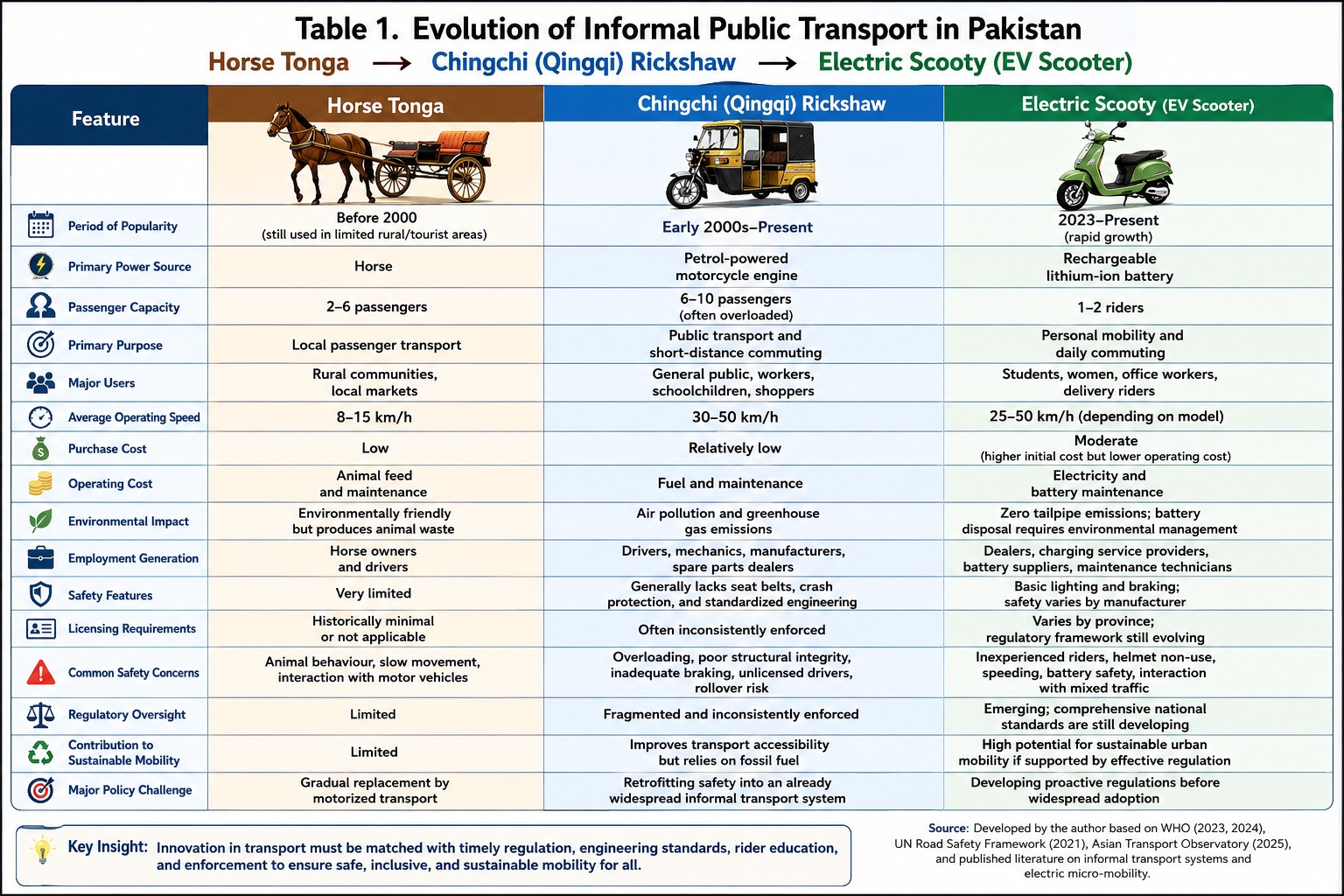
Two decades ago, the term Chingchi was unfamiliar to most Pakistanis. Public transport in small cities and villages primarily depended upon buses, wagons, auto-rickshaws, motorcycles, and the traditional horse-driven tonga.
As urban populations expanded and transport demand increased, entrepreneurs introduced motorcycle-powered passenger carriers manufactured using relatively inexpensive locally assembled components. The concept was simple: attach a passenger carriage behind a motorcycle, creating a low-cost vehicle capable of transporting six to ten passengers at a fraction of the cost of conventional public transport.
The innovation rapidly transformed local transportation.
Many observers believe that the earliest widespread commercial adoption occurred in Burewala, Punjab, before spreading across southern Punjab, central Punjab, Khyber Pakhtunkhwa, Sindh, Balochistan, and eventually almost every district of Pakistan. Although precise historical documentation remains limited, there is little doubt that the Chingchi rickshaw fundamentally changed short-distance transport across the country.
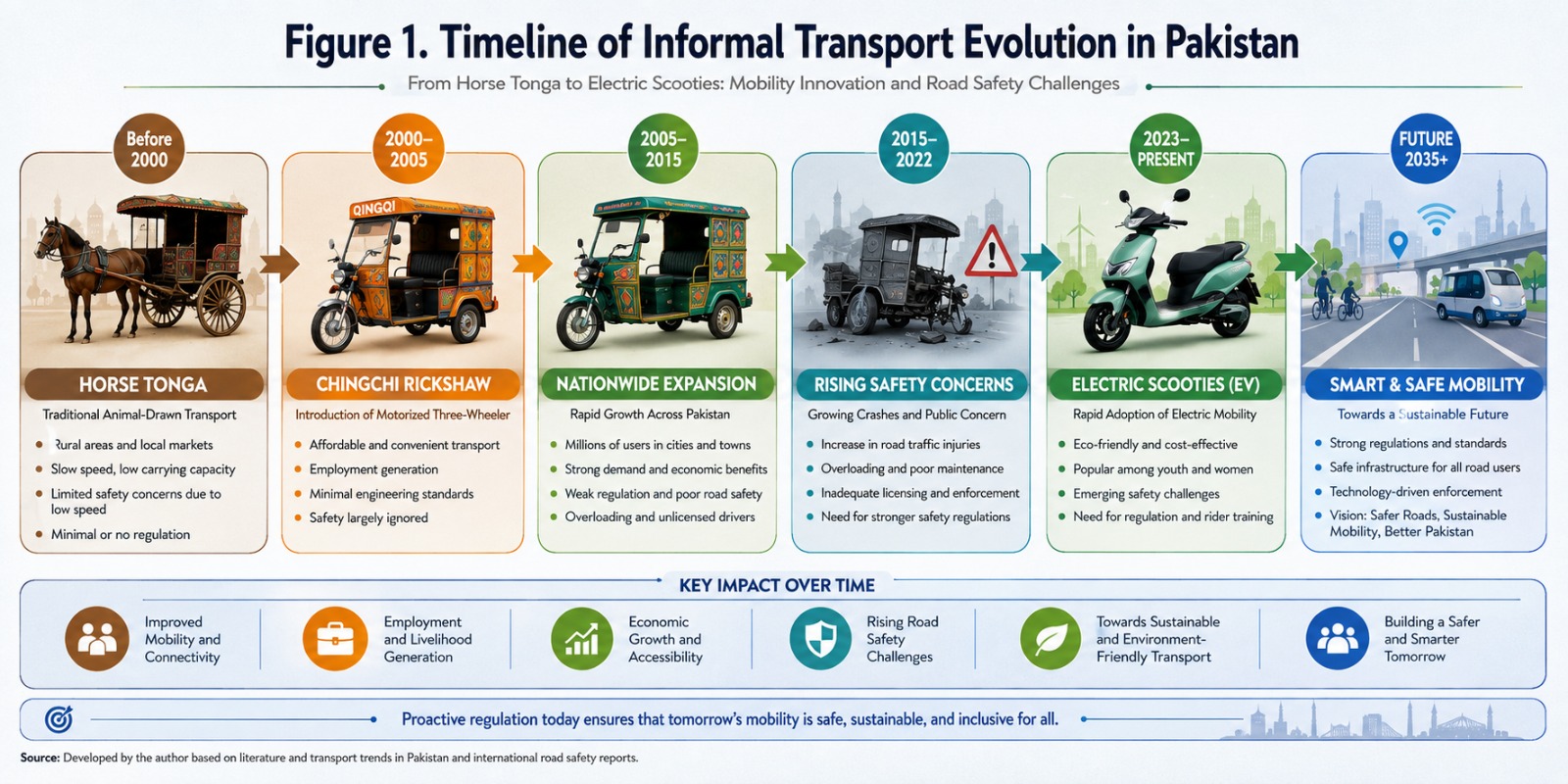
Its popularity was driven by several important advantages:
- Low purchase price.
- Minimal maintenance costs.
- Affordable passenger fares.
- Employment opportunities for thousands of families.
- Accessibility within narrow streets where buses could not operate.
- Reduced dependence on animal-driven transport.
For many low-income households, the Chingchi rickshaw became an economic lifeline.
Yet beneath these socioeconomic benefits lay a significant safety problem.
3. Innovation without Safety Regulation
Virtually every developed country requires that passenger vehicles satisfy rigorous engineering standards before entering public service. Manufacturers must demonstrate compliance with crashworthiness requirements, braking performance, lighting standards, structural integrity, occupant protection, emissions regulations, and periodic inspection protocols.
The Chingchi rickshaw entered Pakistan’s roads under very different circumstances.
In many cases, passenger compartments were fabricated locally without standardized engineering specifications. Vehicle stability varied considerably depending upon local workmanship. Passenger seating arrangements prioritized capacity rather than occupant protection. Emergency exits were absent, rollover protection was almost nonexistent, and structural reinforcement remained minimal.
Unlike conventional passenger vehicles, most Chingchi rickshaws offered:
- No seat belts.
- No crash protection.
- No side-impact protection.
- Weak braking performance under full passenger loads.
- Poor weight distribution.
- High rollover susceptibility.
- Limited visibility.
- Minimal lighting and reflective devices.
Equally concerning was the absence of standardized driver training.
Although many drivers were experienced motorcyclists, operating a three-wheeled passenger vehicle carrying multiple passengers requires substantially different skills involving braking distances, turning dynamics, weight transfer, passenger loading, and emergency manoeuvres.
Unfortunately, licensing and training systems rarely evolved alongside vehicle expansion.
The predictable consequence was increasing crash exposure.
4. The Public Health Consequences
Road crashes should not be viewed solely as transportation failures.
The WHO classifies road traffic injuries as a major public health issue and identifies them as the leading cause of death among people aged 5–29 years worldwide. Young adults—the same population that forms the backbone of Pakistan’s workforce—bear a disproportionate share of this burden.
Pakistan’s own road safety profile indicates persistent challenges in legislation, enforcement, infrastructure, and vehicle safety. While progress has been made in some areas, substantial gaps remain in the protection of vulnerable road users, including pedestrians, motorcyclists, cyclists, and passengers using informal transport systems.
One of the greatest concerns is that informal passenger vehicles frequently operate outside robust safety oversight. Combined with speeding, overloading, inadequate maintenance, and unlicensed driving, these conditions substantially increase crash severity.
The tragedy is not that Chingchi rickshaws became popular.
The tragedy is that safety regulation arrived far too late—or, in many places, not at all.
The lessons from this experience are especially relevant today as Pakistan enters another era of transport innovation through electric scooters.
5. Pakistan’s Road Safety Burden: Understanding the Scale of the Problem
Road traffic injuries represent one of Pakistan’s most significant but under-recognized public health challenges. Despite improvements in motorway infrastructure and enforcement on major highways, crashes on urban roads, provincial highways, and rural transport networks continue to impose an enormous social and economic burden.
The World Health Organization (WHO) estimated that approximately 27,568 people lost their lives in road crashes in Pakistan during 2021, equivalent to a mortality rate of 11.9 deaths per 100,000 population. In contrast, officially reported national statistics recorded only 5,816 fatalities, illustrating a substantial gap between reported and estimated deaths. This discrepancy reflects persistent underreporting, inconsistent crash databases, and fragmented institutional reporting systems. Such inconsistencies complicate evidence-based policymaking and often underestimate the true burden of road traffic injuries.
Pakistan’s vehicle fleet is also changing rapidly. According to WHO, the country had over 34 million registered vehicles in 2021, of which approximately 27.3 million were powered two- and three-wheelers. This means nearly four out of every five registered vehicles belong to the motorcycle or three-wheeler category—a transport mix that inherently exposes road users to greater crash risk because of limited occupant protection.
Unlike occupants of modern passenger cars, riders and passengers travelling on motorcycles, motorcycle rickshaws, and similar vehicles are protected only by their riding skills and, where used, personal protective equipment. Consequently, even low-speed collisions can result in severe or fatal injuries.
6. Motorcycle Rickshaws: A Vulnerable Mode of Public Transport
Motorcycle rickshaws, commonly known as Chingchi or Qingqi rickshaws, occupy a unique position within Pakistan’s transport system. They are neither conventional motorcycles nor purpose-built passenger buses. Instead, they represent an informal transport innovation that evolved primarily in response to unmet public transport demand.
Their popularity is understandable.
They provide affordable mobility for low-income communities, create employment opportunities for thousands of drivers and mechanics, and connect neighbourhoods that are inaccessible to larger buses. In many small towns, they remain the only available form of public transport.
However, their operational characteristics present numerous safety concerns.
Unlike purpose-built passenger vehicles, many motorcycle rickshaws are locally fabricated by combining a standard motorcycle with a custom-built passenger compartment. This modification changes the vehicle’s centre of gravity, braking characteristics, steering response, and rollover stability. In addition, passenger cabins vary considerably in structural quality because manufacturing standards are inconsistent.
Researchers have therefore described motorcycle rickshaws as one of Pakistan’s largest informal public transport systems operating with relatively limited regulatory oversight.
7. Engineering Deficiencies and Crash Vulnerability
From an engineering perspective, motorcycle rickshaws possess several characteristics that increase crash severity.
First, their high centre of gravity increases rollover risk, particularly during abrupt turning or evasive manoeuvres.
Second, braking systems originally designed for a motorcycle are frequently required to stop a vehicle carrying six to ten passengers. Increased passenger loads lengthen stopping distances and reduce braking efficiency.
Third, passenger protection remains minimal. Most vehicles lack:
- Seat belts;
- Energy-absorbing passenger compartments;
- Side-impact protection;
- Roof-strength standards;
- Head restraints;
- Emergency exits; and
- Crash-tested structural designs.
Fourth, many vehicles are overloaded beyond their intended carrying capacity. Overloading alters vehicle stability, increases tyre wear, and further compromises braking performance.
Collectively, these engineering limitations make passengers particularly vulnerable during collisions, overturning events, or side impacts.
Unlike certified public transport vehicles, many motorcycle rickshaws have never undergone standardized crashworthiness testing before entering public service.
8. Human Factors: Licensing, Training, and Driver Behaviour
Vehicle design alone does not explain crash involvement. Human behaviour remains one of the strongest predictors of road traffic collisions.
Observational research conducted in Lahore revealed concerning safety practices among motorcycle rickshaw drivers. Researchers observed 500 motorcycle rickshaw drivers at signalized intersections and found that approximately 23% appeared younger than the legal licensing age of 18 years. Even more concerning, over half (52.6%) entered intersections during a red traffic signal, while many others crossed during unsafe signal transitions. These findings suggest widespread violations of basic traffic regulations.
Such behaviours may result from several interconnected factors:
- Limited formal driver education;
- Weak enforcement of licensing requirements;
- Economic pressure to maximize daily trips;
- Inadequate understanding of defensive driving techniques; and
- Poor risk perception.
The absence of standardized training means that many drivers learn informally from relatives or fellow operators rather than through structured driver education programs.
International evidence consistently demonstrates that formal rider training, licensing compliance, fatigue management, and helmet use significantly reduce crash risk among motorcycle operators.
9. The Hidden Cost of Informal Transport
Road crashes impose costs that extend far beyond immediate fatalities.
Families lose income earners.
Children lose parents.
Hospitals face increasing emergency workloads.
Insurance systems incur higher costs.
Governments experience reduced economic productivity.
The WHO estimates that road traffic crashes consume approximately 3% of a country’s Gross Domestic Product (GDP) annually through medical expenses, rehabilitation, emergency response, property damage, and lost productivity. For developing countries such as Pakistan, these economic losses can amount to billions of dollars each year.
The Asian Transport Observatory similarly estimates that road traffic injuries impose an economic burden equivalent to roughly 3% of Pakistan’s GDP, highlighting that investment in safer infrastructure and better regulation could prevent thousands of deaths while yielding substantial economic benefits.
Although motorcycle rickshaws provide affordable transport, their long-term societal costs may be considerably higher when healthcare expenditure, disability, productivity losses, and emergency response costs are incorporated into national economic assessments.
10. Lessons from the Chingchi Experience
The history of motorcycle rickshaws offers several important lessons for transport policymakers.
The first lesson is that innovation should never outpace regulation. New transport technologies often emerge rapidly because they satisfy genuine market demand. However, regulatory systems must evolve at a similar pace to ensure public safety.
The second lesson is that vehicle safety cannot be separated from driver safety. Safe vehicles require competent drivers, effective licensing systems, regular inspections, and meaningful law enforcement.
The third lesson concerns data-driven policymaking. Reliable crash databases, standardized reporting systems, and evidence-based research are essential for identifying risk factors and evaluating interventions. Without accurate data, governments struggle to allocate resources efficiently or measure policy effectiveness.
Finally, Pakistan’s experience demonstrates that road safety should be viewed not merely as a transportation issue but as a national public health priority. Every preventable crash avoided represents lives saved, disabilities prevented, and economic resources preserved.
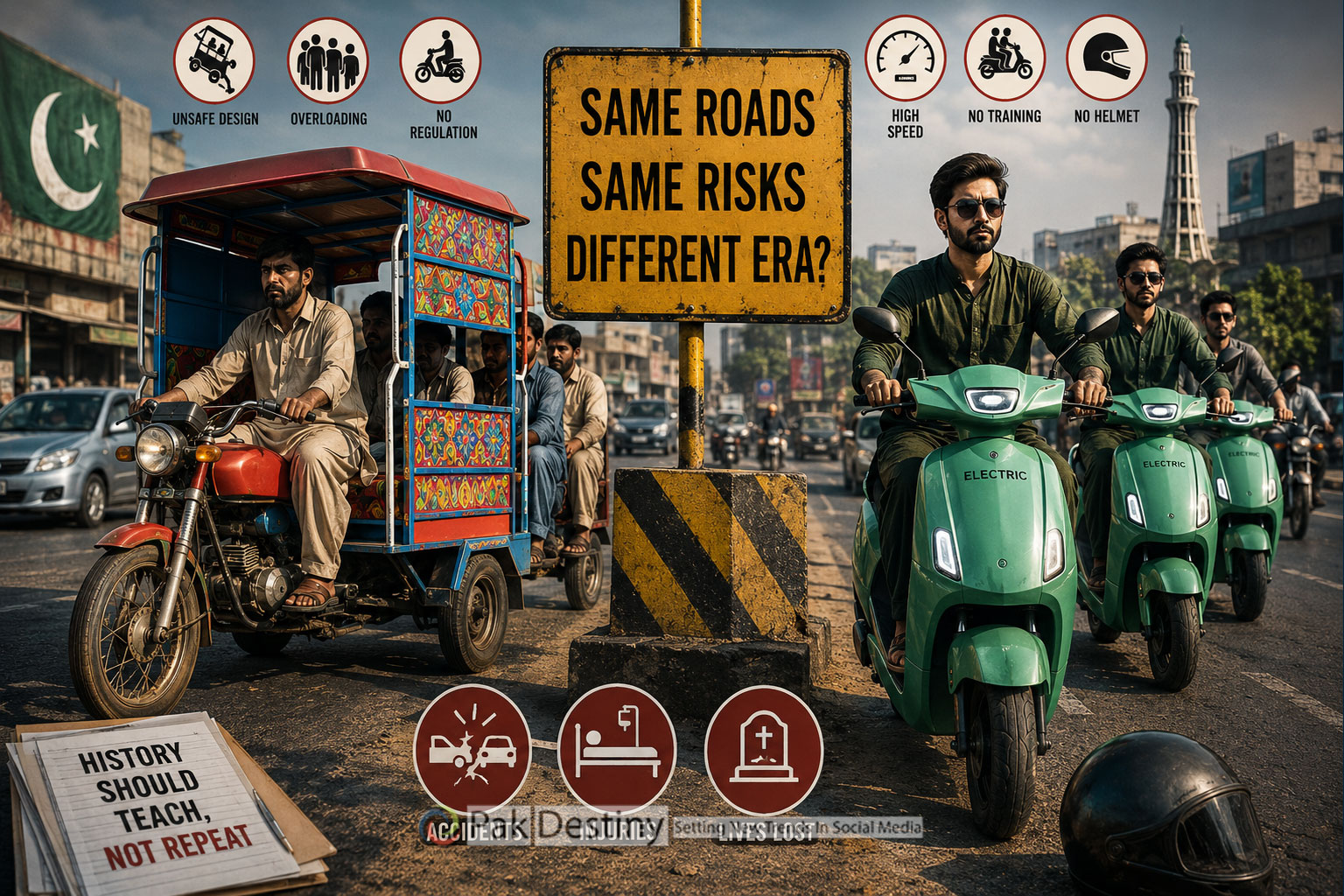
These lessons become increasingly important as Pakistan enters a new era of personal mobility through the rapid expansion of electric scooters. Without proactive regulation, history may once again repeat itself.
11. International Experiences: When Innovation Outpaces Regulation
Pakistan is not the first country to experience the rapid emergence of informal transport systems. Across Asia and Africa, governments have struggled to balance three competing priorities: affordable mobility, employment generation, and public safety. Experiences from several countries demonstrate that while innovative transport solutions can transform mobility, inadequate regulation often leads to increased road traffic injuries. Conversely, jurisdictions that introduced timely engineering standards, licensing requirements, and enforcement mechanisms have achieved measurable improvements in road safety.
The international experience offers valuable lessons for Pakistan as it addresses both the legacy of Chingchi rickshaws and the rapid expansion of electric scooties.
India: Regulating Auto-Rickshaws and Electric Two-Wheelers
India’s transport system shares many similarities with Pakistan, including dense urban populations, mixed traffic conditions, and widespread use of motorcycles and three-wheelers.
Auto-rickshaws have long been a major component of India’s public transport network. However, unlike many informal motorcycle-powered passenger vehicles, commercially manufactured auto-rickshaws are subject to national vehicle standards under the Central Motor Vehicles Rules. Manufacturers must comply with safety, emissions, lighting, braking, and structural requirements before vehicles are approved for road use.
Despite these regulations, India continues to experience a substantial burden of road traffic injuries. According to the Government of India, more than 168,000 people were killed in road crashes during 2022, making road safety one of the country’s most pressing public health issues. Motorcyclists, pedestrians, and cyclists remain among the most vulnerable road users.
The rapid growth of electric two-wheelers has introduced new regulatory challenges. In response, India has introduced:
- mandatory vehicle type approval;
- battery safety certification;
- manufacturer accountability;
- quality standards for charging systems;
- helmet enforcement; and
- licensing requirements for higher-powered electric scooters.
These measures illustrate an important principle: encouraging sustainable mobility does not require compromising safety.
13. Bangladesh: Informal Three-Wheelers and Regulatory Challenges
Bangladesh presents another instructive example.
Motorcycle-based passenger vehicles and battery-powered three-wheelers expanded rapidly across urban and rural communities because they provided affordable transportation where conventional public transport was unavailable.
However, many operated without standardized engineering approval or comprehensive licensing systems.
Researchers have identified several recurring safety concerns:
- overloading;
- unsafe overtaking;
- limited vehicle stability;
- inadequate braking systems;
- poor nighttime visibility;
- weak enforcement of licensing laws.
Recognizing these risks, Bangladeshi authorities have periodically restricted or reorganized the operation of certain categories of informal three-wheelers within metropolitan areas while simultaneously strengthening driver licensing and vehicle registration.
Although implementation remains uneven, Bangladesh demonstrates the importance of integrating informal transport into a formal regulatory framework rather than allowing uncontrolled expansion.
14. China: From Qingqi Motorcycles to Electric Mobility
Ironically, the term “Qingqi” originally referred to a Chinese motorcycle manufacturer whose products became widely recognized across South Asia.
China has since undergone one of the world’s largest transitions toward electric mobility.
Today, hundreds of millions of electric bicycles and electric scooters operate throughout Chinese cities. Initially, however, rapid expansion produced increasing numbers of pedestrian collisions, rider injuries, and conflicts with conventional traffic.
In response, Chinese authorities introduced comprehensive regulatory reforms that included:
- technical manufacturing standards;
- speed limitations;
- mandatory product certification;
- registration systems;
- designated riding spaces in many cities;
- stricter enforcement against illegal vehicle modifications; and
- public awareness campaigns promoting safe riding behaviour.
China’s experience illustrates that regulation often follows innovation—but earlier intervention generally produces better safety outcomes.
15. Vietnam: Managing Motorcycle Dependency
Vietnam possesses one of the world’s highest motorcycle ownership rates.
Motorcycles account for the overwhelming majority of daily trips, creating significant exposure to road traffic injuries.
Recognizing this challenge, Vietnam implemented one of the most successful helmet laws in the developing world.
Following nationwide mandatory helmet legislation introduced in 2007, helmet-wearing rates increased dramatically, accompanied by substantial reductions in fatal head injuries and healthcare costs. Independent evaluations estimated thousands of lives saved during the first years following implementation.
Vietnam’s experience demonstrates that a single evidence-based policy—when supported by strong enforcement and public acceptance—can produce remarkable improvements in road safety.
For Pakistan, similar nationwide commitment could substantially improve safety among motorcycle and electric scooter riders.
16. European Experiences with Electric Scooters
The rapid introduction of shared electric scooters across Europe has generated extensive research concerning rider behaviour and injury prevention.
Countries such as Germany, France, Spain, Sweden, and the Netherlands generally permit electric scooters only under clearly defined legal frameworks.
Common regulatory measures include:
- minimum rider age;
- speed restrictions (typically 20–25 km/h);
- mandatory lighting systems;
- front and rear braking requirements;
- reflector standards;
- prohibition of sidewalk riding;
- restrictions on carrying passengers;
- alcohol impairment enforcement;
- mandatory insurance or registration in some jurisdictions.
Clinical studies from European trauma centres reveal that many electric scooter injuries involve head trauma, upper limb fractures, facial injuries, and nighttime crashes. Researchers consistently identify helmet non-use, excessive speed, alcohol impairment, and inexperienced riders as major contributors to injury severity.
Importantly, European policymakers did not prohibit electric scooters. Instead, they sought to regulate them before injury rates escalated further.
17. Why International Evidence Matters for Pakistan
Some may argue that Pakistan cannot simply replicate regulations developed in Europe or East Asia because of differences in income, infrastructure, and enforcement capacity.
This argument is valid—but only partially.
Road safety principles are universal.
Human biomechanics remain unchanged regardless of geography.
Unprotected riders remain vulnerable to head injuries.
Vehicles with poor braking systems remain more likely to crash.
Untrained drivers remain more likely to make critical errors.
The precise regulatory approach may differ, but the scientific foundations of road safety remain remarkably consistent across countries.
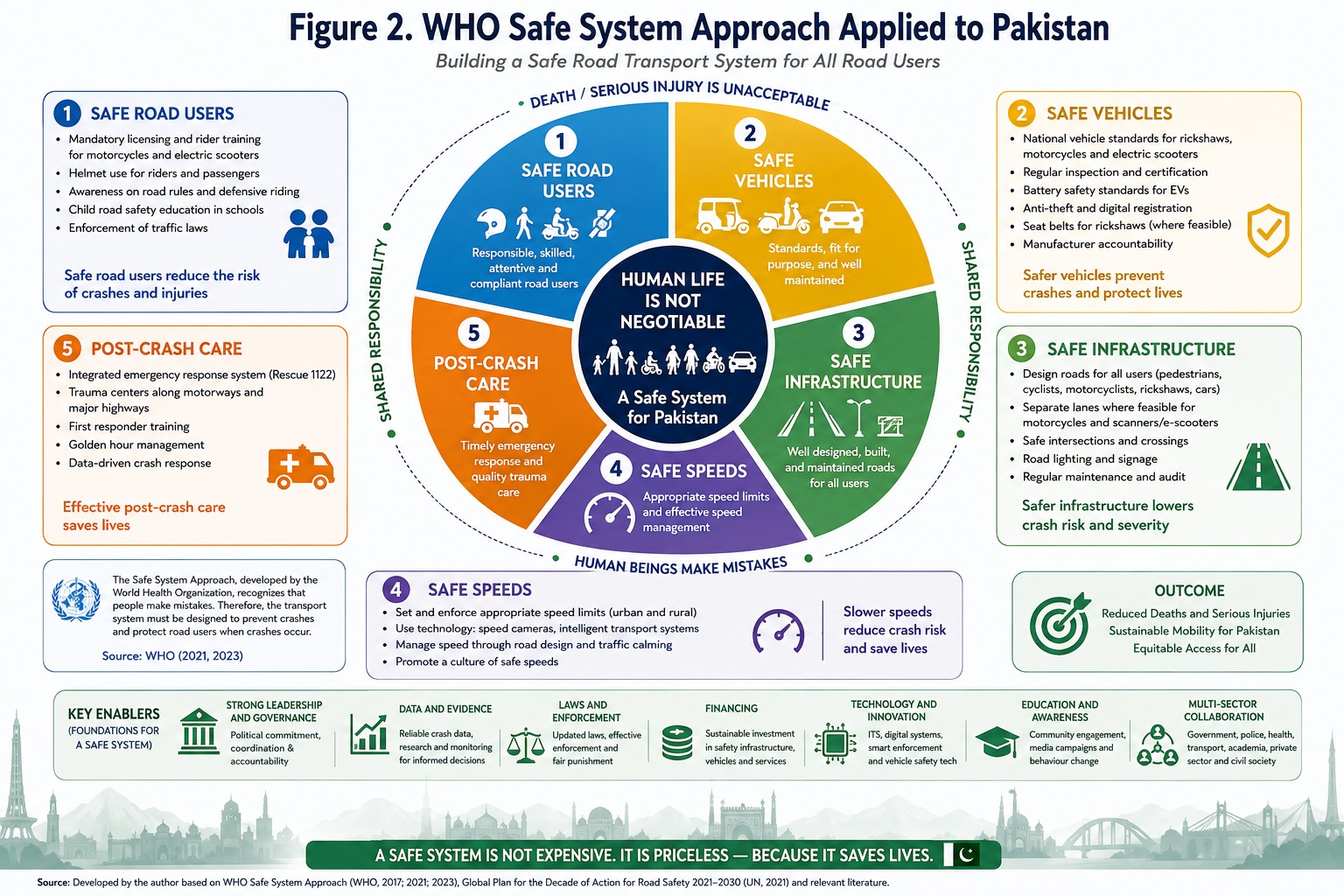
The Safe System Approach, endorsed by the World Health Organization and the United Nations, recognizes that people inevitably make mistakes while using roads. Therefore, transport systems should be designed so that these inevitable human errors do not result in death or serious injury.
The Safe System framework is built upon five mutually reinforcing pillars:
- Safer road users;
- Safer vehicles;
- Safer roads and infrastructure;
- Safer travel speeds; and
- Effective post-crash response.
Pakistan has made meaningful progress in several of these areas, particularly through motorway enforcement and improvements to high-speed road infrastructure. Nevertheless, informal transport systems such as Chingchi rickshaws and the rapidly growing electric scooter market remain comparatively under-regulated within this framework.
18. The Emerging Parallel Between Chingchi Rickshaws and Electric Scooties
History rarely repeats itself in exactly the same way, but it often follows familiar patterns.
When Chingchi rickshaws first appeared, they were celebrated for solving an urgent transportation problem. Their affordability, accessibility, and employment potential understandably attracted widespread public support. Safety concerns, although raised by transportation professionals, received comparatively little policy attention until the vehicles had already become deeply embedded within Pakistan’s transport system.
Electric scooties are now following a remarkably similar trajectory.
They are affordable.
They are environmentally friendly.
They provide mobility for women, students, office workers, and elderly citizens.
Manufacturers and importers are rapidly expanding the market.
Social media increasingly portrays electric scooters as fashionable and convenient.
Yet fundamental questions remain insufficiently addressed:
- Who should be permitted to ride them?
- Should formal rider training be mandatory?
- What engineering standards should manufacturers satisfy?
- Should helmet use be compulsory?
- Should minimum age limits apply?
- How should these vehicles interact with motorcycles, pedestrians, and conventional traffic?
- Which government agencies should regulate their operation?
The experience of Chingchi rickshaws suggests that delaying answers to these questions may ultimately cost far more—in lives, injuries, and economic losses—than proactive regulation implemented today.
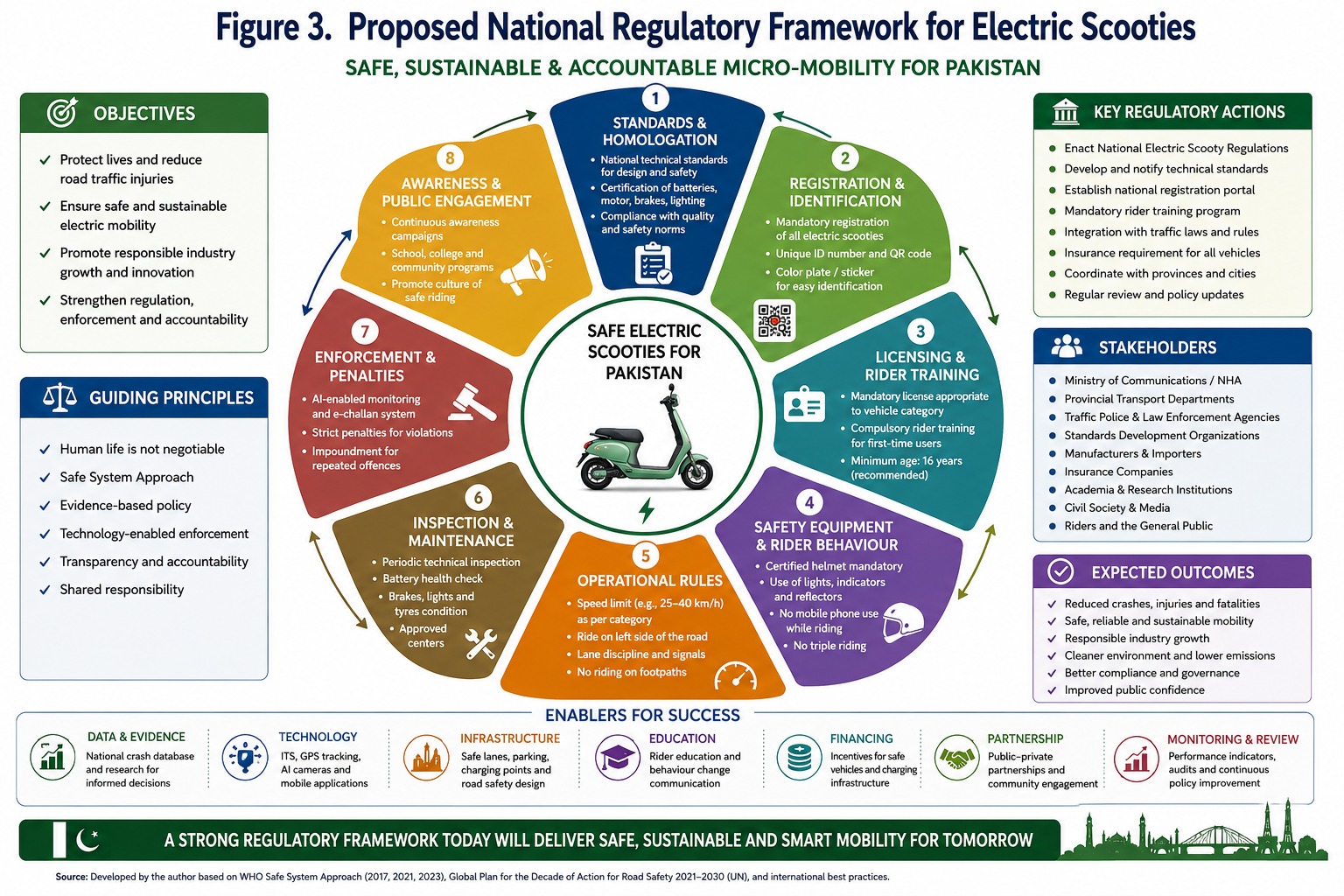
The next section develops an evidence-based policy framework for Pakistan, outlining practical recommendations that can promote sustainable electric mobility while avoiding the regulatory shortcomings that characterized the early expansion of motorcycle-powered passenger rickshaws.
19. Building a Safer Future: A Policy Framework for Pakistan
Pakistan is at a critical point in the evolution of its transportation system. Unlike the emergence of Chingchi rickshaws two decades ago, policymakers now possess valuable national and international experience that can guide future decisions. The rapid expansion of electric scooties provides an opportunity to build a transport system that is not only affordable and environmentally sustainable but also fundamentally safe.
Achieving this objective requires a comprehensive approach that integrates engineering, legislation, education, enforcement, technology, and public awareness. The following policy framework draws upon the World Health Organization’s Safe System Approach and international best practices while considering Pakistan’s socioeconomic realities.
20. Develop National Safety Standards before Market Expansion
One of the principal lessons from the Chingchi experience is that vehicle standards should precede widespread commercialization—not follow it.
Pakistan should establish mandatory technical standards for all electric scooties before their numbers increase further. These standards should be developed jointly by relevant federal and provincial authorities in collaboration with engineering institutions, universities, manufacturers, and road safety experts.
Minimum standards should address:
- braking performance;
- battery safety and thermal protection;
- lighting and visibility;
- reflector requirements;
- tyre quality;
- maximum permissible speed;
- structural integrity;
- electrical safety;
- waterproofing;
- warning systems; and
- manufacturer certification.
Every vehicle entering the Pakistani market should satisfy these requirements before registration.
21. Rider Licensing and Mandatory Training
Perhaps the greatest weakness observed during the expansion of Chingchi rickshaws was inadequate driver training.
Many operators learned through experience rather than formal education, creating substantial variation in riding skills and knowledge of traffic laws.
Pakistan should avoid repeating this mistake.
A graduated licensing system should be introduced for electric scooties. Riders should successfully complete:
- theoretical road safety education;
- practical riding assessment;
- hazard perception training;
- emergency braking exercises;
- night-riding awareness; and
- defensive riding instruction.
Educational institutions, driving schools, and licensing authorities should collaborate to ensure standardized rider education nationwide.
Young riders, particularly students purchasing their first motorized vehicle, should receive compulsory introductory road safety courses before obtaining riding authorization.
22. Helmet Legislation and Personal Protective Equipment
Scientific evidence consistently demonstrates that helmets are among the most effective interventions for preventing fatal head injuries.
The World Health Organization reports that correctly worn, high-quality helmets can reduce the risk of death by approximately six times and significantly decrease the likelihood of severe traumatic brain injury. Countries with strong helmet laws and consistent enforcement have experienced substantial reductions in motorcycle fatalities.
Unfortunately, helmet use remains inconsistent across many parts of Pakistan, particularly for passengers and short-distance commuters.
Electric scooter users should therefore be legally required to wear certified helmets regardless of trip length.
Additional recommendations include:
- reflective jackets for nighttime riding;
- high-visibility clothing for school commuters;
- protective gloves;
- front and rear lighting;
- reflective wheel markings.
These measures are relatively inexpensive yet highly effective in improving rider visibility and reducing injury severity.
23. Registration, Insurance, and Digital Monitoring
Every motorized vehicle operating on public roads should be identifiable.
A national digital registration system for electric scooties would provide several benefits:
- improved law enforcement;
- theft prevention;
- recall management for defective batteries;
- insurance administration;
- crash investigation;
- traffic violation monitoring.
Registration should include:
- manufacturer information;
- battery specifications;
- vehicle identification number (VIN);
- ownership details;
- inspection history.
Pakistan’s increasing adoption of digital governance platforms makes such a system technically achievable.
24. Infrastructure Must Evolve Alongside Vehicles
Vehicle safety cannot compensate for unsafe infrastructure.
Many Pakistani roads were designed decades before the emergence of modern micro-mobility devices.
Urban planning authorities should gradually incorporate infrastructure that accommodates multiple categories of road users.
Future transport planning should include:
- protected motorcycle and scooter lanes where feasible;
- improved road surface maintenance;
- dedicated parking spaces;
- safer intersections;
- enhanced street lighting;
- traffic calming near schools and universities;
- clearly marked pedestrian crossings.
International evidence consistently demonstrates that infrastructure improvements reduce conflict between vulnerable road users and larger vehicles.
25. Public Awareness: Learning Before Crashes Increase
One recurring weakness in Pakistan’s transport policy has been reactive rather than preventive public education.
Large-scale awareness campaigns often begin only after serious crash trends become evident.
Instead, public education should precede widespread adoption of electric scooties.
National campaigns should focus upon:
- safe riding behaviour;
- defensive driving principles;
- helmet importance;
- battery charging safety;
- visibility at night;
- speed management;
- interaction with pedestrians;
- dangers of distracted riding;
- mobile phone use while riding.
Social media platforms, television, universities, schools, manufacturers, and transport companies should all participate in coordinated awareness campaigns.
Young riders are particularly responsive to digital communication, making online platforms an essential component of future road safety strategies.
26. Strengthening Enforcement Without Discouraging Innovation
Effective enforcement should not be viewed as an obstacle to innovation.
Instead, it should provide the foundation upon which safe innovation can flourish.
Traffic enforcement agencies should prioritize:
- licensing compliance;
- helmet enforcement;
- speed monitoring;
- dangerous overtaking;
- underage riding;
- vehicle modifications;
- overloading;
- distracted riding.
Technology can substantially improve enforcement efficiency.
Automatic number plate recognition, artificial intelligence-assisted traffic monitoring, digital licensing systems, body-worn cameras, and intelligent transportation systems can assist police agencies in identifying violations while reducing opportunities for discretionary enforcement.
27. The Role of the National Highways & Motorway Police
Pakistan’s National Highways & Motorway Police (NHMP) has long been recognized for its emphasis on education alongside enforcement. While electric scooties are expected to operate primarily within urban areas under provincial jurisdiction, the NHMP possesses considerable institutional experience that can inform national road safety policy.
The NHMP could contribute by:
- developing standardized rider education modules;
- supporting national awareness campaigns;
- sharing expertise on defensive driving and crash prevention;
- collaborating with provincial traffic police and licensing authorities;
- contributing operational data to national road safety research;
- participating in policy development through federal coordination mechanisms.
A unified national approach would help ensure consistent safety messaging across provinces and reduce fragmentation in road safety initiatives.
28. Universities and Research Institutions as Policy Partners
Evidence-based policymaking requires continuous research.
Pakistani universities should be encouraged to establish multidisciplinary road safety research centres involving transportation engineering, public health, behavioural science, psychology, urban planning, and public policy.
Priority research areas include:
- electric scooter crash epidemiology;
- rider behaviour;
- helmet compliance;
- battery fire incidents;
- infrastructure assessment;
- injury severity patterns;
- artificial intelligence applications in crash prediction;
- economic evaluation of road safety interventions.
Reliable evidence enables governments to evaluate policies objectively and refine regulations as technology evolves.
29. Manufacturers Must Share Responsibility
Road safety cannot remain solely the responsibility of governments or road users.
Manufacturers should adopt a “Safety by Design” philosophy, ensuring that products entering the market meet internationally recognized engineering standards.
Corporate responsibility should include:
- consumer safety education;
- clear operating instructions;
- battery safety guidance;
- recall procedures for defective products;
- quality assurance systems;
- transparent reporting of safety defects.
Manufacturers that invest in safety not only protect consumers but also strengthen public confidence in emerging transport technologies.
30. Preparing for the Next Transport Revolution
Electric mobility represents only the beginning of broader technological change.
Within the coming decade, Pakistan is likely to experience increasing adoption of:
- autonomous driving assistance systems;
- connected vehicles;
- intelligent transportation systems;
- shared micro-mobility;
- AI-assisted traffic management;
- smart city infrastructure.
The regulatory decisions made today regarding electric scooties will establish institutional precedents for managing future transport innovations.
Rather than repeating a reactive pattern, Pakistan has an opportunity to become proactive—integrating safety into transportation policy from the earliest stages of technological adoption.
History suggests that innovation is inevitable.
Whether innovation becomes safe depends entirely upon the quality of governance that accompanies it.
31. Conclusion
Pakistan’s transportation landscape is evolving at an unprecedented pace. Over the past two decades, the emergence of Chingchi (Qingqi) rickshaws transformed mobility by providing affordable transportation and creating employment opportunities for thousands of families. However, the rapid expansion of these vehicles also exposed significant weaknesses in the country’s transport governance. Engineering standards, vehicle certification, driver licensing, passenger protection, and safety regulations failed to evolve at the same pace as the technology itself. The result has been an increased exposure of vulnerable road users to preventable injuries and fatalities.
Today, Pakistan is entering another era of transport innovation through the widespread adoption of electric scooties. Unlike the introduction of Chingchi rickshaws, policymakers now possess the advantage of hindsight. International experience, scientific evidence, and decades of road safety research provide a clear roadmap for developing a safer regulatory framework before electric scooters become deeply embedded in the transport system.
The evidence reviewed throughout this article demonstrates several consistent findings.
First, road traffic injuries remain one of the world’s leading public health challenges, causing approximately 1.19 million deaths annually, with low- and middle-income countries bearing a disproportionate share of the burden. Pakistan continues to experience substantial under-reporting of road crash fatalities, making comprehensive data collection and evidence-based policymaking essential.
Second, the majority of Pakistan’s registered vehicles are motorcycles and three-wheelers, which inherently provide limited occupant protection compared with enclosed passenger vehicles. Consequently, improvements in rider behaviour, vehicle engineering, licensing systems, and infrastructure are likely to produce significant reductions in deaths and serious injuries.
Third, international experiences from India, China, Vietnam, Bangladesh, and European countries consistently demonstrate that successful transport innovation depends upon proactive regulation rather than reactive enforcement. Jurisdictions that introduced engineering standards, rider licensing, helmet legislation, speed limits, and infrastructure improvements early experienced better safety outcomes than those that delayed intervention.
The central lesson emerging from this analysis is straightforward:
Transport innovation should never outpace transport regulation.
Affordable mobility and public safety should not be viewed as competing objectives. Instead, they are complementary goals that must advance together. Sustainable transportation requires safe vehicles, competent drivers, forgiving infrastructure, effective legislation, public awareness, and continuous research.
For Pakistan, this means that electric scooties should not repeat the regulatory history of Chingchi rickshaws.
Instead, policymakers should introduce:
- National engineering standards before mass commercialization.
- Mandatory rider education and licensing.
- Certified helmet requirements.
- Digital registration and vehicle identification systems.
- Periodic technical inspections.
- Public awareness campaigns targeting young riders.
- Data-driven enforcement using intelligent transport technologies.
- Ongoing academic research evaluating rider behaviour and injury trends.
These interventions should not be viewed as regulatory barriers but rather as investments in human life, public health, and sustainable mobility.
Road safety is ultimately a shared responsibility. Governments establish legislation, manufacturers produce safer vehicles, enforcement agencies uphold compliance, researchers generate evidence, educational institutions promote awareness, and citizens adopt safer behaviours. Success requires collaboration across all these sectors.
The emergence of electric mobility presents Pakistan with an opportunity to redefine its transportation future. Whether this transition becomes another missed opportunity or a model of safe and sustainable innovation will depend on the policy decisions made today.
The country’s experience with Chingchi rickshaws should not merely be remembered as a chapter in transportation history. It should serve as a valuable lesson for shaping the future of road safety in Pakistan.
Policy Implications
The findings of this paper have several practical implications for policymakers and practitioners:
- Establish comprehensive national technical standards for electric scooties before further market expansion.
- Introduce a graduated licensing and rider training system specifically for electric two-wheelers.
- Strengthen enforcement of helmet laws and minimum age requirements.
- Improve the national road crash database by integrating police, hospital, rescue, and insurance records.
- Promote interdisciplinary road safety research involving engineering, public health, behavioural science, and transportation planning.
- Encourage manufacturers to adopt international vehicle safety standards and transparent product recall mechanisms.
- Develop coordinated national road safety campaigns targeting schools, universities, and first-time riders.
- Integrate electric mobility into Pakistan’s broader Safe System Approach and Vision Zero aspirations.
Future Research Directions
Future studies should investigate:
- Injury severity among electric scooter riders in Pakistan.
- Public perceptions of electric mobility.
- Cost-benefit analysis of mandatory rider training.
- Artificial intelligence applications for crash prediction.
- Effectiveness of helmet legislation among young riders.
- Urban infrastructure requirements for micro-mobility.
- Comparative safety performance of Chingchi rickshaws and electric scooties.
- The role of intelligent transportation systems in improving road safety.
References
Ahmed, I., et al. (2016). Pillion riders’ cloth-related injuries and helmet wearing patterns: A study of Lahore, Pakistan. International Journal of Injury Control and Safety Promotion, 23(4), 388–394.
Asian Transport Observatory. (2025). Pakistan Road Safety Profile 2025. https://asiantransportobservatory.org/analytical-outputs/roadsafetyprofiles/pakistan-road-safety-profile-2025/
Institute for Health Metrics and Evaluation. (2024). Global Burden of Disease Study 2021.
United Nations. (2021). Global Plan for the Decade of Action for Road Safety 2021–2030.
Wali, B., Khattak, A., & Khattak, A. (2018). A heterogeneity-based case-control analysis of motorcyclist injury crashes. arXiv.
World Bank. (2024). World Development Indicators.
World Health Organization. (2023). Global status report on road safety 2023. Geneva: WHO.
World Health Organization. (2024). Road safety: Pakistan country profile. Geneva: WHO.
World Health Organization. (2024). Global status report on road safety 2023: Country and territory profiles. Geneva: WHO.
Author’s Note
This paper argues that Pakistan has a rare opportunity to avoid repeating past mistakes. The transition from Chingchi rickshaws to electric scooties should not simply represent technological progress; it should mark the beginning of a transport system in which innovation and safety advance together. By embedding evidence-based regulation, engineering standards, rider education, and institutional collaboration into transport policy, Pakistan can improve mobility while protecting the lives of millions of road users for generations to come.
By Dr. Syed Imran Ahmad Shah
PhD (Media Studies)
Former Research Fellow, Michigan State University, USA
Public Relations Professional and Researcher
&
Mian Azmat Farooq
Foreign Service of Pakistan