By Irum Saleem
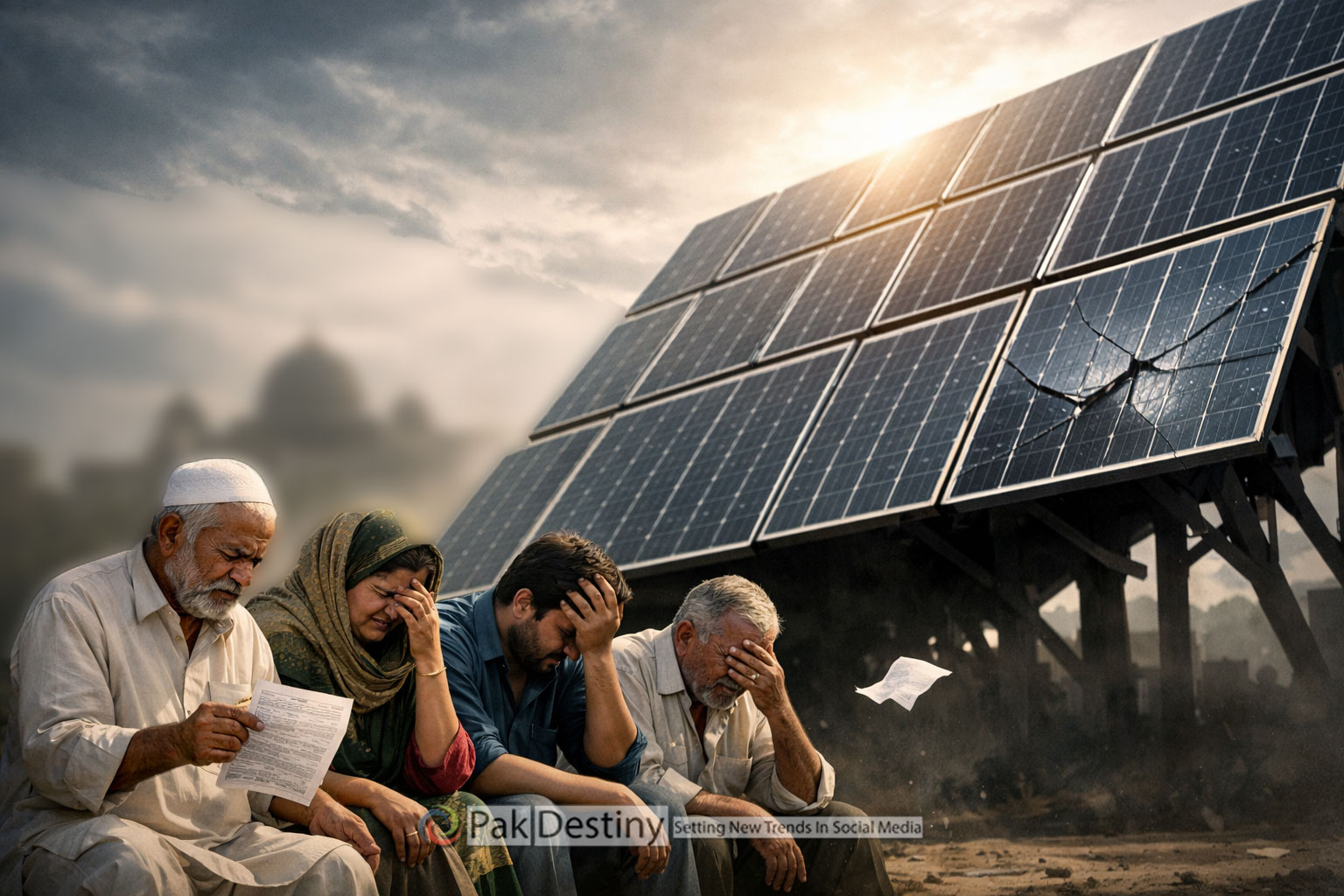
The fact that Nepra’s controversial decision to radically alter the incentive structure for distributed solar power met with strong criticism during a parliamentary panel meeting on Monday is not surprising. “Both parliamentarians and government officials were critical of the changes that have effectively terminated the ‘unit-for-unit energy exchange’ between prosumers and the grid. It was rightly maintained that the abrupt, unilateral reversal of benefits for prosumers risks undermining policy credibility and shattering the already weak investor confidence,” Dawn writes.
Residential prosumers and industrial manufacturers, it was pointed out, had opted for capital-intensive solar installations under a clearly defined net-metering regime and on the assumption of policy continuity. By altering the framework, the power sector regulator has sent a disturbing signal to both prosumers and prospective investors. The power minister, however, has defended the revised net-metering rules, arguing that the move was about “fair pricing”. He maintained that the decision would reduce general electricity tariffs by Rs1-1.5 per unit without significantly denting returns for rooftop solar investors.
“Both residential and industrial consumers have adopted rooftop solar in recent years to reduce the burden of higher tariffs and unreliable supplies. The net-metering policy had accelerated this shift, with total distributed solar generation estimated at 20,000-22,000 MW. Of this, 6,000-7,000 MW is under the net-metering regime. At a broader level, Nepra’s decision highlights a persistent contradiction in Pakistan’s energy sector governance,” the paper says.
On the one hand, the country speaks of promoting renewable energy, reducing the cost of doing business and easing pressure on a strained power grid. On the other, it appears to penalise early adopters of clean technology. Solar power for industry and other consumers is not just an environmental choice; it is an economic necessity in a high-tariff, high-unreliability environment. Further, regulatory stability is as important as affordability. Without predictability, even well-intentioned reforms can backfire.
If Pakistan is serious about transitioning to cleaner energy and reviving industrial growth, it must ensure that policy shifts are gradual, consultative and based on sound analysis and not decisions that shake confidence in the very institutions meant to provide stability. This is especially crucial when policy changes are unlikely to fix systemic, structural problems such as declining electricity demand, rising prices and the power sector’s mounting financial stress. Solarisation should not be seen as a threat to the grid. Nor should net-metered consumers be labelled as a privileged class benefiting unfairly while shifting costs onto others. Such arguments tend to oversimplify the issue. If anything, distributed solar adoption has mostly been a rational response to unaffordable tariffs and unreliable supply.