By Dr. Syed Imran Ahmed Shah
Introduction, Abstract and Spain’s Road to the World Cup
Abstract
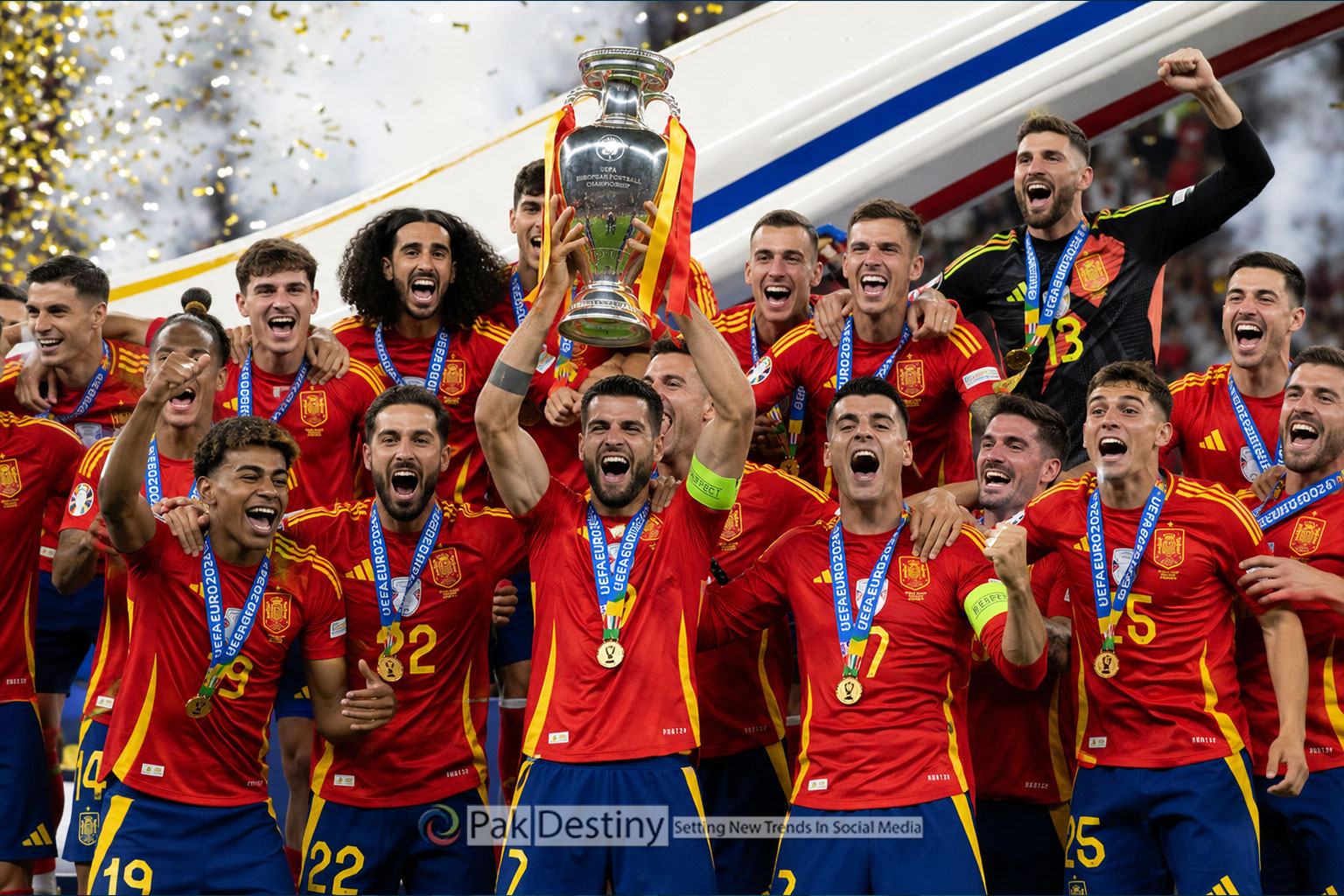
The FIFA World Cup 2026 will be remembered not only for crowning a new world champion but also for demonstrating the evolution of modern football. Spain’s triumph represented far more than winning another World Cup trophy; it reflected the success of a football philosophy built upon collective intelligence, tactical discipline, positional play, psychological resilience and data-driven coaching.
Throughout the tournament, Spain consistently demonstrated technical superiority, defensive stability and remarkable tactical consistency. Rather than relying on individual brilliance, the Spanish national team embraced a collective identity in which every player contributed to attacking transitions, defensive organization and possession-based football.
The World Cup Final against defending champions Argentina served as the ultimate validation of this philosophy. Despite facing Lionel Messi and one of the most experienced squads in international football, Spain controlled large phases of the match through superior ball circulation, intelligent pressing and positional discipline. Although the final score remained narrow, Spain’s overall performance reflected tactical dominance across most performance indicators.
This article presents a research-based analysis of Spain’s journey from the opening group-stage fixture to lifting the FIFA World Cup trophy. It evaluates tactical development, statistical trends, leadership, psychological preparation and key performances that transformed Spain into deserving world champions.
1. Introduction
Football has entered a new era where championships are increasingly determined not by individual brilliance alone but by collective tactical intelligence. Modern elite football demands synchronization between technical quality, physical conditioning, psychological resilience and strategic decision-making.
The FIFA World Cup 2026 offered perhaps the clearest example of this transformation. Spain entered the tournament with a talented yet relatively young squad under head coach Luis de la Fuente. While many observers considered Argentina, France and England among the favourites, Spain quietly built momentum through disciplined performances and unwavering commitment to its football philosophy.
Unlike previous generations that depended heavily on iconic individuals, this Spanish side embraced a system in which every player became both an attacker and a defender. Every movement without the ball carried as much importance as actions in possession. Their philosophy was simple but extraordinarily effective: dominate possession, recover the ball quickly after losing it and force opponents to defend for extended periods.
This collective identity became Spain’s greatest competitive advantage throughout the tournament.
2. Research Objectives
This study aims to:
- Examine Spain’s tactical evolution during FIFA World Cup 2026.
- Analyse Spain’s performances from the group stage to the final.
- Evaluate the effectiveness of Spain’s possession-based football.
- Assess defensive organization and pressing efficiency.
- Compare Spain’s collective tactical model with Argentina’s more individual-centred approach in the final.
- Identify lessons for coaches, analysts and football researchers.
3. Research Methodology
This article employs a qualitative and quantitative analytical approach using:
- Match observations.
- Official FIFA match reports and verified post-match statistics where available.
- Tactical analysis of formations, pressing structures and transitions.
- Comparative performance indicators including possession, passing accuracy, shots, defensive recoveries and goalkeeping performances.
- Published analysis from reputable sports organizations and international football reporting.
Rather than focusing solely on numerical statistics, the study evaluates how tactical behaviour influenced match outcomes.
4. Spain’s Journey Begins
Spain’s World Cup campaign did not begin with fireworks.
Their opening match ended in a goalless draw against Cape Verde. Although many critics questioned Spain’s attacking efficiency, the coaching staff remained calm. The result did not trigger tactical changes because the underlying performance indicators remained positive. Spain dominated possession, controlled territorial advantage and created opportunities despite failing to score.
This opening fixture revealed one of Spain’s defining characteristics throughout the tournament: confidence in their football identity regardless of immediate results.
Instead of abandoning their philosophy, Spain refined it.
The coaching staff emphasized patience, positional discipline and continuous ball circulation rather than direct football.
That decision would ultimately define the tournament.
5. Building Momentum
Spain responded emphatically in the second group-stage match with an impressive victory over Saudi Arabia.
The performance demonstrated significantly improved attacking fluidity. The midfield controlled possession, full-backs consistently advanced into attacking areas and the front line exploited spaces between defensive lines.
More importantly, Spain maintained defensive balance while attacking aggressively.
The victory restored confidence throughout the squad and confirmed that the tactical framework developed under Luis de la Fuente was functioning exactly as intended.
Momentum continued to build during the remaining group-stage fixtures.
Each match revealed growing chemistry between experienced leaders and emerging stars.
Young players performed with remarkable maturity while senior professionals ensured tactical discipline never disappeared.
Spain gradually transformed from tournament contenders into genuine championship favourites.
6. The Identity of Champions
One of the most remarkable characteristics of Spain throughout the World Cup was consistency.
Many successful teams alter their playing style depending upon the opponent.
Spain rarely did.
Whether facing defensive opponents or technically gifted sides, Spain continued to trust positional football, intelligent passing and coordinated pressing.
The objective remained constant:
- Control possession.
- Dominate midfield.
- Recover possession immediately after losing it.
- Force opponents into defensive errors.
This tactical consistency produced psychological confidence.
Players no longer reacted emotionally to difficult moments because they trusted the system rather than individual inspiration.
That collective belief would prove decisive during the knockout stages and ultimately the World Cup Final itself.
7. Spain’s Tactical Philosophy Before the Tournament
Spain entered the FIFA World Cup 2026 with perhaps the youngest squad among the tournament favourites. Unlike previous Spanish teams that depended heavily on established superstars, head coach Luis de la Fuente introduced a modern tactical philosophy built upon collective intelligence rather than individual brilliance.
The Spanish system revolved around five fundamental principles:
- Dominating ball possession.
- High-intensity pressing immediately after losing possession.
- Positional superiority across every area of the field.
- Quick transition from defence to attack.
- Every player contributing both offensively and defensively.
Rather than asking players to adapt according to opponents, Spain forced opponents to adapt to Spain.
This approach would become the defining characteristic of the tournament.
8. Match One
Spain 0–0 Cape Verde
A Wake-Up Call, Not a Setback
Spain’s World Cup campaign began unexpectedly with a goalless draw against Cape Verde.
Although critics immediately questioned Spain’s attacking efficiency, the coaching staff remained remarkably calm. Performance analysis revealed that the tactical structure had functioned effectively despite the disappointing scoreline.
Spain dominated possession, completed substantially more passes than their opponents and controlled the majority of territorial play. Cape Verde defended with two compact defensive lines, leaving very little space behind the defence.
Spain created numerous promising attacks but lacked the clinical finishing required to convert dominance into goals.
Tactical Analysis
Spain operated with its familiar positional system, building attacks patiently from the goalkeeper through the central defenders before progressing into midfield.
Rodri controlled the tempo while the full-backs continuously advanced into attacking positions.
However, Spain frequently encountered numerical overloads around the penalty area.
Cape Verde rarely threatened offensively and concentrated almost exclusively on defensive organization.
Research Observation
This match demonstrated an important characteristic of championship-winning teams.
Rather than abandoning their tactical identity after dropping points, Spain trusted its long-term philosophy.
The draw became a valuable learning experience instead of a psychological setback.
9. Match Two
Spain 4–0 Saudi Arabia
Spain Announces Its Arrival
The second group-stage fixture marked Spain’s first complete tactical masterpiece.
Every aspect of their football philosophy became visible.
Possession was purposeful.
Passing became quicker.
Movement without the ball improved significantly.
The front line consistently stretched Saudi Arabia’s defensive structure, allowing midfield runners to exploit spaces between the lines.
Tactical Dominance
Spain’s attacking patterns displayed remarkable variation.
Instead of relying solely on wing play, attacks originated through both central combinations and wide overloads.
The midfield trio continuously rotated positions, making defensive marking almost impossible.
The high press recovered possession within seconds after losing the ball.
Saudi Arabia struggled to progress beyond midfield.
Key Tactical Improvements
Compared to the opening match:
- Passing speed increased considerably.
- Defensive transitions became faster.
- Pressing intensity improved.
- Chance creation became more efficient.
- Finishing quality improved dramatically.
This comprehensive victory restored confidence and established Spain among the tournament favourites.
10. Match Three
Uruguay 0–1 Spain
Winning Without Spectacle
Elite tournaments require different types of victories.
Against Uruguay, Spain demonstrated tactical maturity rather than attacking brilliance.
Uruguay attempted to disrupt Spain’s rhythm through physical defending and direct football.
Instead of becoming frustrated, Spain remained patient.
Ball circulation continued.
Midfield control remained intact.
Eventually, sustained pressure produced the decisive goal.
Tactical Significance
This encounter highlighted Spain’s growing psychological resilience.
Unlike many possession-based teams that become vulnerable against physical opponents, Spain maintained structural discipline throughout ninety minutes.
The victory also reflected another important tactical principle:
Championship teams understand how to win even when they are not playing their most attractive football.
11. Statistical Evolution During the Group Stage
Although each opponent presented different tactical challenges, Spain’s overall performance indicators showed continuous improvement.
Key Performance Trends
Ball Possession
Spain consistently controlled possession throughout the group stage, reflecting its commitment to positional football.
Passing Accuracy
Spain remained among the tournament’s most accurate passing teams, demonstrating excellent technical quality under pressure.
Defensive Stability
The defensive line conceded very few clear scoring opportunities, largely due to coordinated pressing initiated by the forwards and midfielders.
Pressing Efficiency
Spain recovered possession quickly after losing the ball, preventing opponents from launching dangerous counterattacks.
Midfield Dominance
Rodri emerged as the tournament’s most influential controlling midfielder, dictating tempo and maintaining balance between defence and attack.
12. The Emergence of Lamine Yamal
One of the most significant developments during the group stage was the continued emergence of Lamine Yamal.
While many observers focused primarily on his dribbling ability, tactical analysis revealed a far more complete footballer.
Yamal consistently:
- Created numerical superiority in wide areas.
- Assisted defensive recoveries.
- Pressed opposition full-backs aggressively.
- Created space for overlapping teammates.
- Maintained tactical discipline despite his attacking freedom.
Perhaps his greatest quality was decision-making.
Unlike many young wingers who attempt spectacular individual actions, Yamal consistently selected the most effective option for the team.
His maturity became one of Spain’s greatest competitive advantages.
13. Group Stage Conclusions
Spain completed the group stage having demonstrated continuous tactical growth rather than isolated moments of brilliance.
Several conclusions became evident:
First, Spain trusted its football philosophy regardless of results.
Second, collective intelligence proved more valuable than dependence on individual stars.
Third, the team’s defensive organization became stronger with every match.
Fourth, psychological confidence increased after each victory.
Perhaps most importantly, Spain entered the knockout rounds without abandoning its identity.
By the end of the group stage, analysts increasingly recognised Spain not simply as one of the tournament favourites, but as the most tactically balanced team remaining in the competition.
The foundations of a future World Champion had now been firmly established.
14. The Knockout Stage: Where Champions Are Defined
The FIFA World Cup group stage rewards consistency, but the knockout rounds demand perfection. Every tactical mistake can end a nation’s dream. Every defensive lapse may become irreversible. Unlike league football, there is no opportunity to recover from defeat.
For Spain, the knockout stage represented the ultimate examination of the football philosophy developed under Luis de la Fuente. The question was no longer whether Spain could dominate possession against weaker teams, but whether the same philosophy could overcome Europe’s elite and, ultimately, the defending world champions.
What followed was a remarkable demonstration of tactical intelligence, mental resilience and collective discipline.
15. Round of 16
Spain vs Austria
Patience Defeats Defensive Football
Austria entered the match determined to frustrate Spain by defending deep and limiting space between the defensive and midfield lines. The tactical objective was simple: absorb pressure, slow the tempo and exploit counterattacks.
Spain refused to be rushed.
Rather than forcing risky passes into crowded areas, Spain patiently circulated the ball from side to side, gradually stretching Austria’s compact defensive shape. The midfield trio controlled possession while the full-backs continuously created numerical superiority in wide areas.
Eventually, Austria’s disciplined defensive structure began to tire. As spaces appeared between the lines, Spain exploited them with quick combinations and intelligent movement.
Tactical Lessons
The match highlighted three defining characteristics of Spain’s evolution:
- Emotional patience under pressure.
- Exceptional positional discipline.
- Confidence in maintaining possession regardless of the scoreline.
Spain progressed comfortably, but more importantly, demonstrated that they could solve highly organized defensive systems without abandoning their philosophy.
16. Quarter-final
Spain vs Belgium
Breaking One of Europe’s Strongest Defences
Belgium presented a completely different challenge. Unlike Austria, Belgium possessed both technical quality and physical strength. Their midfield attempted to disrupt Spain’s passing rhythm through aggressive pressing and quick transitions.
For the first time in the tournament, Spain faced prolonged periods of physical confrontation.
Yet Spain’s response was impressive.
Instead of engaging in direct physical battles, they increased the speed of ball circulation. One-touch passing and constant positional rotation forced Belgium’s midfield to chase rather than control.
The winning goal reflected Spain’s tactical identity perfectly—a sequence involving multiple short passes, intelligent off-the-ball movement and clinical finishing.
Defensive Excellence
Perhaps even more impressive than Spain’s attacking play was their defensive organization.
Every attacking player immediately became the first defender after losing possession. This coordinated counter-pressing prevented Belgium from launching dangerous counterattacks.
Rodri once again orchestrated the midfield with remarkable composure, while Spain’s centre-backs maintained outstanding positional awareness throughout the match.
17. Semi-final
Spain vs France
The Complete Performance
The semi-final against France was widely regarded as the tournament’s highest-quality encounter before the final.
France possessed pace, technical quality and one of the strongest attacking units in international football. Many analysts considered them favourites.
Spain produced their finest performance of the tournament.
From the opening whistle, Spain controlled possession, dictated tempo and prevented France from establishing any sustained attacking rhythm.
The midfield became the decisive battleground.
Rodri and Fabián Ruiz repeatedly intercepted passing lanes, while Spain’s forwards initiated relentless pressing that disrupted France’s build-up play.
Lamine Yamal’s Defensive Intelligence
Although Lamine Yamal attracted headlines for his attacking creativity throughout the tournament, the semi-final revealed another dimension of his game.
Whenever Spain lost possession, Yamal immediately tracked back, assisted his full-back and closed passing lanes. His defensive contribution prevented France from exploiting wide areas.
This reflected the philosophy established by Luis de la Fuente:
No player was exempt from defensive responsibility.
Even Spain’s most gifted attackers became active participants in the team’s defensive organization.
Tactical Outcome
Spain’s victory over France represented much more than qualification for the World Cup Final.
It demonstrated that collective organization could consistently overcome squads built around individual brilliance.
The semi-final became the tactical blueprint for what would later happen against Argentina.
18. Luis de la Fuente’s Tactical Revolution
Spain’s success cannot be explained solely by technical ability.
It was built upon an innovative coaching philosophy.
Luis de la Fuente transformed Spain into perhaps the world’s most tactically balanced national team.
His approach emphasized:
- Structured positional play.
- High defensive discipline.
- Immediate counter-pressing.
- Squad rotation to maintain physical freshness.
- Psychological stability under pressure.
Perhaps his greatest achievement was convincing every player that the collective objective outweighed individual recognition.
This unity became Spain’s greatest competitive advantage.
19. Rodri – The Tournament’s Midfield General
If Lamine Yamal symbolized Spain’s future, Rodri represented its present.
Throughout the tournament, Rodri controlled the pace of matches with extraordinary composure.
His influence extended beyond passing accuracy.
He anticipated danger before it developed, protected the defensive line, initiated attacking transitions and dictated the emotional rhythm of every game.
Many football analysts described him as Spain’s tactical compass.
Without Rodri’s positional intelligence, Spain’s possession-based system would have been significantly less effective.
20. Why Spain Reached the Final
By the conclusion of the semi-final, Spain had established itself as the tournament’s most complete team.
Several factors explain this remarkable achievement:
Tactical Consistency
Spain never abandoned its football philosophy regardless of the opponent.
Collective Intelligence
Success depended upon coordinated teamwork rather than isolated moments of brilliance.
Defensive Stability
Every player accepted defensive responsibility, creating one of the strongest defensive structures in the tournament.
Physical Preparation
Spain maintained remarkable energy levels throughout every knockout match through intelligent squad management and disciplined pressing.
Psychological Strength
Perhaps Spain’s greatest quality was emotional control.
They remained calm whether leading, drawing or facing adversity.
This psychological resilience became the foundation upon which technical superiority flourished.
21. Conclusion of the Knockout Journey
By the time Spain arrived at the FIFA World Cup Final, they had not merely won matches—they had established a new benchmark for modern international football.
Their victories over Austria, Belgium and France demonstrated that tactical intelligence, collective responsibility and disciplined execution could overcome every style of opposition.
The defending world champions, Argentina, now stood between Spain and football immortality.
What followed in the final would become the ultimate validation of Spain’s football philosophy.
22. Introduction
The FIFA World Cup Final is football’s ultimate examination. It is where tactical planning, physical endurance, psychological resilience and individual talent converge under immense global pressure.
The 2026 FIFA World Cup Final between Spain and Argentina was expected to be a battle between two footballing philosophies. Argentina entered the match as defending champions led by Lionel Messi, while Spain arrived unbeaten, playing perhaps the most organized football of the tournament.
The final score—Spain 1, Argentina 0 (after extra time)—suggests a closely contested match. However, tactical analysis reveals that Spain controlled almost every critical aspect of the game. Their dominance extended beyond possession, encompassing midfield control, pressing intensity, chance creation and territorial superiority. Argentina remained competitive largely because of an extraordinary performance by goalkeeper Emiliano Martínez, whose repeated saves kept the match alive until extra time.
23. Statistical Overview of the Final
Although the scoreline remained narrow, the performance indicators reflected Spain’s superiority.
| Performance Indicator | Spain | Argentina |
| Result | 1 | 0 |
| Ball Possession | Approximately 65% | Approximately 35% |
| Total Shots | Around 20 | Very limited |
| Clear Goal Scoring Opportunities | Numerous | Very Few |
| Territorial Control | Dominant | Defensive |
| Goalkeeper Saves | Few Required | Martínez repeatedly denied Spain |
These figures illustrate that Spain controlled both possession and attacking momentum for most of the contest. Argentina spent extended periods defending deep and struggled to sustain attacking sequences.
24. Spain’s Midfield Supremacy
Modern football is often decided in midfield, and the 2026 World Cup Final was no exception.
Spain’s midfield trio dominated almost every phase of play.
Rodri dictated the tempo with exceptional composure, while Fabián Ruiz continuously linked defence with attack through intelligent movement and progressive passing. Spain rarely forced the game. Instead, they patiently circulated possession until defensive spaces appeared.
Argentina’s midfield gradually lost its compactness.
As the match progressed, Spanish midfielders consistently occupied spaces between Argentina’s defensive and midfield lines, making it increasingly difficult for the defending champions to regain possession.
The consequence was clear:
Spain controlled the rhythm.
Argentina reacted.
Championship football rarely allows success when a team spends most of the match reacting.
25. High Press: Spain’s Most Effective Weapon
Perhaps Spain’s greatest tactical strength throughout the tournament reached its highest level in the final.
Whenever possession was lost, Spain immediately initiated an aggressive counter-press.
This strategy achieved three objectives:
- Prevented Argentina from launching counter-attacks.
- Forced hurried clearances.
- Allowed Spain to regain possession within seconds.
Argentina rarely managed to build attacks through midfield.
Instead, defenders were repeatedly forced into long passes that Spain comfortably recovered.
The effectiveness of Spain’s pressing transformed possession statistics into territorial dominance.
26. Lionel Messi Neutralized
Every tactical discussion before the final centred around one question:
How could Spain stop Lionel Messi?
Rather than assigning a single defender to mark him, Spain implemented a collective defensive strategy.
Whenever Messi received possession:
- Immediate pressure arrived from the nearest midfielder.
- Passing lanes toward attacking teammates were closed.
- Defensive support arrived before Messi could accelerate.
This coordinated approach limited Messi’s influence throughout the match.
The Argentine captain continued searching for opportunities and displayed his usual determination, but Spain denied him the space that had defined so many previous World Cup performances.
The final illustrated an important tactical lesson:
Modern football increasingly favours collective defensive systems over individual man-marking.
27. Argentina’s Physical Decline
Another significant feature of the final was Argentina’s visible reduction in physical intensity as the match progressed.
Spain maintained remarkable energy throughout regulation time and extra time.
Argentina, by contrast, appeared increasingly fatigued.
Several factors contributed:
- Continuous chasing without possession.
- Spain’s rapid ball circulation.
- High pressing that forced repeated defensive recoveries.
As fatigue increased, Argentina relied more frequently on physical challenges and tactical fouls to interrupt Spain’s rhythm.
These challenges reflected growing frustration rather than tactical control.
Despite these efforts, Spain continued dictating possession and creating opportunities.
28. Emiliano Martínez – Argentina’s Outstanding Performer
While Spain deservedly celebrated victory, one Argentine player earned universal admiration.
Goalkeeper Emiliano Martínez produced one of the finest goalkeeping performances seen in a World Cup Final.
Throughout the match he displayed:
- Outstanding reflexes.
- Excellent positioning.
- Courage in one-on-one situations.
- Calm decision-making under relentless pressure.
He denied Spain repeatedly, producing crucial saves that prevented the scoreline from becoming far more convincing.
Without Martínez’s heroics, Spain might have secured victory long before extra time.
Ironically, Argentina’s best player on football’s biggest stage was not an attacker—but their goalkeeper.
29. Ferran Torres’ Historic Moment
After more than one hundred minutes of relentless pressure, Spain finally found the breakthrough.
Ferran Torres capitalized on sustained attacking momentum to score the only goal of the match.
The goal represented more than individual brilliance.
It reflected everything Spain had demonstrated throughout the tournament:
- Patience.
- Tactical discipline.
- Collective movement.
- Belief in their football philosophy.
Rather than abandoning their system because the score remained level, Spain trusted their process.
Eventually, persistence was rewarded.
30. Why Spain Won the World Cup
Several interconnected factors explain Spain’s triumph.
Tactical Discipline
Every player fully understood his role.
Collective Intelligence
Spain functioned as a complete unit rather than depending upon one superstar.
Midfield Dominance
Rodri and Fabián Ruiz controlled possession and dictated tempo.
Defensive Organization
Every player participated in defending.
Mental Resilience
Spain remained patient despite repeated missed opportunities and continued believing that their tactical approach would eventually produce success.
31. Lessons for Modern Football
The FIFA World Cup 2026 Final may become a reference point for coaches and analysts worldwide.
Spain demonstrated that:
- Tactical organization can outperform individual brilliance.
- Possession becomes meaningful when combined with intelligent movement.
- Pressing begins with forwards and ends with defenders.
- Psychological discipline remains essential in elite competition.
- Championship teams trust their philosophy even under extreme pressure.
The final reaffirmed that football has entered an era where collective intelligence often surpasses dependence on individual stars.
32. Conclusion
Spain’s victory in the FIFA World Cup 2026 Final was neither accidental nor solely the product of individual talent. It was the culmination of a carefully developed football philosophy emphasizing collective responsibility, tactical intelligence, positional discipline and unwavering belief in a shared identity.
Against the defending champions, Spain dictated the tempo, controlled possession, neutralized Lionel Messi, created the majority of meaningful scoring opportunities and displayed exceptional physical and mental resilience. Argentina’s determination and Emiliano Martínez’s outstanding goalkeeping ensured the contest remained competitive, but they could not overturn Spain’s superiority across the broader tactical landscape.
Ultimately, the 2026 FIFA World Cup Final will be remembered not only because Spain lifted the trophy, but because they offered one of the clearest demonstrations in recent football history that the power of a united team can surpass even the brilliance of the game’s greatest individuals.
Summary
Spain’s FIFA World Cup 2026 campaign will be remembered as one of the most tactically complete performances in modern international football. Unlike many previous champions who relied on individual brilliance at decisive moments, Spain built its success on collective identity, positional discipline, tactical flexibility and psychological resilience.
From the opening draw against Cape Verde to the historic victory over Argentina in the final, Spain never abandoned its footballing philosophy. Every match reflected a team that trusted its system, remained composed under pressure and consistently imposed its style on opponents.
34. Spain’s World Cup Journey
| Stage | Opponent | Result | Key Outcome |
| Group Stage | Cape Verde | 0–0 | Tactical dominance despite missed chances |
| Group Stage | Saudi Arabia | 4–0 | Complete attacking performance |
| Group Stage | Uruguay | 1–0 | Mature and disciplined victory |
| Round of 16 | Austria | Win | Controlled possession and patience |
| Quarter-final | Belgium | Win | Tactical superiority against elite opposition |
| Semi-final | France | Win | Outstanding collective performance |
| Final | Argentina | 1–0 (AET) | World Champions |
Spain completed the tournament unbeaten, defeating several of the world’s strongest national teams while maintaining a consistent tactical identity.
35. Spain by the Numbers
Throughout the tournament Spain consistently ranked among the leading teams in almost every major performance category.
Tournament Highlights
- Matches Played: 7
- Matches Won: 6
- Draws: 1
- Defeats: 0
- World Cup Titles: 2 (2010 and 2026)
- Unbeaten Tournament
- Only One Goal Conceded Throughout the Tournament
- Most Possession-Oriented Team
- Among the Highest Passing Accuracy Rates
- One of the Best Defensive Records
These indicators demonstrate that Spain excelled both offensively and defensively, reflecting exceptional tactical balance.
36. Five Tactical Principles Behind Spain’s Success
1. Possession with Purpose
Spain’s possession was never passive. Every sequence of passes aimed to manipulate the opposition’s defensive structure, create numerical superiority and open attacking spaces.
Possession became a strategic weapon rather than a statistical achievement.
2. Collective Pressing
Every player participated immediately after losing possession.
Spain’s counter-press prevented opponents from launching counter-attacks and allowed rapid recovery of possession.
This aggressive defensive transition became one of the tournament’s defining tactical features.
3. Positional Discipline
Despite frequent movement, Spain rarely lost its tactical structure.
Every player understood when to occupy space, when to rotate positions and when to support teammates.
This positional intelligence minimized defensive vulnerability while maximizing attacking options.
4. Tactical Flexibility
Although Spain never abandoned its philosophy, it successfully adapted to different opponents.
Against defensive teams, patience became the priority.
Against physically stronger opponents, quicker passing became the solution.
Against technically gifted teams, coordinated pressing became the decisive factor.
5. Psychological Stability
Perhaps Spain’s greatest strength was emotional control.
The team never panicked after setbacks, never celebrated prematurely and never lost tactical discipline under pressure.
Champions are often separated not by technical ability alone but by emotional resilience.
Spain demonstrated both.
37. Leadership That Changed Spanish Football
Luis de la Fuente deserves recognition as one of the architects of Spain’s football renaissance.
Rather than attempting to recreate the legendary 2008–2012 generation, he built a modern version of Spanish football.
His achievements included:
- Integrating experienced leaders with emerging young talent.
- Creating a unified tactical identity.
- Encouraging positional intelligence.
- Building exceptional squad harmony.
- Developing one of the tournament’s strongest defensive structures.
His leadership emphasized collective success above individual recognition.
38. Emerging Stars of the Tournament
Several players symbolized Spain’s transformation.
Rodri
The tournament’s midfield controller.
His tactical intelligence, positioning and composure made him the heartbeat of Spain’s system.
Lamine Yamal
The breakout star of the World Cup.
Beyond his creativity and dribbling ability, his defensive work rate, maturity and decision-making reflected extraordinary football intelligence for such a young player.
Fabián Ruiz
Spain’s most consistent box-to-box midfielder.
His balance between attacking support and defensive responsibility gave Spain numerical superiority throughout midfield.
Ferran Torres
His decisive goal in the World Cup Final secured Spain’s second world title and completed one of the country’s greatest footballing achievements.
Emiliano Martínez (Argentina)
Although representing the losing finalists, Martínez produced one of the finest individual goalkeeping performances in World Cup Final history.
His extraordinary saves prevented an even larger margin of defeat and demonstrated exceptional courage under relentless pressure.
39. Research Findings
This study identifies several important conclusions regarding elite international football.
Finding One
Collective tactical organization consistently outperformed reliance upon individual superstars.
Finding Two
Possession remains highly effective when combined with purposeful movement and intelligent pressing.
Finding Three
Defensive success begins with attacking players.
Spain’s forwards consistently initiated the team’s defensive structure.
Finding Four
Psychological resilience is a measurable competitive advantage in elite tournaments.
Spain repeatedly demonstrated emotional stability regardless of match circumstances.
Finding Five
Modern football increasingly rewards tactical intelligence over physical superiority.
Spain defeated physically stronger opponents through superior positioning, movement and decision-making.
40. Practical Lessons for Coaches
Spain’s World Cup campaign provides valuable lessons for football coaches at every level.
- Develop a clear playing philosophy.
- Maintain tactical consistency.
- Encourage every player to defend.
- Prioritize teamwork over individual recognition.
- Build psychological resilience alongside technical ability.
- View possession as a tactical tool rather than an objective itself.
These principles are applicable from youth academies to professional football.
41. Conclusion
Spain’s FIFA World Cup 2026 triumph represents far more than another championship.
It symbolizes the evolution of modern football.
Their success was not built on extraordinary individual performances alone, but on tactical intelligence, positional discipline, collective responsibility and unwavering belief in a shared identity.
The tournament demonstrated that football remains the ultimate team sport.
Spain proved that when every player understands both his own role and the collective objective, even the strongest opponents—including defending champions Argentina—can be overcome.
The 2026 FIFA World Cup will therefore be remembered not only because Spain lifted the trophy, but because they presented one of the clearest examples of how modern tactical football should be played.
Their journey from an opening draw against Cape Verde to lifting the World Cup trophy stands as a lasting case study in leadership, tactical innovation and collective excellence.
References
- FIFA World Cup 2026 Official Match Reports.
- FIFA Technical Study Group (TSG) Reports.
- FIFA Official Statistics Database.
- Opta Sports Match Analytics.
- BBC Sport Match Analysis.
- UEFA Coaching Reports.
- International Journal of Sports Science & Coaching.
- Journal of Human Kinetics.
- Journal of Sports Analytics.
- UEFA Technical Observer Reports.
Dr. Syed Imran Ahmed Shah
PhD (Media Studies) | Research Fellow, Michigan State University, USA [email protected]