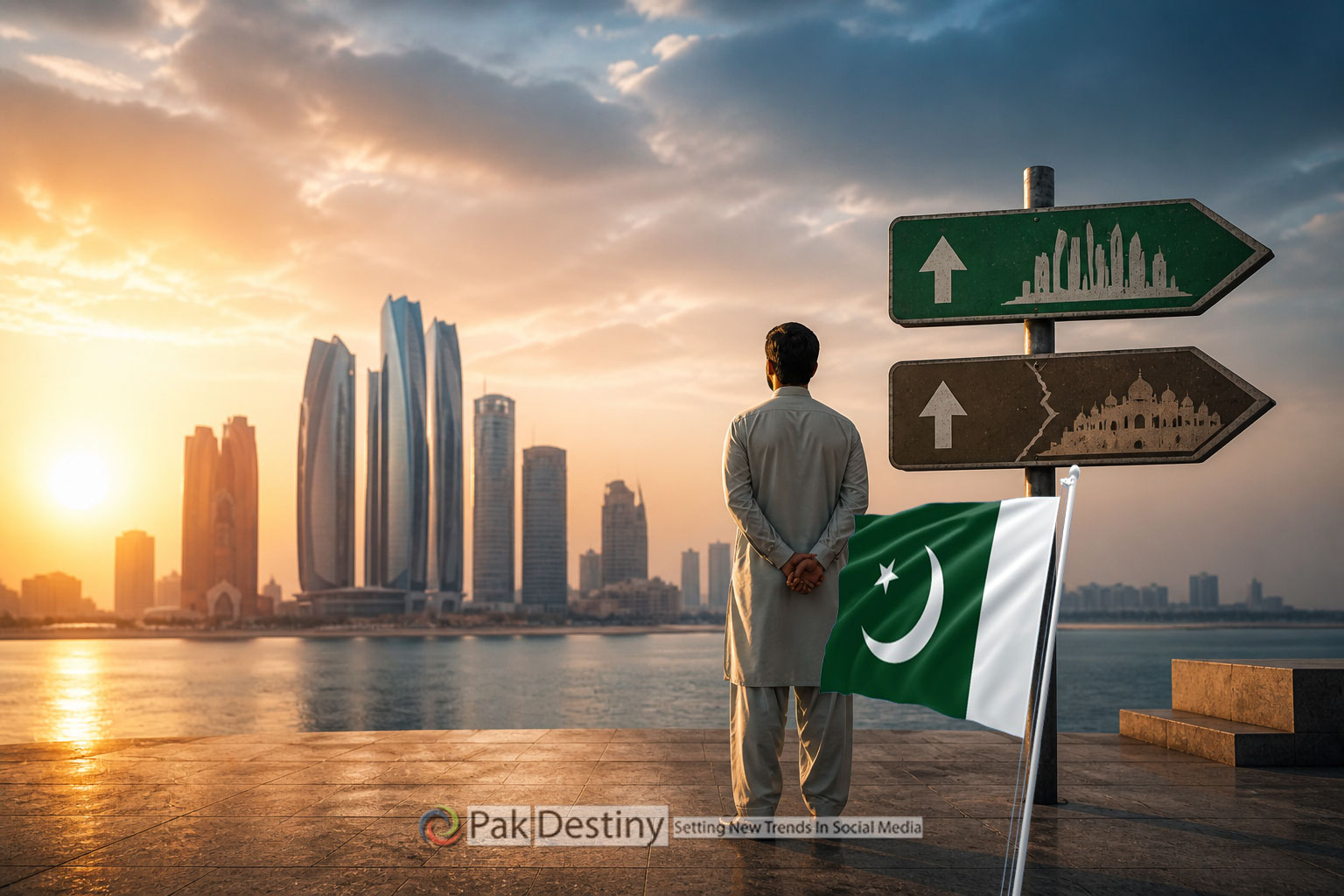
— Beyond Oil: UAE’s global ambitions and Pakistan’s balancing act
— Changing Gulf dynamics put Pakistan at a diplomatic crossroads
By Zulqernain
When the news broke that the United Arab Emirates was stepping away from OPEC, it did not immediately echo in the narrow streets of Islamabad or the bustling markets of Lahore. But in the quiet corridors of policymaking, it landed like a warning bell.
For decades, Pakistan’s relationship with the UAE had been wrapped in the language of brotherhood — shared faith, shared interests, and, often, shared crises. Whenever Islamabad found itself cornered economically, Abu Dhabi was among the first to extend a hand. Deposits would arrive, oil on deferred payments would ease pressure, and diplomacy would follow a familiar script of mutual support.
But the world was changing — and so was the UAE.
In Abu Dhabi, the decision to walk away from OPEC was not just about oil quotas. It was about identity. The UAE no longer saw itself as merely part of a collective Gulf voice shaped largely by Saudi Arabia. It wanted to speak in its own tone — assertive, independent, and globally ambitious.
Thousands of miles away, in Islamabad, a senior official paused over a briefing note. The message between the lines was clear: the era of easy assumptions was over.
A few years earlier, Pakistan had already received a subtle preview of this shift. When the UAE requested the return of its financial deposits, Islamabad complied — not because it was easy, but because it had little choice.
That moment quietly redefined the relationship. It was no longer about unconditional support; it was about accountability.
Now, as the UAE charted a more independent course, Pakistan faced a new reality.
In Karachi’s ports and Gwadar’s expanding coastline, Emirati investors began to see opportunity — not as benefactors, but as stakeholders. Deals were discussed not in terms of aid, but equity. Land, logistics, energy corridors — everything had a price, and everything required guarantees.
A young Pakistani bureaucrat, part of a new generation, remarked during a closed-door meeting: “They are not here to help us anymore. They are here to do business.”
And perhaps that was not entirely a bad thing.
Meanwhile, in Dubai, where millions of expatriates shape the skyline as much as steel and glass, Pakistani workers continued to arrive — but under different expectations. The UAE was changing internally too. Emiratisation policies meant fewer low-skilled opportunities and greater demand for expertise.
For a Pakistani technician landing at Dubai International Airport, the stakes were higher now. Skills mattered more than connections. Compliance mattered more than convenience.
Back in Pakistan, the ripple effects were becoming clearer.
Islamabad could no longer rely on sentiment to navigate its ties with Gulf capitals. The widening differences between the UAE and Saudi Arabia — whether over oil, Yemen, or regional influence — meant Pakistan had to walk a tighter rope. Neutrality was no longer passive; it required careful, constant calibration.
A diplomat described it quietly over tea: “Before, we balanced out of habit. Now, we must balance out of necessity.”
Yet, within this shifting landscape, opportunity flickered.
The UAE’s global ambitions meant it was searching for reliable partners — countries that could offer strategic geography, resources, and market access. Pakistan, if it chose to reform and stabilize, could still be one of them.
Imagine a different future:
Gwadar humming with Emirati-backed logistics networks.
Punjab’s farmlands feeding Gulf food security projects.
Renewable energy plants rising in Sindh under joint ventures.
It was not a distant dream — but it was no longer guaranteed.
Years from now, historians may not remember the exact moment the UAE stepped away from OPEC. But they may remember what it symbolized: the end of one kind of global order and the beginning of another — one where nations, even allies, act first and foremost in their own interest.
For Pakistan, the lesson is unfolding in real time.
The relationship with the UAE will endure — but it will be different. Less emotional, more strategic. Less about rescue, more about relevance.
And as Islamabad looks toward Abu Dhabi in this new era, one truth becomes unavoidable:
The future of the relationship will not be decided in the Gulf.
It will be decided in Pakistan itself.