By Zulqernain
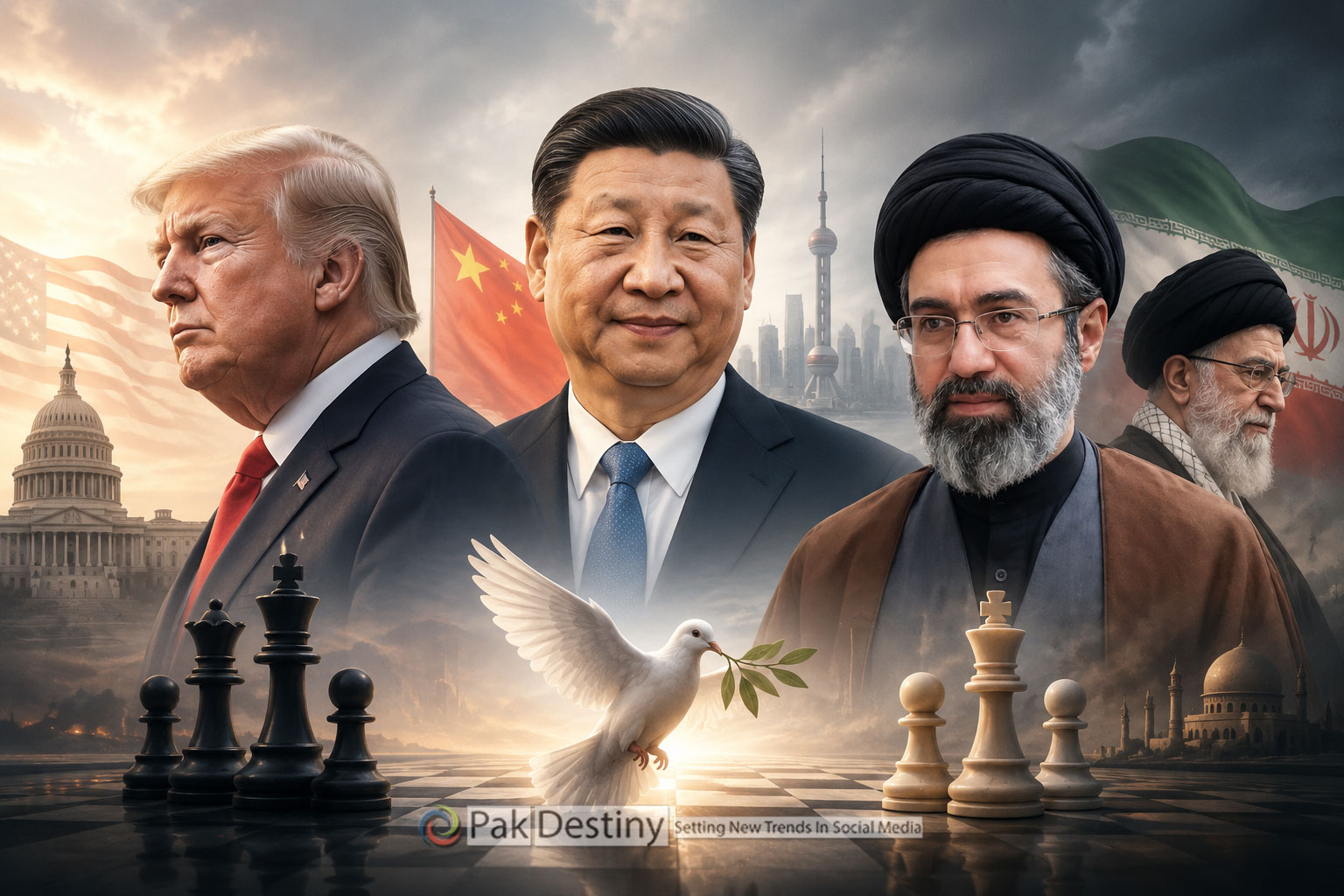
Fresh diplomatic engagement between the presidents of the United States and China has triggered cautious optimism about the possibility of easing tensions surrounding Iran, even as fears of a wider regional conflict continue to haunt the Middle East.
The high-profile summit between US President Donald Trump and Chinese President Xi Jinping in Beijing this week came against the backdrop of growing instability linked to the Iran conflict, disruptions in the Strait of Hormuz and mounting concerns over global energy security. According to international media reports, both leaders discussed the Iran situation extensively and agreed that Tehran should not acquire nuclear weapons while also stressing the need to reopen vital shipping routes in the Gulf.
Analysts say the talks signal that Washington and Beijing, despite their deep strategic rivalry, share a common interest in preventing a full-scale war that could destabilise global markets and damage already fragile economic growth.
China, which imports a significant portion of its oil from the Middle East and maintains close economic ties with Tehran, has increasingly projected itself as a mediator urging negotiations and restraint. Chinese Foreign Minister Wang Yi, after the summit, publicly called for diplomacy and dialogue between Washington and Tehran, saying disputes should be resolved through negotiations rather than military escalation.
President Xi also described relations with the United States as entering a phase of “constructive and strategically stable” engagement, a tone viewed by observers as an attempt to avoid confrontation while managing major crises such as Iran, Taiwan and trade disputes.
However, despite the conciliatory language, the threat of renewed military escalation remains significant.
Reports emerging from Washington suggest that the Trump administration is still weighing military options should diplomacy fail. Pentagon planners are reportedly reviewing contingency strategies amid concerns over Iran’s regional posture and the security of maritime trade routes.
The Strait of Hormuz — through which nearly a fifth of global oil supplies pass — has become a central issue in the crisis. Any prolonged disruption there could send oil prices soaring and trigger wider economic shocks worldwide.
Both Washington and Beijing appear keen to prevent such an outcome.
Political observers believe China’s growing diplomatic activism reflects its broader ambition to emerge as a global powerbroker capable of mediating conflicts traditionally dominated by Western powers.
“China wants stability in the Gulf because its economy depends heavily on uninterrupted energy supplies,” said one regional affairs expert. “At the same time, Beijing does not want direct confrontation with the United States over Iran.”
Some analysts argue that the Beijing summit has temporarily lowered the immediate risk of a wider war by opening communication channels between the two superpowers.
Yet others caution that mistrust between Washington and Tehran, combined with continuing sanctions and military deployments in the region, means the possibility of escalation cannot be ruled out.
International observers also note that while China advocates diplomacy, the US continues to pressure Iran over its nuclear programme and regional influence, leaving the crisis delicately balanced between negotiations and confrontation.
The latest developments come at a time when the global geopolitical order is increasingly shaped by competition and cooperation between Washington and Beijing, with the Iran conflict becoming another test of whether the world’s two largest powers can jointly prevent a broader regional war.