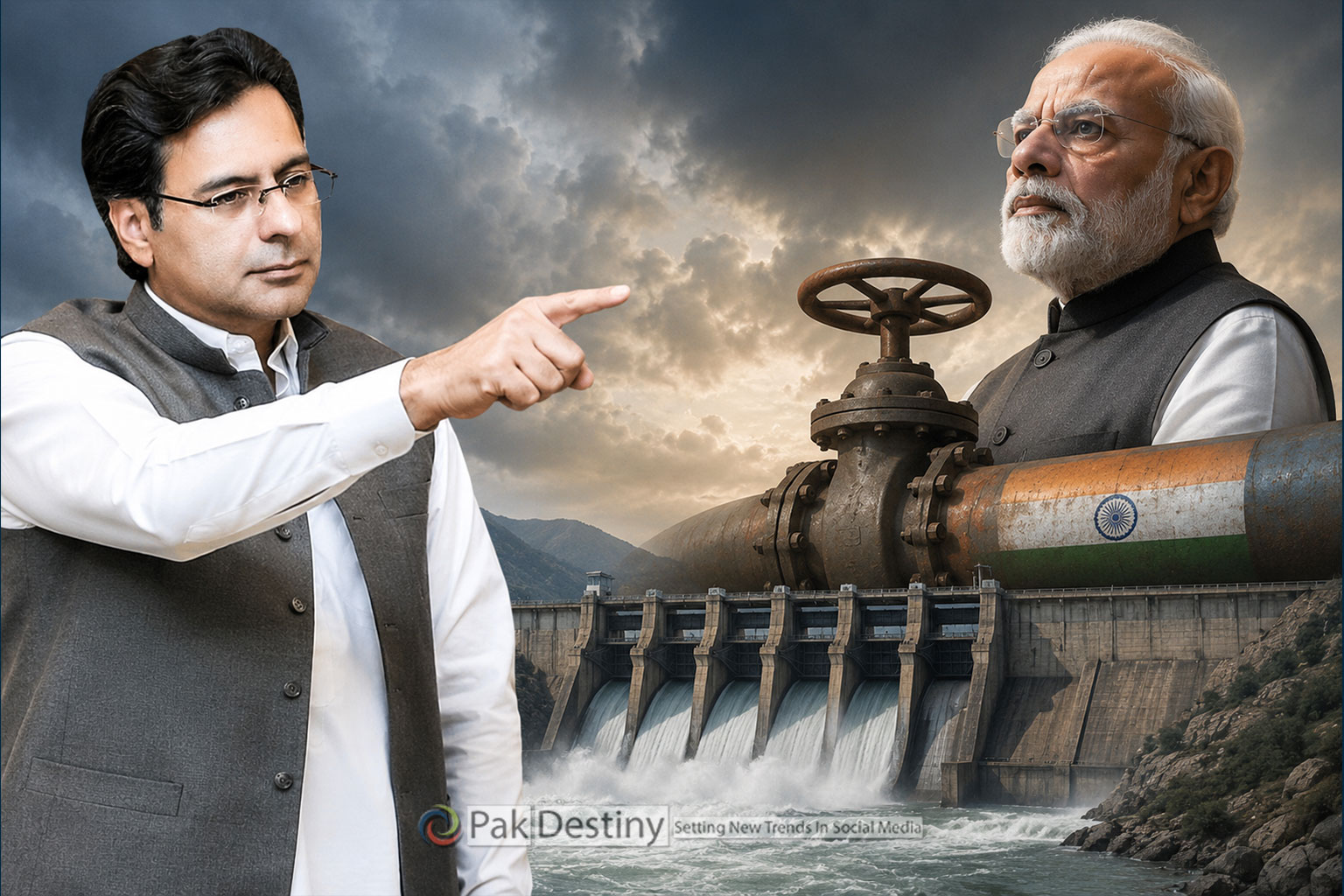
— India violating Indus Waters Treaty
By Irum Saleem
Concerns are mounting in Pakistan over reports that India has allegedly restricted the flow of water in the Chenab River, prompting fears of a possible violation of the decades-old Indus Waters Treaty and renewed tensions between the two nuclear-armed neighbours.
Senior leader of Pakistan Tehreek-i-Insaf and former federal minister Moonis Elahi strongly criticised the Pakistani government over the issue, warning that any prolonged disruption in the river’s flow could have devastating consequences for agriculture and water security in the country.
“India has been blocking the flow of the Chenab River for several days. This serious violation of the Indus Waters Treaty poses a grave threat of severe drought in Pakistan. While the rulers remain busy in political showmanship, the enemy continues its cunning manoeuvres,” Moonis said in a strongly-worded statement shared on social media.
The former minister said that the government had failed to respond effectively to what he described as an “emerging water crisis”, saying Pakistan’s leadership appeared more focused on political optics than safeguarding national interests.
The Chenab River is considered one of Pakistan’s key water lifelines, particularly for Punjab’s agricultural belt, where millions of acres of farmland depend on irrigation supplies originating from rivers flowing from India-administered territory.
Monnis says even temporary disruptions in water flow can affect crop planning, irrigation schedules and reservoir management downstream.
The remarks by Moonis Elahi came amid increasing public debate in Pakistan regarding water security and fears that India could use upstream control mechanisms to exert pressure during periods of heightened political or military tensions.
The Indus Waters Treaty, brokered by the World Bank in 1960, governs the distribution and management of rivers shared by Pakistan and India. Under the agreement, Pakistan was granted rights over the western rivers — the Indus, Jhelum and Chenab — while India received control over the eastern rivers.
Despite decades of wars and diplomatic crises between the two countries, the treaty has largely survived and is often cited internationally as one of the most durable water-sharing agreements in the world.
However, tensions over water have repeatedly surfaced in recent years, particularly after periods of military escalation between Islamabad and New Delhi. Pakistani officials and political leaders have on several occasions accused India of attempting to manipulate water flows or accelerate hydroelectric projects on western rivers in ways they believe undermine the spirit of the treaty.
Analysts say water disputes are becoming increasingly sensitive in South Asia due to climate change, melting glaciers, erratic rainfall patterns and growing population pressures, all of which are intensifying competition over already stressed water resources.
Agriculture remains the backbone of Pakistan’s economy, contributing significantly to employment and exports. Any sustained reduction in river water flows could impact major crops including wheat, rice, sugarcane and cotton, particularly in Punjab and Sindh provinces.
So far, there has been no official confirmation from independent international observers regarding the scale or duration of any alleged blockage in Chenab River flows. Indian authorities have also not publicly responded to the latest accusations.
Water experts, meanwhile, have urged both countries to avoid politicising technical water-management issues and instead utilise dispute-resolution mechanisms available under the treaty framework to prevent further escalation.
The latest controversy comes at a time when relations between Pakistan and India remain strained over longstanding political and security disputes, with diplomatic engagement between the two sides remaining limited.