By Irum Saleem
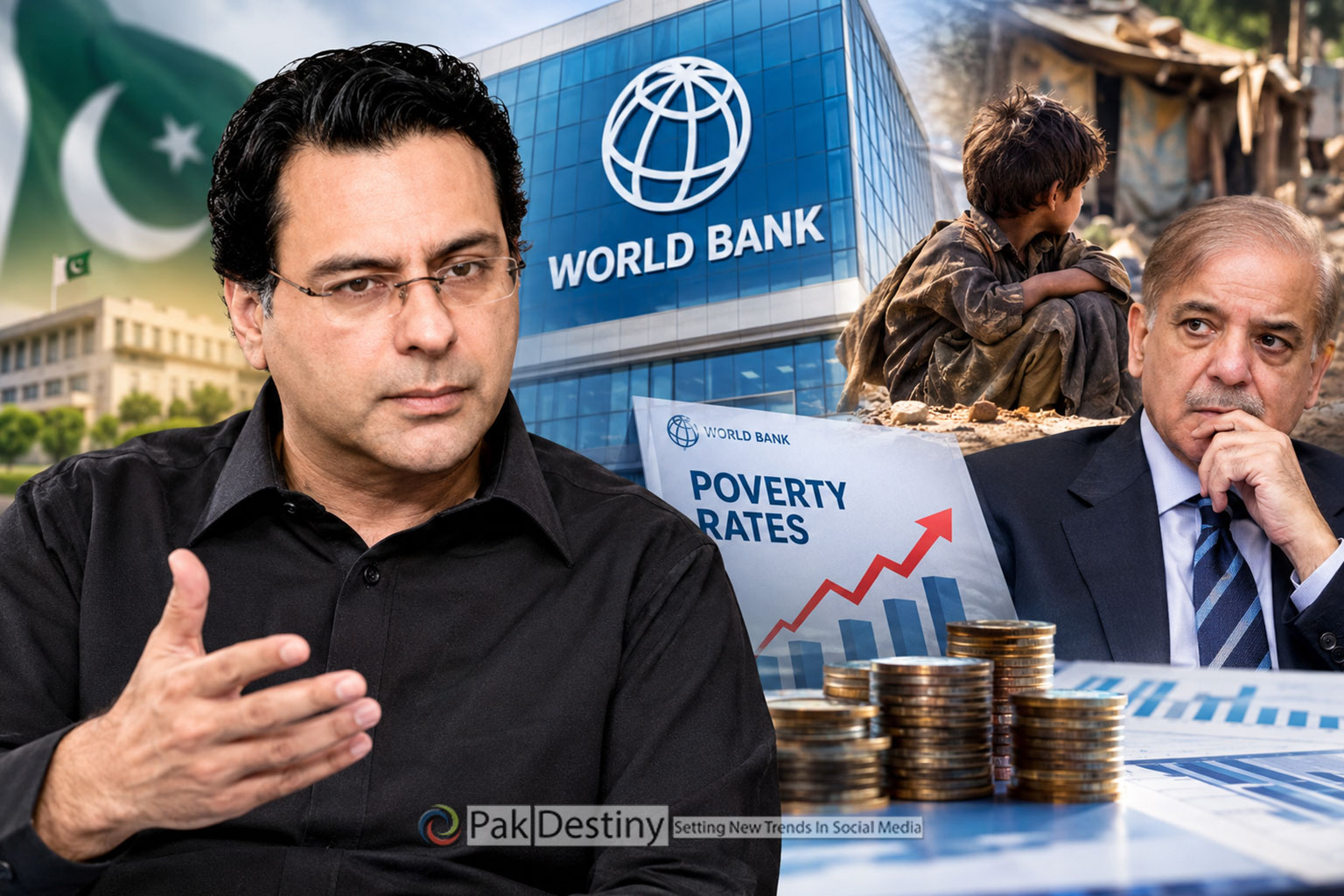
Former federal minister and senior PTI leader Moonis Elahi on Thursday questioned the PML-N government’s economic performance, saying the latest World Bank assessment presented a grim picture of poverty and household hardship in Pakistan despite official claims of economic recovery.
Reacting to the World Bank’s latest economic outlook, Moonis Elahi said the report had raised serious questions about the government’s economic narrative and asked when ordinary Pakistanis would actually begin to feel the benefits of the claimed recovery.
“The World Bank report raises questions on government’s economic claims,” Mr Elahi said in a post on X.
He pointed to what he described as a “dire poverty situation” and said the public continued to face inflation and economic difficulties.
“When will the common man attain economic relief?” he asked.
His comments came a day after the World Bank said Pakistan accounted for around 48 per cent of people living below the $3-a-day poverty line in the Middle East, North Africa, Afghanistan and Pakistan (MENAAP) region.
The bank said Pakistan’s poverty rate at the $3-a-day threshold had increased by 6.4 percentage points between 2018-19 and 2024-25, while poverty measured at the $4.20-a-day threshold rose by 3.2 percentage points over the same period.
According to the World Bank, the deterioration followed a succession of shocks, including the Covid-19 pandemic, the devastating 2022 floods, high inflation, currency depreciation and a prolonged period of economic adjustment that weakened real household incomes and employment opportunities.
The report said MENAAP was the only region in the world where poverty remained above pre-pandemic levels and continued to rise, with Pakistan accounting for nearly half of the region’s extreme poor.
The findings have provided fresh ammunition to the opposition, which has sought to portray the government’s claims of macroeconomic stabilisation as disconnected from the economic realities confronting ordinary households.
However, the government has rejected any suggestion that the World Bank figures alone establish that Pakistan is the region’s “poorest” country. Finance Ministry adviser Khurram Schehzad said the World Bank’s inclusion of Pakistan in the MENAAP reporting group was an administrative and statistical reclassification that had changed the composition of regional aggregates.
He argued that Pakistan remained a South Asian country and that its geographical or income classification had not changed.
The World Bank, meanwhile, has projected Pakistan’s economic growth at around 3.8 per cent for the current fiscal year, suggesting that headline economic activity is recovering even as poverty and household-income pressures remain significant.
The latest assessment highlights a central challenge for the government: translating macroeconomic stabilisation and higher GDP growth into tangible improvements in household incomes, employment and purchasing power.
The criticism also comes as Pakistan and the IMF reached a staff-level agreement on the fourth review of the $7 billion Extended Fund Facility and the third review of the $1.4bn Resilience and Sustainability Facility. The agreement could release about $1.2bn to Pakistan, subject to completion of the required procedures.
The IMF said Pakistan had maintained macroeconomic stability despite the impact of the Middle East conflict, with real GDP growth reaching 4pc in the first three quarters of FY26.
It estimated full-year growth at 3.6pc, while headline inflation stood at about 10.3pc in September after peaking in May.
The contrasting assessments underline the political and economic debate now facing the government: while official and international lenders point to stabilisation, improved reserves and renewed market confidence, opposition parties are focusing on poverty, inflation and the purchasing power of ordinary citizens.