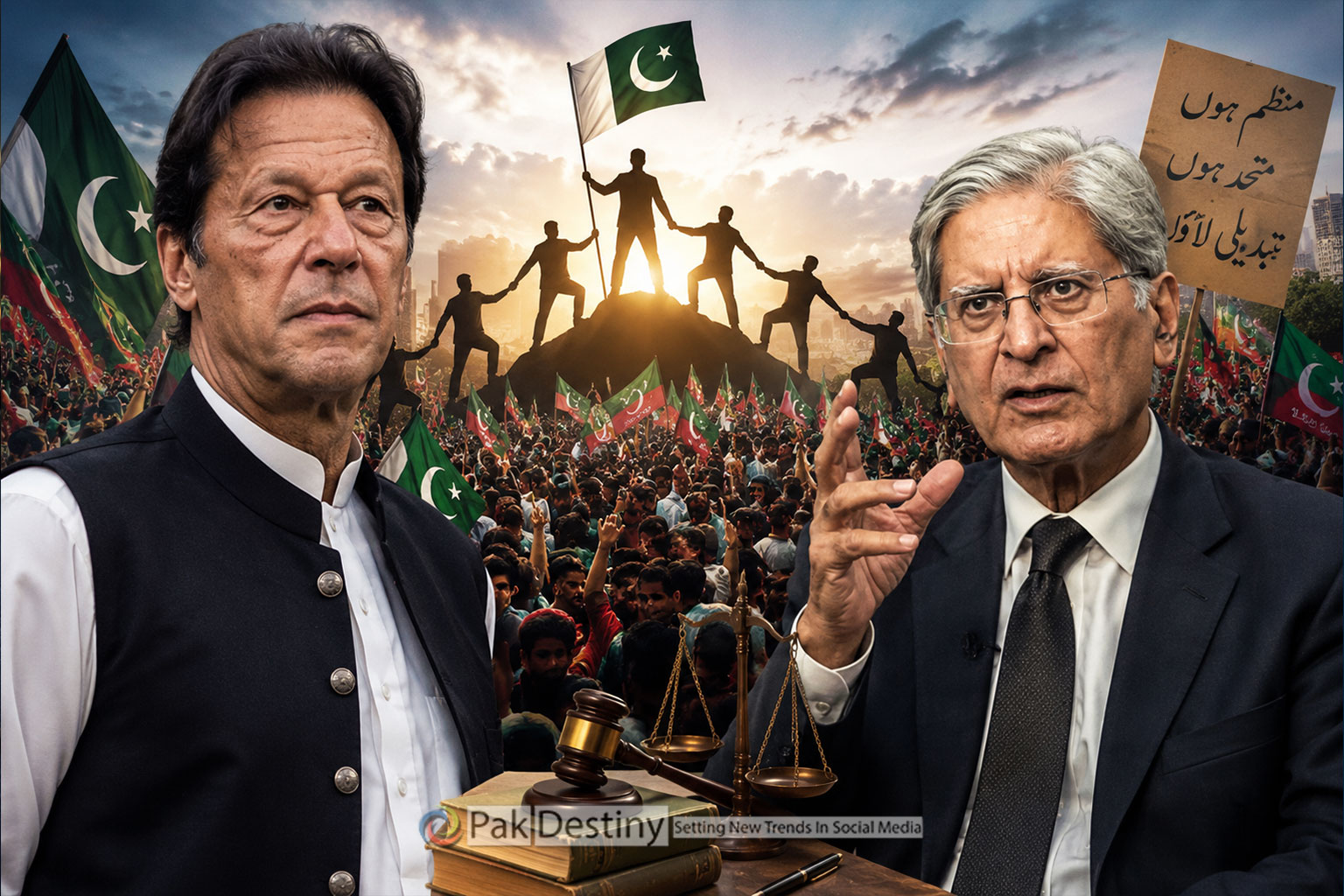
No system can work without broader consensus, PEMA Representative
Our Correspondent
Lahore
Senior Pakistan Peoples Party (PPP) leader Chaudhry Aitzaz Ahsan has said that “we are consuming the resources of our future generations,” stressing the need for a broad-based and organised movement in the country.
“If we remain divided along sectarian and caste lines, there will be no productivity. If our potential is wasted now, Pakistan will suffer,” he said.
He was speaking at a discussion titled “More Provinces or Empowered District Governments?” organised by the PPP Information Bureau and Bhutto Shaheed Foundation at the SAFMA auditorium. Bushra Manzoor Manika and Ahmed Ghuman moderated the discussion.
Imtiaz Alam, Barrister Amir Hassan, Khan Asif Khan, Ahmad Owais, Brigadier (retd) Dr Amin Amir Bahadur Hoti and Intikhab Hanif also addressed the event.
Speaking at the discussion, the former federal minister said that from August 14, 1947, to the present day, “under the system inherited from the British, we have seen no change except a change of the flag.”
He said local governments were not a substitute for any other tier of government and called for local government elections.
Aitzaz said Pakistan was unfortunately burdened with $150 billion in debt, while also acknowledging that the PPP had indulged in extravagant spending.
“We will have to tighten the belt around our stomachs even further,” he said.
He said the country’s problems were so grave that Pakistan had turned its neighbours into enemies. “We must move forward while keeping the country’s international interests in mind; otherwise, we will have to sing their tune,” he said.
Imtiaz Alam said the country had broken apart, but the people’s mandate had still not been accepted. He said the federating units were constitutional units that constituted the federation, adding that Pakistan’s fundamental problem was an authoritarian system.
He questioned whether the provinces had actually become empowered after the 18th Amendment. “The Council of Common Interests has not met for the past two years,” he said.
Alam said Pakistan was not even prepared to give municipal powers to Kashmiris but was talking about holding local government elections. “Two provinces are already unstable, and now they want to destabilise Sindh as well,” he said.
He said the armed forces should focus on their own responsibilities, adding that Pakistan was becoming administratively ungovernable.
Barrister Amir Hassan said neither state institutions nor local governments were functioning properly and that Pakistan was still living with the “gifts of General Zia’s democracy.”
He said former president Asif Ali Zardari had taken the “N” out of the PML-N, which had already presented 17 budgets. He said the PPP was the founder of the Constitution, yet it was the same Constitution that sent Zulfikar Ali Bhutto to the gallows.
“What is the point of the rule of law if it is replaced by the rule of authority?” he asked.
PTI leader Ahmad Owais said Pakistan’s system was functioning without the Constitution and the law. “You cannot express your views here. There are restrictions on both speaking and listening,” he said.
Representing the Pakistan English Media Association (PEMA), senior journalist Intikhab Hanif said there was “suffocation everywhere, both inside and outside.”
He said policy decisions in Pakistan lacked broader consultation and consensus, which was why every change of regime or elected government was followed by attempts to undo systems introduced by its predecessor.
The PEMA governing body member said no one had ever been given sufficient space to discuss the pros and cons of a policy while a particular regime was in power. “Those who support a policy while it is in force start finding faults with it after the regime is gone,” he said.
Hanif called for building broader consensus before experimenting with any new system or policy.