
–What exactly happened in Chakwal on Wednesday night?
By Nabeel Anwar
The robbers were armed with pistols, but the five bullets that tore through the body of nine-year-old Hania Ahmed came from an automatic weapon — a Kalashnikov-type submachine gun (SMG).
Whatever conclusions the Joint Investigation Team may eventually reach, the bullets that ripped through Hania’s small body and also wounded her 10-year-old brother Affan Ahmed and their father Adil Ahmed were not fired by the robbers or any unidentified gunman.
پنجاب میں بے گناہوں کا کھلا قتلِ عام جاری ہے۔ سی سی ڈی کو کھلی چھوٹ ملنے کے بعد مجرموں سے زیادہ معصوم لوگ نشانہ بن رہے ہیں۔ چکوال میں کار پر اندھا دھند فائرنگ سے معصوم بچی کی ہلاکت اس کی تازہ مثال ہے۔ pic.twitter.com/DQohwfVGf3
— Moonis Elahi (@MoonisElahi) June 13, 2026
They were allegedly fired from the SMG of a Crime Control Department (CCD) officer who, in a fatal error of judgment, mistook Adil Ahmed’s vehicle for that of fleeing criminals and riddled it with bullets.
Adil Ahmed, 39, hailed from Dhuddial, a prominent town in Chakwal district. Nearly two decades ago, he moved to Australia in search of better opportunities. Through years of hard work, he completed his studies, became a civil engineer, and built a comfortable life with his wife, Dr Sidra Khan, and their two children, Affan and Hania.
Responsibility lies with following two people: @MaryamNSharif & Sohail Zafar Chattha https://t.co/Nw9QsFNr6J
— Moonis Elahi (@MoonisElahi) June 15, 2026
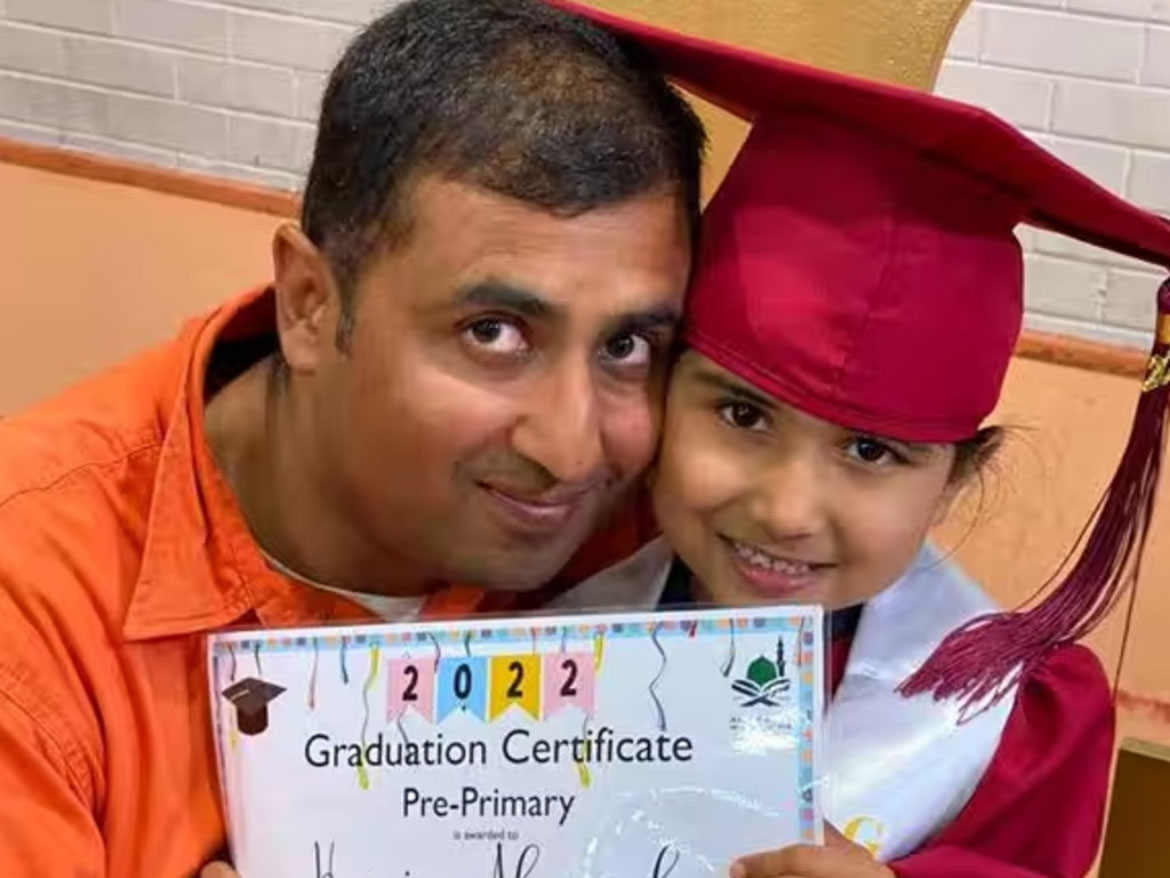
Like many overseas Pakistanis, Ahmed remained deeply connected to his roots.
The family had recently travelled to Pakistan from Australia with plans to leave their children with grandparents before proceeding to Saudi Arabia for Hajj. Adil and Sidra arrived in Pakistan from Saudi Arabia on Wednesday morning.
That evening, a family dinner was hosted by Sidra’s father, retired Colonel Muhammad Khan, at his residence near the Girls College area of Chakwal city.
At around 11:40 pm, the family left the house and drove to visit Sidra’s uncle, Raja Ali Ejaz, who lived near Myers College on Circular Road.
Hania, who had travelled from Australia, wished to meet her uncle before the family departed.
CCTV footage from a neighbouring house helps reconstruct what happened next.
At 11:46 pm, the family’s white car entered the street. A minute later, Adil parked beside a wall directly opposite Raja Ali Ejaz’s house. Unbeknownst to him, the wall belonged to the local CCD police station.
After ringing the doorbell and receiving no response because it was out of order, Adil returned to the vehicle.
The family waited while repeatedly calling their relative, who later said he was asleep and did not hear the phone.
At 11:51 pm, two men arrived on a motorcycle and stopped near the vehicle. One approached from the passenger side, the other from the driver’s side. Brandishing pistols, they demanded valuables. Adil reportedly pleaded that they would hand over whatever they had if the robbers spared the family.
His wife surrendered the jewellery she was wearing.
As the robbery unfolded, vehicles and pedestrians continued to pass by.
The irony was stark
Although surveillance cameras had been installed across the city, including in businesses, schools and private homes, the CCD station itself reportedly had no camera monitoring the area outside its own walls.
By chance, a CCD clerk returning from a nearby hotel noticed the robbery while entering the station.
He alerted colleagues inside. Moments later, a CCD constable armed with an SMG rushed out and opened fire.
According to witnesses and CCTV footage, the officer fired even though the robbers had already taken cover behind Adil’s vehicle. The first burst of gunfire struck a nearby gate rather than the suspects.
The robbers returned fire with pistols, prompting the officer to retreat into the station and call for reinforcements.
In the confusion, the robbers abandoned their motorcycle and fled on foot.
At the same time, Adil Ahmed, unaware that the shooter was a CCD officer, believed a gang war had erupted. Fearing for his family’s safety, he accelerated away from the scene.
An eyewitness later told local media that as the vehicle sped away, the same CCD officer emerged again, shouted for it to stop, and when it failed to do so, opened direct fire on the moving car.
Within seconds, multiple rounds struck the vehicle from behind.
The bullets tore through nine-year-old Hania, passed through her body, and wounded both Affan and Adil.
Despite being seriously injured, Adil managed to drive toward his father-in-law’s residence. Near the house, he lost control and crashed into a wall. His wife, horrified by the sight of her bleeding husband and children, cried for help. Neighbours called emergency services.
Hania, seated in the rear of the vehicle, had already succumbed to her injuries.
Adil sustained two gunshot wounds, while Affan suffered three. Fortunately, neither sustained life-threatening damage to vital organs. Both were initially treated at the District Headquarters Hospital before being transferred to Benazir Bhutto Hospital in Rawalpindi, where surgery was performed. Adil was later discharged, while Affan remains under treatment.
Hania was buried the following day. According to the post-mortem report, she suffered five bullet wounds that passed through her body, creating ten separate injuries.
The tragedy sent shockwaves through Chakwal and beyond.
The following night, CCD officials claimed to have killed the two robbers in an armed encounter.
The suspects were identified as Muhammad Fayyaz of Ferozewala, Sheikhupura, and Muhammad Abbas of Lahore. Police sources said both men had extensive criminal histories, including multiple robbery and theft cases across Punjab.
According to CCD officials, the pair had committed several robberies on the same night before targeting Adil Ahmed’s family. Investigators alleged they had been operating in Chakwal while disguised as a married couple, with one suspect reportedly dressing in women’s clothing during reconnaissance missions.
Police later registered a case against the CCD constable whose weapon was allegedly used in the shooting. Initially booked under provisions relating to accidental homicide, the case was later upgraded to murder charges. The officer has been arrested and his weapon seized.
Legal experts, however, argue that proving intentional murder may be difficult and that the circumstances more closely fit culpable homicide caused by negligence.
A Joint Investigation Team has been constituted to determine responsibility.
Senior police officers have openly questioned the constable’s actions. One officer noted that standard procedure requires officers to identify suspects before opening fire. Even where force becomes unavoidable, firing directly at a vehicle carrying civilians in a populated area is considered unjustifiable.
At most, officers are expected to target tyres to immobilise a vehicle.
“The car could have been traced and intercepted later,” the officer said.
“There was no justification for firing directly at it.”
For the Ahmed family, however, those questions come too late.
A young girl who had travelled thousands of miles to visit her grandparents lost her life, and a family that had come home to celebrate and prepare for a sacred pilgrimage was instead left shattered by a tragedy allegedly caused not by criminals, but by the very officers tasked with protecting the public.