By Irum Saleem
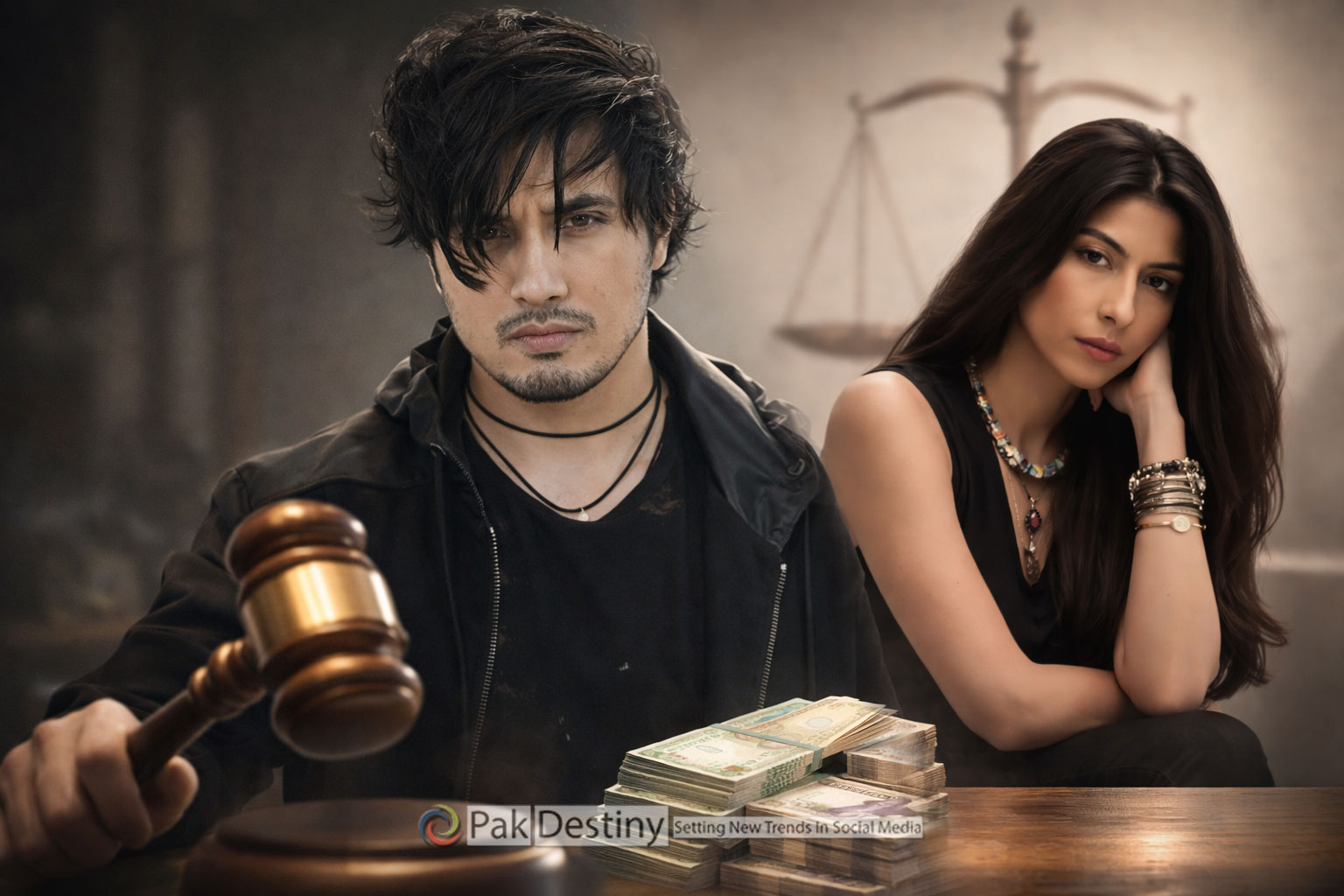
Famous singer-actor Ali Zafar wins defamation case against fellow singer Meesha Shafi as court slaps her Rs5m to be paid to him.
After an exhaustive eight-year legal battle, the Sessions Court Lahore on Tuesday issued a final decree in favour of singer and Ali Zafar in his Rs1bn defamation suit against Meesha.
Finding the allegations of harassment to be false, malicious, and part of a coordinated campaign, the court has ordered the defendant to pay PKR 5 Million (50 Lacs) in damages to the Plaintiff.
This landmark judgment marks the conclusion of one of the most high-profile defamation cases in Pakistan’s history, shifting the narrative from social media hearsay to a definitive judicial record of forensic truth and biological reality.
The court’s decree follows years of hearings where the Plaintiff presented a mountain of documented evidence that systematically dismantled the architecture of the false allegations.
While the defendant relied on interested witnesses, some nine independent professional musicians who were present in the room during the alleged incident testified under oath that no harassment occurred.
Under cross-examination, the defendant made the fatal admission: “I felt it; I did not see it.”
She further conceded that in a room full of people, not a single individual witnessed any inappropriate act.
The court examined a digital trail that proved the allegations were a retrospective construction. This included a WhatsApp message from the Defendant stating she had a great time jamming immediately after the alleged incident, and public photos with the plaintiff captioned with “red heart” emojis.
It was established as a physiological impossibility that a significant physical intrusion could occur without the Defendant turning to look or anyone in the room noticing a reaction.
The proceedings exposed the campaign as a premeditated commercial hit designed to sabotage Ali Zafar’s PKR 11 Crore brand contract and the release of his feature film.
A feature-length investigative article was published just 11 minutes after the initial tweet—a logistical impossibility for spontaneous reporting.
Forensic analysis traced the “grassroots” support back to a network of fake accounts, including the “Sofi” account, which was caught lying about a “backstage” incident at an SKMT charity show that never happened.
Throughout the trial, Ali Zafar maintained that his fight was not just for his own reputation, but for the sanctity of the #MeToo movement itself.
The plaintiff argued that weaponizing the genuine pain of real victims to mask a documented falsehood for personal and commercial motives is the ultimate disservice to survivors of harassment.
By refusing a quiet settlement and voluntarily presenting himself as the first witness for years of cross-examination, Ali Zafar has set a vital legal precedent: that the “court of public opinion” cannot override the constitutional right to due process and the requirement for evidence-based justice.
The case has reached its definitive end. With the truth now legally documented and the decree issued, Ali Zafar accepts the outcome with humility.
“This judgment serves as a sobering reminder that while movements are essential for social progress, they must never be exploited as tools for individual malice or professional destruction.Truth, backed by evidence and the law, has stood the test of time.”