By Kiran Bokhari
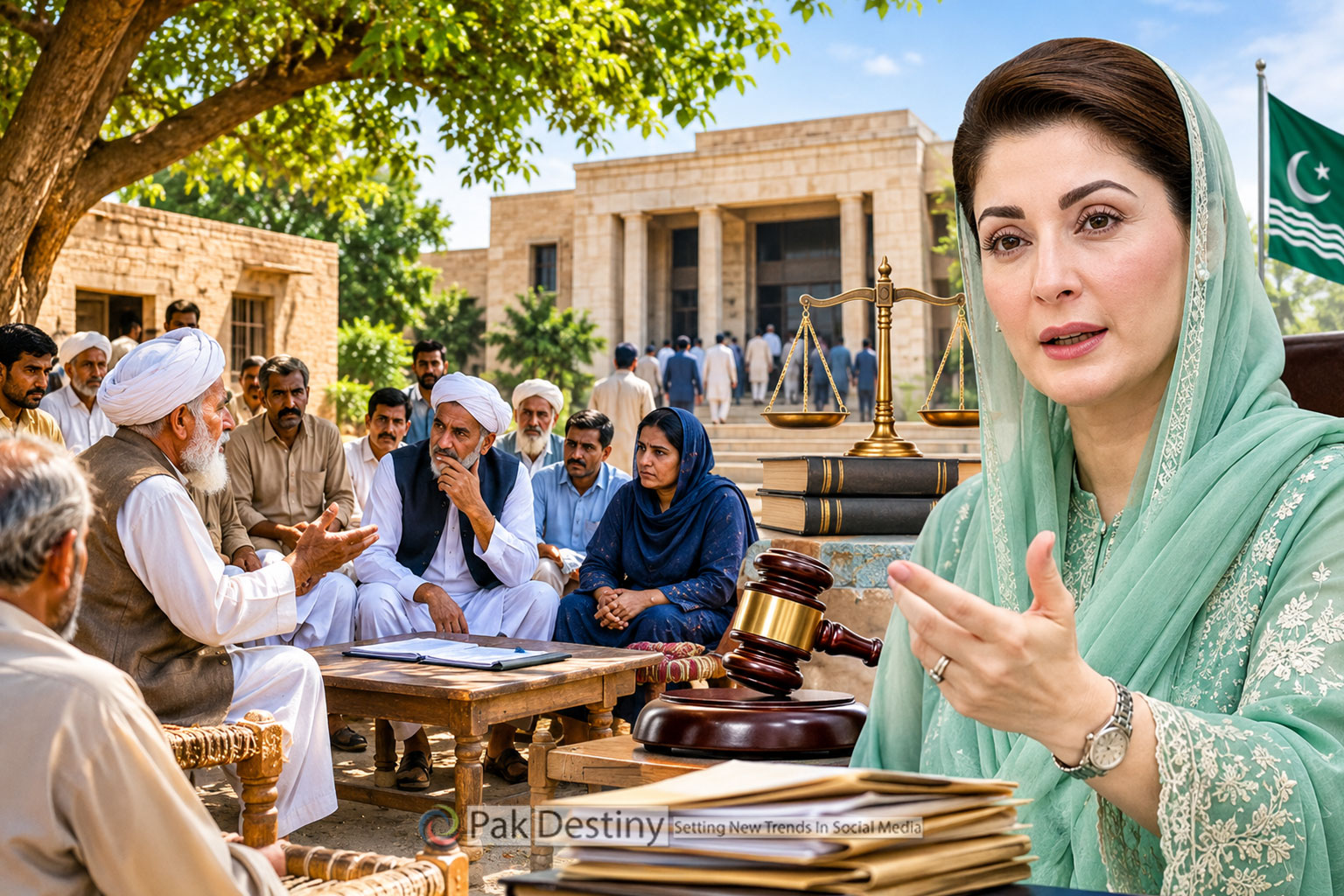
With nearly two million cases pending in the lower judiciary, most of them in Punjab, Chief Minister Maryam Nawaz’s endorsement of a panchayat system to settle local disputes may appear to offer an attractive shortcut to justice. For litigants who spend years, sometimes decades, waiting for court verdicts, the promise of swift and inexpensive dispute resolution is understandably appealing. But the question is whether panchayats will deliver justice or merely provide an escape route from a judicial system the state has failed to fix.
Pakistan’s judicial backlog is not an overnight crisis. A chronic shortage of judges, complicated procedures, unclear rules, repeated adjournments and corruption have combined to make access to justice an exhausting and expensive exercise.
The consequences are particularly severe for poorer communities, which often lack the resources to sustain lengthy legal battles. Yet the persistence of informal dispute-resolution forums, including traditional panchayats, is hardly evidence of their effectiveness. Many have historically operated beyond the reach of the law, enforcing decisions rooted in patriarchal authority, social pressure and, at times, deeply discriminatory customs.
This is where the government’s proposal demands serious scrutiny.
Community-based dispute resolution can certainly help resolve minor civil and neighbourhood disputes, provided it is voluntary, transparent and subject to judicial oversight. But a panchayat is not inherently an institution of justice. Without clear safeguards, it can become an instrument of local power, allowing influential families, landlords and community elders to dictate outcomes at the expense of women, minorities and vulnerable groups. Speedy decisions mean little if they come at the cost of fundamental rights.
There is also a question of whether the government has learnt anything from its own experience. Pakistan already has legislation for alternative dispute resolution.
The Punjab Alternative Dispute Resolution Act, 2019, recently repealed through the Punjab Alternative Dispute Resolution Ordinance, 2026, was intended to ease the burden on courts. Its record raises an obvious question: what went wrong, and what will make the proposed panchayat framework any different?
Simply reviving traditional forums under a new administrative label will not resolve the structural weaknesses that have undermined earlier initiatives.
The experience of India’s village justice courts, established to provide inexpensive and accessible justice in rural areas, also offers lessons.
Such mechanisms can improve access, but their effectiveness depends on adequate resources, trained personnel, institutional independence and public confidence. These are not details to be addressed after the system is launched; they are prerequisites for its credibility.
The government must resist the temptation to present panchayats as a cure for a crisis of its own making. Alternative dispute resolution should complement the formal judicial system, not become a parallel arrangement that allows the state to abdicate its constitutional responsibility.
Its jurisdiction must be narrowly defined, participation voluntary, decisions legally reviewable and fundamental rights non-negotiable.
Ultimately, the real test of judicial reform is not how many cases can be diverted to informal forums but how many citizens can obtain fair and timely justice through institutions they trust.
Vacant judicial positions must be filled, procedures simplified, unnecessary adjournments curbed and corruption tackled. Unless these fundamental reforms are pursued, panchayats risk becoming little more than a convenient political response to a deeply entrenched institutional failure. Pakistan does not need shortcuts around justice; it needs a justice system that works.