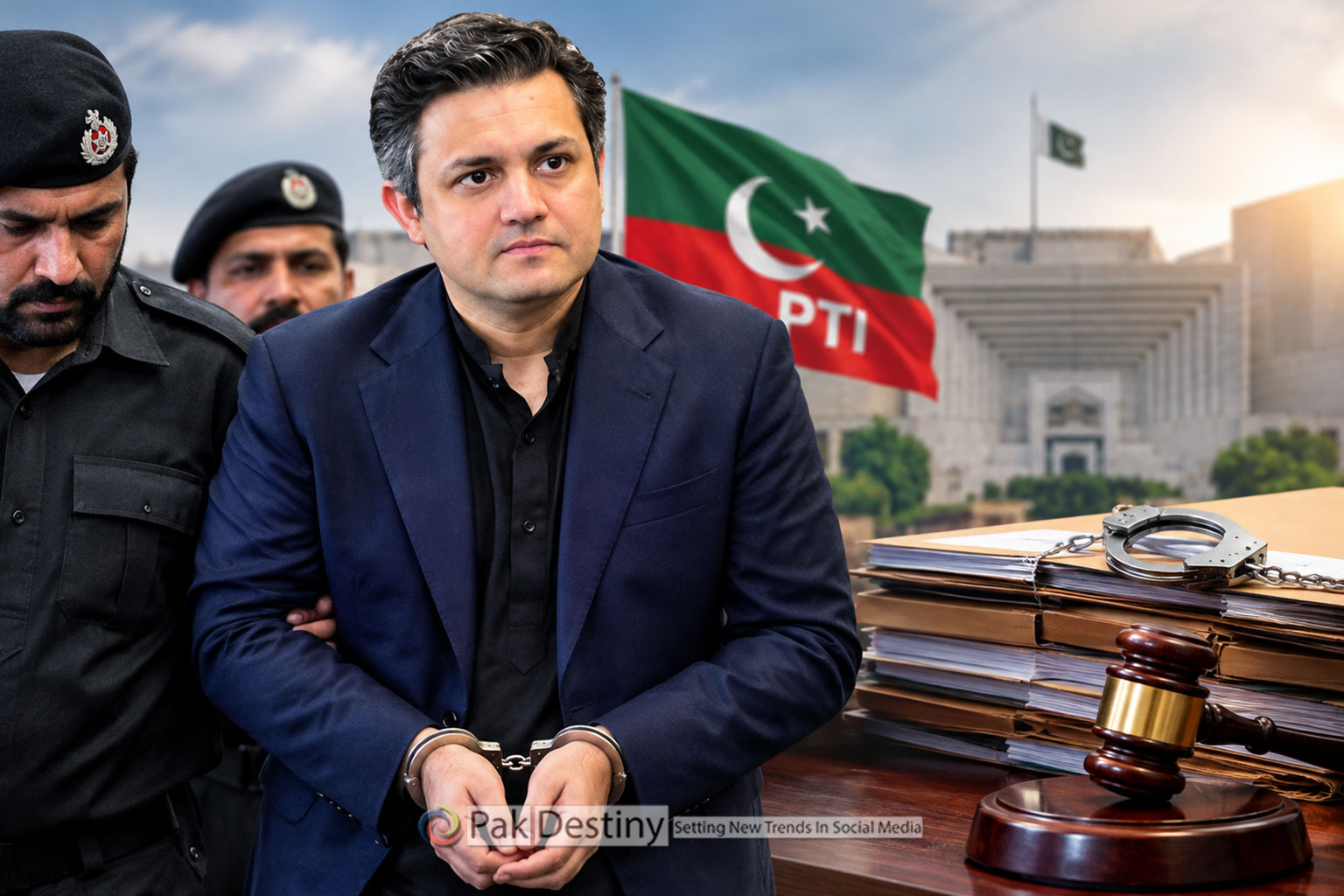
— PTI leaders Moonis, Basra, Akbar and otherd accuse PML-N government of political victimisation as former minister is sent on physical remand
— Government’s position on cases remains central to the controversy
By Irum Saleem
The arrest of senior PTI leader and former federal minister Hammad Azhar has once again brought the party’s prolonged confrontation with the state into sharp focus, with PTI leaders alleging that the latest cases against him are part of a wider campaign to keep the opposition under pressure.
میاں حماد اظہر مختلف جھوٹے مقدمات میں گرفتار۔ خوفزدہ پٹواریوں کی تحریک انصاف کے کارکنوں اور قائدین کے خلاف زیادتیوں کا سلسلہ جاری۔
— Moonis Elahi (@MoonisElahi) September 6, 2026
Azhar, one of the prominent young faces of the former Imran Khan government, was produced before a court after his arrest and subsequently remanded in physical custody for 20 days. PTI supporters have strongly objected to the manner in which he was brought before the court, particularly his appearance with his face covered and hands cuffed.
Senior PTI leader and former federal minister Moonis Elahi, in a post on X, described Azhar’s arrest as part of what he called a series of “fabricated cases”, alleging that the ruling PML-N was intensifying its crackdown on PTI leaders and workers amid mounting political pressure.
"کسی کو کھانے نہیں دونگی" #MadamThiefMinister کا بیان۔ 11 ارب کا جہاز، اربوں کی لگژری گاڑیاں، گندم کی خریداری سے لیکر ستھرا پنجاب میں اربوں کی ہیرا پھیری، الیکٹرک بسوں میں بھاری کمیشن کون کھا گیا؟ بلی دودھ پر پہرہ دے گی ؟
— Moonis Elahi (@MoonisElahi) September 5, 2026
PTI leader Shaukat Basra also criticised the treatment of the former minister, asking whether this was an appropriate way to treat someone who had served the country.
“Is this how we honour those who served Pak?” Basra said in his post on X, claiming that Azhar had played a key role in Pakistan’s exit from the Financial Action Task Force’s (FATF) grey list.
Is this how we honour those who served Pak?Hammad Azhar who played a key role in Pak’s FATF exit, was brought to court w/ his face covered & hands cuffed, then sent on 20-days physical remand.When patriotism is punished & dissent becomes a crime, something is deeply wrong. pic.twitter.com/lVDEToc2LQ
— Shaukat Basra (@sh_basra) September 7, 2026
The FATF reference has given the controversy an additional political dimension. Pakistan was removed from the FATF list of jurisdictions under increased monitoring in October 2022 after completing the action plans drawn up by the watchdog. The achievement involved a broad institutional effort spanning several years and multiple governments.
Former PTI accountability adviser Mirza Shahzad Akbar also came to Azhar’s defence, describing him as one of the youngest and “most decent” members of Imran Khan’s cabinet.
@Hammad_Azhar was one of the youngest and most decent in IK’s cabinet, worked diligently day and night and steered Pakistan out of FATF blacklisting. A very balanced man (unlike myself!) who doesn’t deserve these scenes of ridicule. Unfortunately the ‘collapsed system’ has done… pic.twitter.com/IcRQG8t1XU
— Mirza Shahzad Akbar (@ShazadAkbar) September 7, 2026
Mr Akbar said Azhar had worked “diligently day and night” and credited him with helping steer Pakistan out of FATF-related restrictions. He also criticised what he termed the “collapsed system” for subjecting political opponents to humiliating treatment.
The comments reflect a familiar pattern in Pakistan’s increasingly polarised politics: criminal proceedings against opposition politicians are viewed by their supporters as political persecution, while authorities maintain that cases are based on alleged violations of law and must be dealt with through due process.
Azhar’s arrest is particularly significant because he has remained one of the more prominent PTI figures facing legal pressure since the party’s confrontation with the state intensified following the events of May 9, 2023.
Unlike some PTI leaders who have publicly distanced themselves from the party or gone into political silence, Azhar has continued to be regarded by the party as an important member of its leadership. His prolonged absence from the political scene amid legal cases had already made him a symbol of the pressure facing PTI’s second-tier leadership.
His latest appearance in court has therefore renewed questions about the treatment of political opponents and the use of criminal proceedings during a period of deep political polarisation.
For the PTI, the issue is no longer simply about one leader’s arrest. The party has repeatedly argued that its leadership and workers are being subjected to a systematic legal campaign designed to restrict political activity and weaken its organisational structure.
The government and law-enforcement authorities, however, have consistently rejected the broader political characterisation of such proceedings, maintaining that individuals accused in criminal cases must face the law.
The immediate legal battle over Azhar’s physical remand may now determine the next phase of the case. But politically, his arrest is likely to keep alive a much larger debate over whether Pakistan’s criminal justice system is being used as an instrument of political contestation — a question that has followed successive governments and opposition movements for decades.
At a time when the country’s political landscape remains deeply divided, the treatment of high-profile opposition figures carries significance beyond individual cases. For the PTI, Azhar’s arrest is another example of what it describes as a continuing campaign of repression. For the authorities, it is a matter of legal accountability.
The competing narratives are likely to remain irreconcilable unless the cases are ultimately tested through transparent judicial proceedings and the evidence against the accused is made clear.