By Irum Saleem
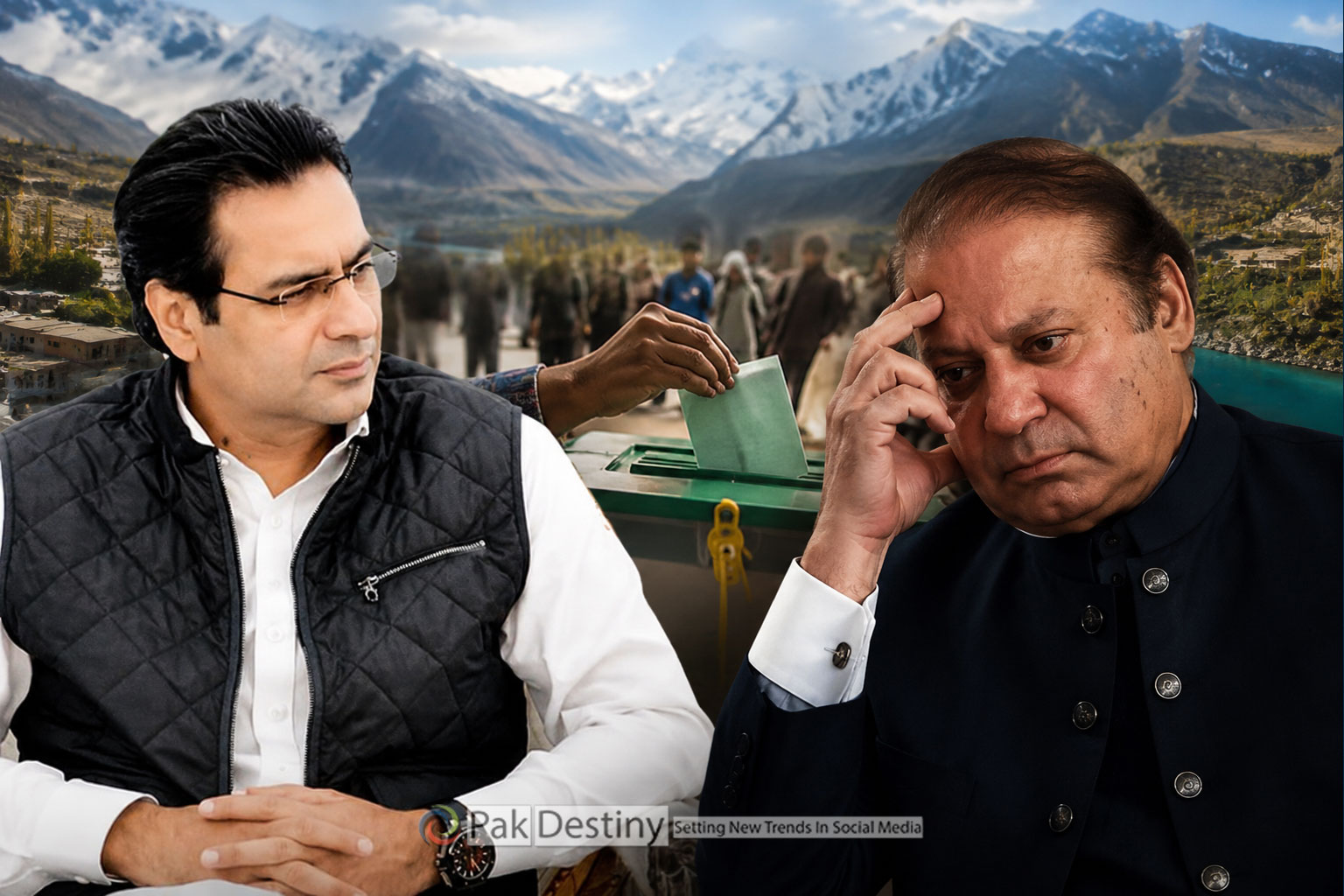
Pakistan Tehreek-i-Insaf (PTI) senior leader and former federal minister Moonis Elahi has launched a sharp criticism of Pakistan Muslim League-Nawaz (PML-N) President Nawaz Sharif, saying that the former prime minister’s campaign visit to Gilgit-Baltistan had failed to generate the public response his party had anticipated ahead of the region’s June 7 elections.
In a post on X, Moonis Elahi mocked what he described as Nawaz Sharif’s longstanding reliance on the “Mujhe Kyun Nikala” narrative, asserting that the strategy had once again failed to win over voters.
“The Gilgit-Baltistan show of Mian Sahib’s ‘Why Was I Removed?’ drama has also flopped.
The man who has always managed to strike deals and find his own way out has once again failed in his attempt to portray himself as a victim and emperor of emotions,” he wrote.
ہمیشہ خود ڈیل کر کے نکلنے والے میاں صاحب کا ڈرامہ "مجھے کیوں نکالا" کا گلگت بلتستان شو بھی فلاپ۔ شہنشاہ جذبات بننے کی کوشش ایک دفعہ پھر ناکام۔
— Moonis Elahi (@MoonisElahi) June 3, 2026
انکی آرام گاہ لندن ہیں یہ صرف پاکستان عوام کا خون چوسنے اور ملکی خزانہ لوٹنے آتے ہیں بدترین معاشی پالیسیوں نے لوگوں کو منگتا بنا دیا ہے بیروزگاری عروج پر ہے
— Qamar u zaman bandesha (@Qamarjutt185762) June 3, 2026
The comments came shortly after Nawaz Sharif’s visit to Gilgit-Baltistan, where the three-time former prime minister met party leaders, candidates and workers as part of the PML-N’s campaign for the upcoming elections.
The visit was widely viewed as a major effort by the party leadership to consolidate support in the strategically important region, where a closely contested electoral battle is expected among the PML-N, Pakistan Peoples Party (PPP) and PTI-backed candidates.
Mr Elahi’s remarks are the latest in a series of attacks by PTI leaders against Nawaz Sharif’s political narrative, which has remained a point of contention since his disqualification by the Supreme Court in 2017.
Following his removal from office, the PML-N leader repeatedly questioned the circumstances surrounding his ouster through the slogan “Mujhe Kyun Nikala”, a phrase that became central to the party’s political messaging and election campaigns.
By invoking the slogan, Mr Elahi sought to portray the former premier’s Gilgit-Baltistan campaign as an extension of what PTI leaders describe as an attempt to seek public sympathy rather than address governance and public issues.
The criticism comes at a time when political temperatures are rising in Gilgit-Baltistan ahead of polling day. Opposition parties, particularly PTI, have alleged that they are facing restrictions in electioneering and an uneven playing field, allegations that have been rejected by government representatives and rival parties.
Nawaz Sharif’s visit marked his most significant direct involvement in the Gilgit-Baltistan election campaign, underscoring the importance the PML-N attaches to the polls. Party leaders have expressed confidence that their development agenda, economic policies and organisational strength will translate into electoral gains.
While Moonis Elahi dismissed the visit as politically unsuccessful, the PML-N has maintained that its campaign is receiving a positive response from voters and that public support will become evident on election day.
The Gilgit-Baltistan elections are being closely watched by political observers as a test of the relative strength of the country’s major political parties and a possible indicator of emerging political trends ahead of future electoral contests elsewhere in Pakistan.