By Zulqernain
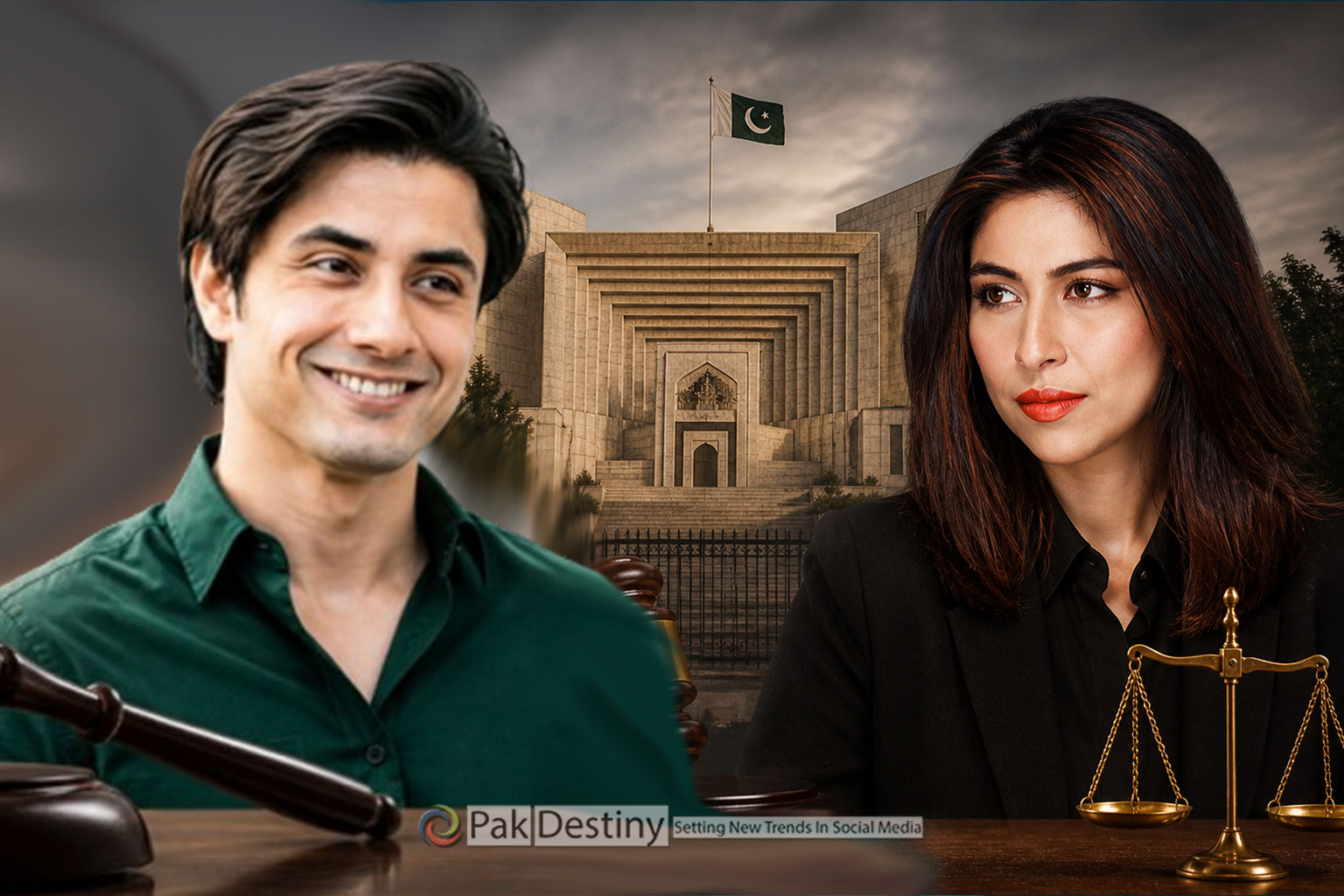
The Lahore High Court on Monday declined to suspend the core findings of a trial court judgment that declared allegations levelled by singer Meesha Shafi against singer-actor Ali Zafar as false, defamatory, and not made in the public interest.
The ruling came during proceedings before a division bench headed by Justice Arshad Ahmed Nadeem, hearing an appeal filed by Shafi against the March 31, 2026 verdict. At the outset, the court issued notice to Zafar, which was accepted by his counsel, Advocate Umer Tariq Gill.
During the hearing, Shafi’s counsel requested suspension of the trial court’s judgment and decree, offering to deposit one-third of the decretal amount. However, the court refused to grant any relief on the substantive findings of the judgment.
There appears to be a concerted attempt in certain quarters to mischaracterize the legal position by circulating incomplete and misleading narratives, which do not withstand scrutiny against the court record. We advise to always fact check. pic.twitter.com/yjiEhnwDrJ
— M. Umer Tariq Gill (@UmerTariq_Gill) May 4, 2026
The high court granted only limited interim relief by suspending the Rs5 million monetary penalty, subject to Shafi depositing 50 percent of the amount with the court and furnishing security for the remaining sum.
Crucially, the court left untouched the core declarations of the trial court, which remain fully operative and binding in law.
This means the trial court’s conclusion — that the allegations were false, defamatory, and not made for public good — continues to stand. The permanent injunction restraining Shafi from repeating the allegations also remains in full force.
The case traces back to 2018, when Zafar filed a defamation suit following Shafi’s public accusations of sexual harassment. Last month, a sessions court in Lahore ruled decisively in Zafar’s favour, concluding that Shafi’s tweet dated April 19, 2018, and an interview published on April 21, 2018, contained “false, defamatory and injurious imputations” that were neither proven nor justified in the public interest, thereby constituting actionable defamation.
Zafar’s counsel described the verdict as long-awaited justice after an eight-year legal battle. He argued that his client had been subjected to a coordinated smear campaign ahead of the release of his film Teefa in Trouble, allegedly involving fake accounts and a manufactured media narrative.
The trial court held Shafi liable for damages, observing that the accusations were made with “deliberate intent” to harm Zafar’s reputation and career. While Zafar had originally sought Rs1 billion in damages, the court awarded Rs5 million.
A key element of the ruling was the evidentiary record presented by Zafar. During the trial, nine professional musicians who were present at the time of the alleged incident testified under oath that no harassment took place.
The court also examined digital evidence, including messages and social media posts exchanged after the alleged occurrence, which it found inconsistent with the conduct of a harassment victim.
In her statement, Shafi told the court, “I felt it but I did not see it,” a claim the court found insufficient to substantiate allegations of physical harassment.
Additional evidence showed that Shafi had maintained friendly communication with Zafar, including messages expressing that she had “a great time jamming,” accompanied by heart emojis, and social media posts featuring positive captions and shared photographs. The court viewed this conduct as contradictory to the claims made.
The judgment further noted that Shafi had voluntarily visited Zafar’s residence prior to the rehearsal and initiated professional interaction outside any formal obligation.
The case has remained one of Pakistan’s most closely watched and polarising legal battles, intersecting with broader debates around the #MeToo movement. Zafar’s legal team argued that the movement had been misused in this instance for personal motives — a contention the trial court appeared to accept in its findings.
Now pending final adjudication before the high court, the case continues to carry significant legal and social implications. For now, however, the trial court’s central findings remain firmly in place — reinforcing the primacy of evidence in defamation law and drawing a clear line against what the court described as unsubstantiated allegations amplified through media.
Ali Zafar, one of Pakistan’s few artists to achieve mainstream success in Bollywood, has appeared in several Indian films between 2010 and 2016, including Tere Bin Laden and Mere Brother Ki Dulhan.