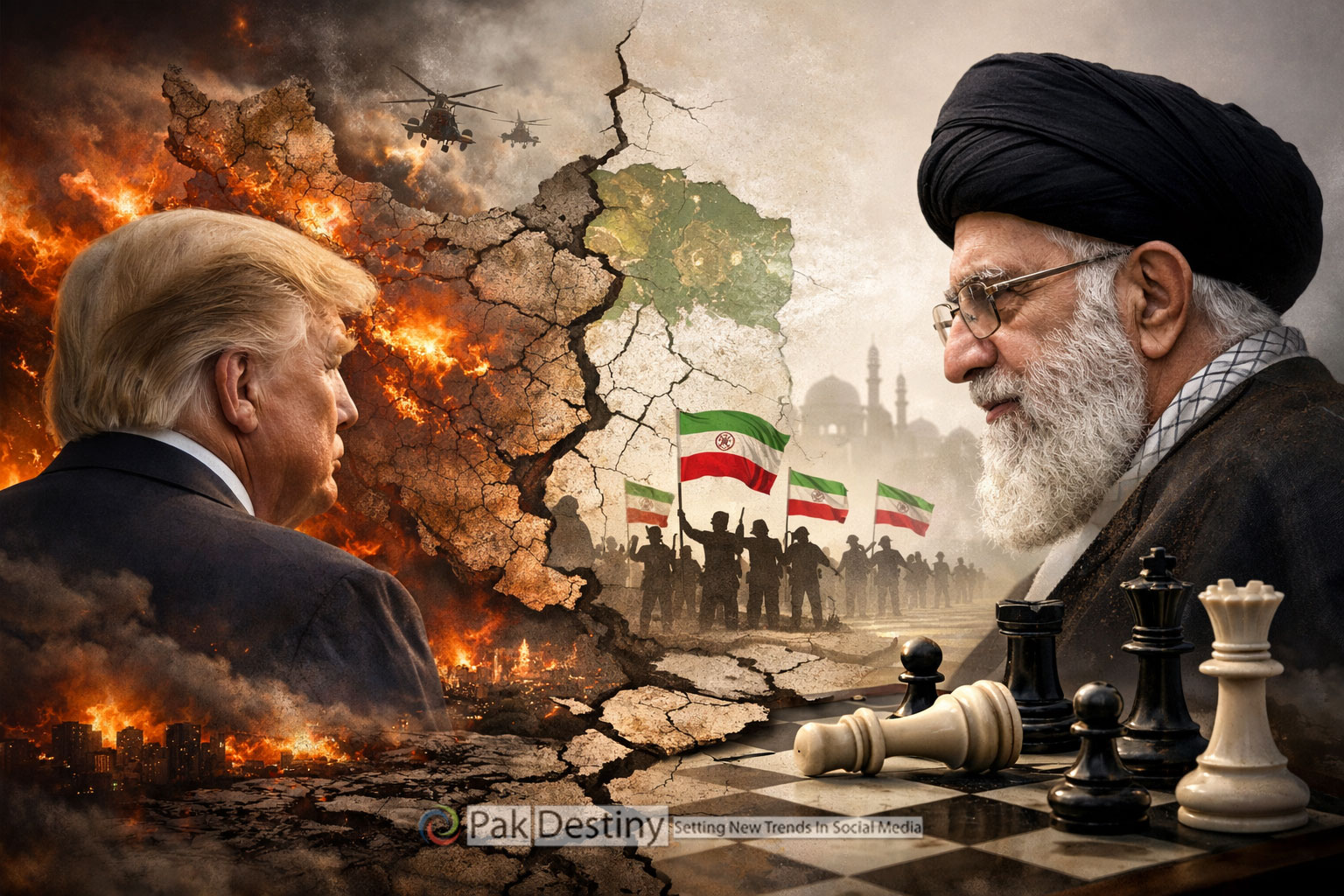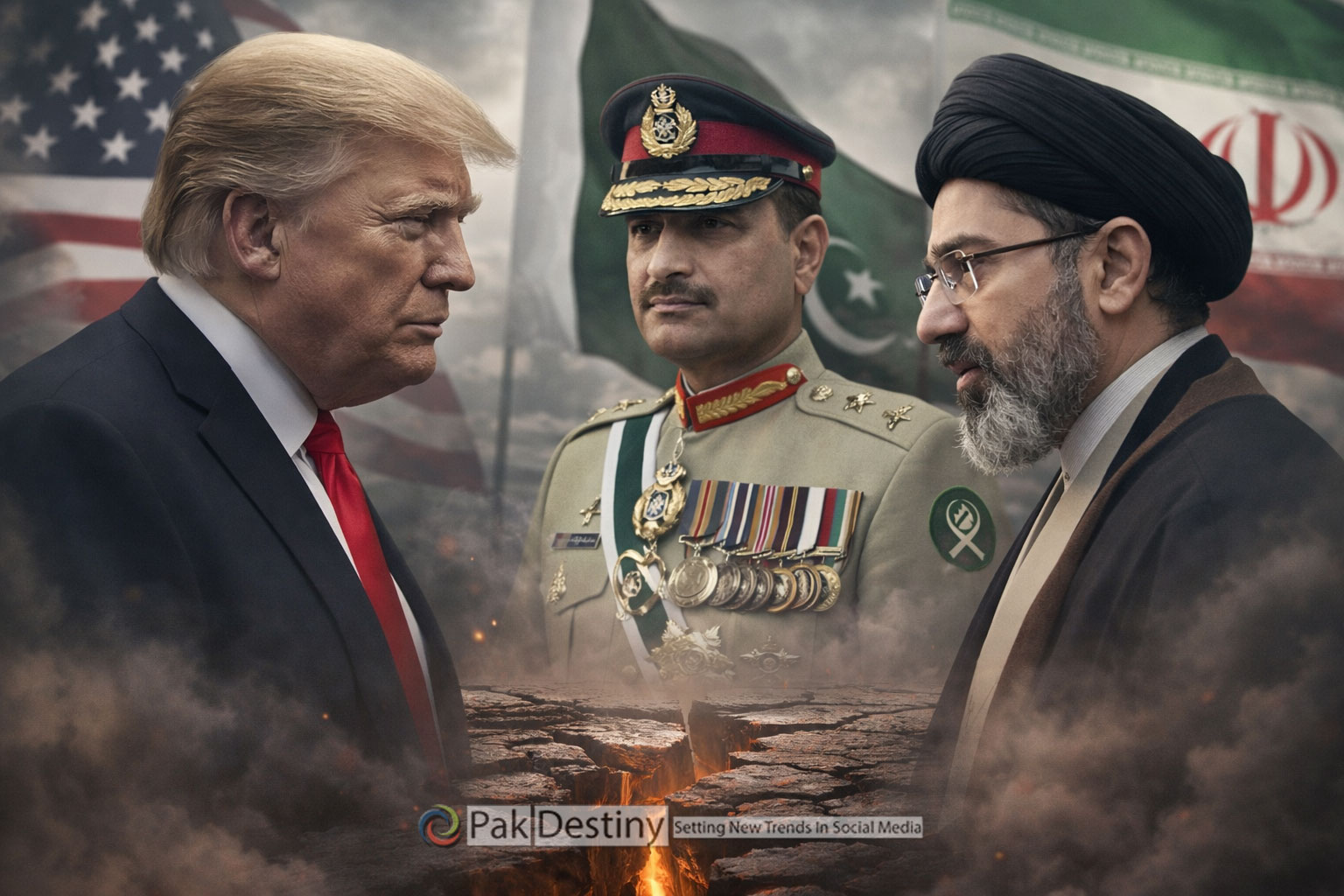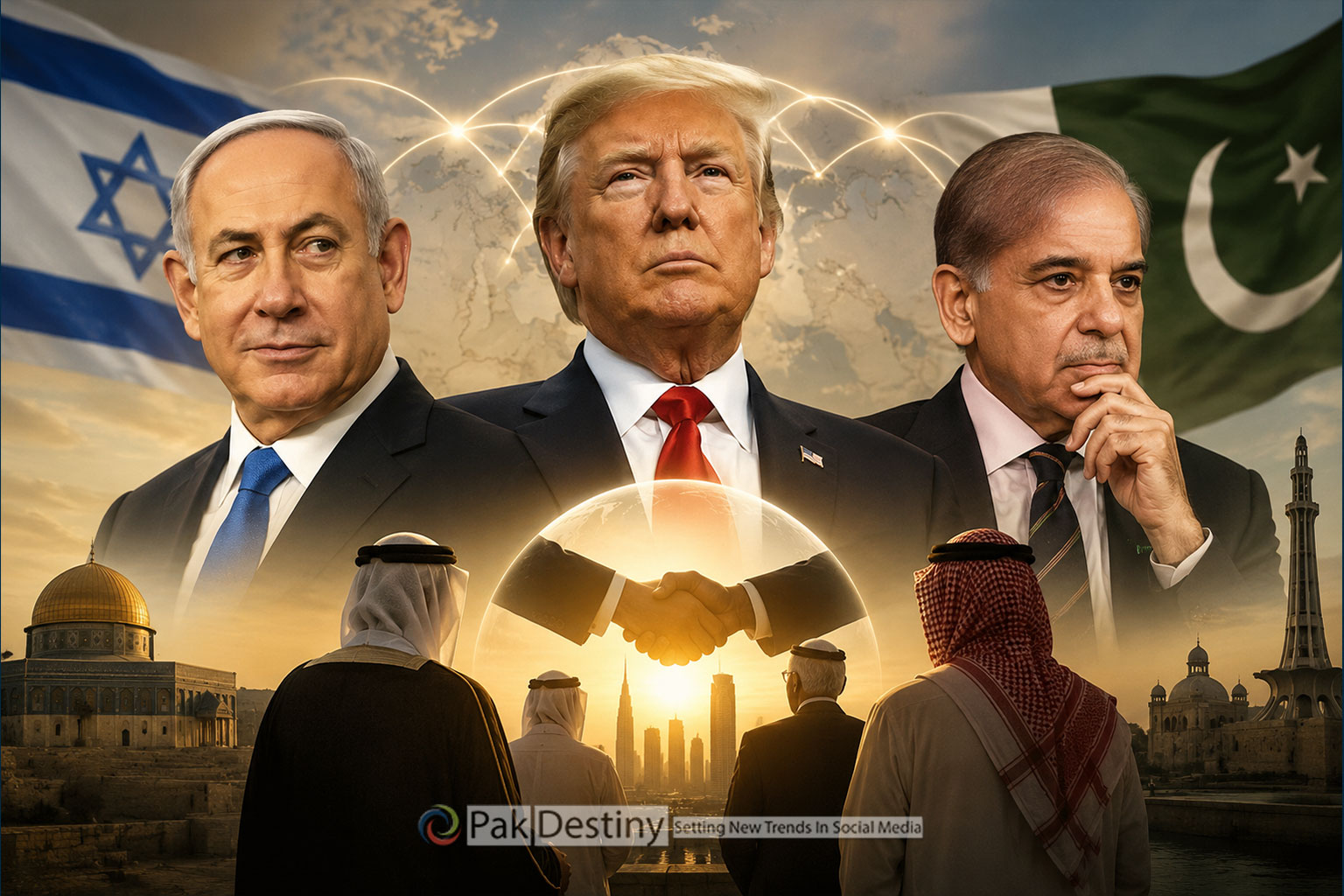
–Washington’s attempt to link a possible US-Iran deal with Israel normalisation triggers concerns over pressure tactics, Palestinian statehood and the reshaping of Middle East alliances
By Irum Saleem
President Donald Trump’s latest attempt to tie an emerging Iran peace arrangement to the expansion of the Abraham Accords has triggered unease across diplomatic circles, particularly in countries like Pakistan, Saudi Arabia and Qatar, where support for the Palestinian cause remains deeply embedded in state policy and public sentiment.
The move, unveiled through a lengthy Truth Social post on Monday, appeared to transform what was initially being viewed as a possible US-Iran de-escalation framework into a much broader geopolitical bargain aimed at restructuring the Middle East under a US-Israeli security architecture.
If in fact as a result of these negotiations to end the Iranian conflict, our Arab and Muslim allies in the region agreed to join the Abraham Accords, it would make this agreement one of the most consequential in the history of the Middle East.
— Lindsey Graham (@LindseyGrahamSC) May 24, 2026
Saudi Arabia, Qatar, and Pakistan…
Trump’s remarks came amid reports of a potential memorandum of understanding (MoU) between Washington and Tehran that could end hostilities on multiple fronts and possibly reopen discussions on sanctions relief and oil waivers. But instead of presenting the agreement solely as a diplomatic breakthrough with Iran, Trump used the moment to pressure Muslim-majority countries into formally recognising Israel under the Abraham Accords framework.
“After all the work done by the United States to try and pull this very complex puzzle together, it should be mandatory that all of these countries, at a minimum, simultaneously sign onto the Abraham Accords,” Trump wrote, naming Pakistan, Saudi Arabia, Qatar, Turkiye, Egypt and Jordan among the countries he expected to join.
The statement marked one of the clearest indications yet that the former US president — who remains central to Washington’s Middle East policymaking discourse — sees the Iran crisis not merely as a security challenge but as an opportunity to redraw regional alignments.
Diplomats and analysts, however, view the proposal as politically loaded and strategically risky.
For Pakistan in particular, the suggestion cuts directly against decades of declared policy. Islamabad has consistently maintained that recognition of Israel is contingent upon the establishment of an independent Palestinian state based on pre-1967 borders with Al-Quds Al-Sharif as its capital.
Officials and foreign policy observers argue that Pakistan’s stance is not transactional but rooted in constitutional commitments, historical positioning and the broader principle of self-determination — a principle Islamabad also invokes in the context of Kashmir.
“This is not simply about diplomatic recognition,” said a senior analyst familiar with regional diplomacy.
“Trump is attempting to create the perception of an Islamic consensus behind a US-led regional order. But the Palestinian issue cannot be bypassed through pressure tactics or strategic packaging linked to Iran.”
Indeed, Trump’s framing appeared unusually coercive. While acknowledging that “one or two” countries may refuse to join the accords, he warned that those declining participation could effectively be excluded from the broader peace arrangement with Iran.
“It should start with the immediate signing by Saudi Arabia and Qatar,” he wrote, adding that countries refusing to do so “should not be part of this deal”.
The remarks were reinforced by Republican Senator Lindsey Graham, a close Trump ally and one of the strongest pro-Israel voices in Washington, who openly warned Muslim countries of “severe repercussions” if they rejected the proposal.
“If you refuse to go down this path as suggested by President Trump, it will have severe repercussions for our future relationships and make this peace proposal unacceptable,”
Graham wrote on X.
Such language has already raised concerns among observers who see the initiative less as consensual diplomacy and more as a pressure campaign designed to manufacture political momentum ahead of a potentially larger regional settlement.
Critics point out that the Abraham Accords themselves remain controversial across much of the Muslim world because they largely sidestepped the Palestinian question.
Signed in 2020 under Trump’s presidency, the agreements normalised relations between Israel and several Arab states, including the UAE and Bahrain, without securing any substantive concessions for Palestinians.
Public opinion across the region has since hardened further against Israel, especially after the devastating Gaza war, mounting civilian casualties and repeated accusations of collective punishment and disproportionate military force by Israeli authorities.
Against this backdrop, analysts say Trump may be overestimating the willingness of governments like Pakistan, Qatar or even Saudi Arabia to publicly embrace normalisation without meaningful movement on Palestinian statehood.
Pakistan’s recent diplomatic relevance during the US-Iran crisis may also explain why its name was inserted into the discussion. Islamabad reportedly played a quiet but active role in backchannel de-escalation efforts, maintaining communication with both Tehran and Washington at a sensitive moment.
That role elevated Pakistan’s strategic visibility, but analysts caution that Washington may now be attempting to convert Islamabad’s diplomatic cooperation into broader political alignment.
“Linking Pakistan’s mediation role in the Iran crisis with the Abraham Accords is strategically misleading,” said another regional expert. “The two issues are fundamentally different. One concerns conflict de-escalation; the other concerns a historic dispute tied to occupation, sovereignty and public legitimacy.”
The proposal also exposes a deeper contradiction within American regional policy. While Washington seeks urgent stability in the Gulf and reduced tensions with Iran, it simultaneously appears willing to expand an already polarising regional political agenda centered on Israel.
Analysts warn that merging these two tracks could complicate rather than strengthen diplomacy.
“Trying to convert a ceasefire framework into an ideological or geopolitical loyalty test may backfire,” one observer noted.
“It risks undermining the very consensus needed to sustain any long-term arrangement with Iran.”
For now, no official response has emerged from Islamabad regarding Trump’s remarks. But diplomatic circles in Pakistan insist there has been no shift in policy regarding Israel or Palestine.
If anything, the latest statements from Washington may reinforce the long-held view in Islamabad that any sustainable peace in the Middle East must address Palestinian statehood first — rather than treating it as a secondary issue in a broader strategic bargain.