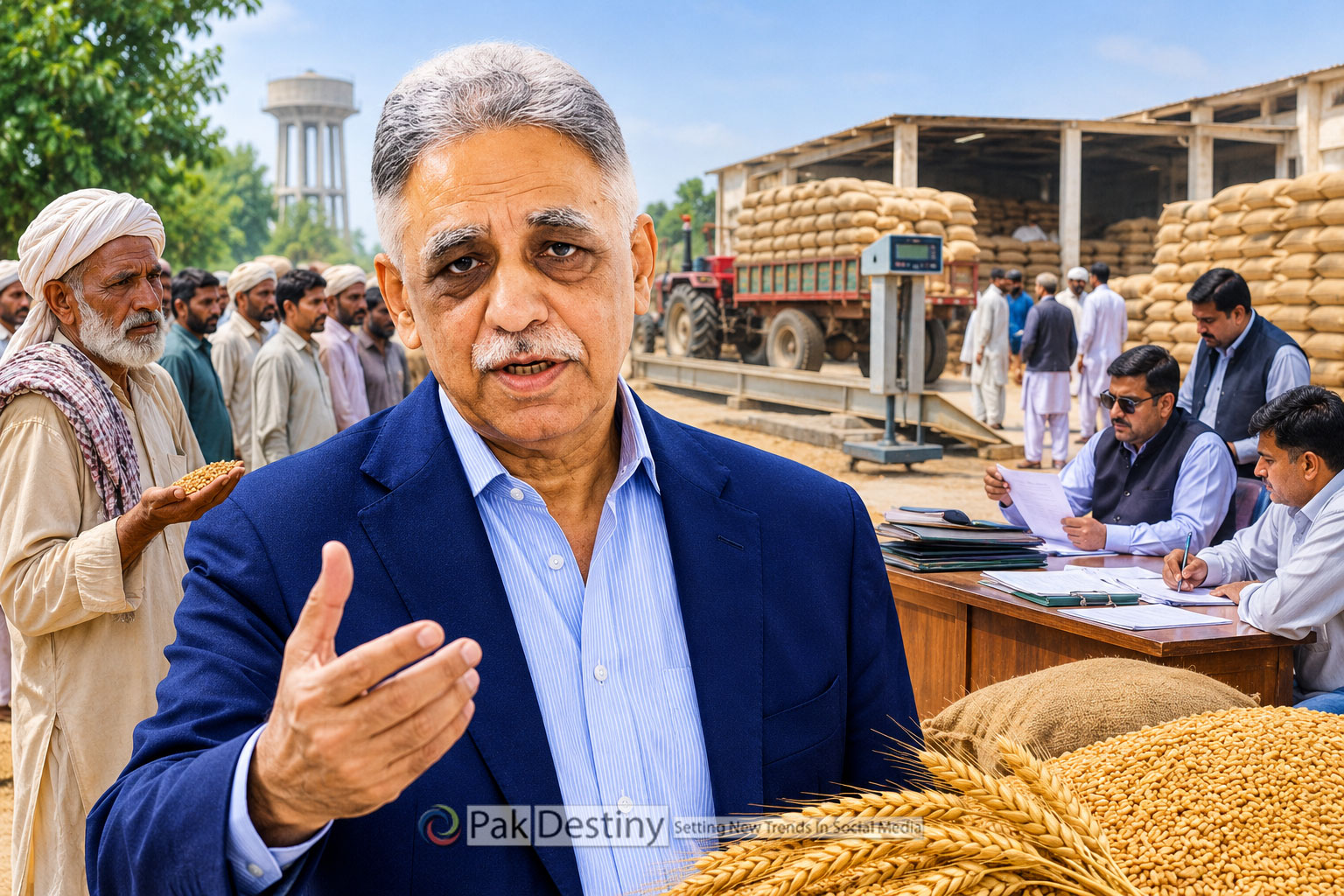
— Mohammad Zubair raises questions over the selection of 11 companies for wheat procurement, alleged profiteering and the government’s failure to anticipate shortages, claiming farmers and consumers have borne the cost of a massive scandal
By Raza Ruman
Former Sindh governor and senior PML-N leader Muhammad Zubair has raised serious questions over the Punjab government’s wheat procurement policy, alleging that a handful of private companies benefited at the expense of farmers and millions of consumers.
In a strongly worded post on X, Mr Zubair described the alleged wheat scandal as an example of “elite capture at its best”, claiming that hundreds of billions of rupees were involved in another controversy at a time when the country was facing a severe wheat shortage for the third consecutive year.
He pointed out that the shortage had pushed the price of flour (atta), a staple food for millions of Pakistanis, to Rs200 per kilogram, with the rising cost of wheat flour also driving up the prices of roti and naan.
Zubair questioned why the government had failed to decide on wheat imports in August or September when a significant domestic shortfall was reportedly becoming evident.
He also demanded an explanation for who had benefited from the alleged transactions and who had suffered financial losses, arguing that farmers and ordinary citizens had been made to bear the burden while a small group of influential beneficiaries allegedly made billions.
One of the central questions raised by the former governor concerned the ownership of 11 companies selected by the Punjab government to procure wheat from farmers.
He questioned why these companies were allegedly allowed to purchase wheat at Rs3,000 and sell it at nearly twice that price over a period of six months, demanding disclosure of their beneficial owners.
Zubair also sought accountability from the federal and Punjab governments, asking which officials and political figures should be held responsible for the alleged financial irregularities.
His remarks add to the debate over wheat procurement, government policy and the role of private-sector intermediaries in the country’s food supply chain.
The allegations, however, require an official response and independent verification, particularly regarding the identities of the companies, their beneficial owners, procurement prices and the alleged margins.